How to catch trophy pike · Mid-May to September

How to Catch Trophy Northern Pike: A Month-by-Month Guide

Small pike are easy. Big ones play by different rules. Here’s where the trophies go each month, how deep, what to throw and when to go, the way we hunt them on Sydney and Kilburn. — Jeb

Guest holding a northern pike in front of a rocky, tree-lined shoreline in Northwest OntarioGuest holding a big northern pike in front of a rocky shoreline on Sydney Lake, Ontario

Start here

Six Trophy Pike Rules That Work All Season

Little pike are everywhere. Learn these six and you’ll start finding the big ones. The monthly game plans below build on them.

1

Big pike like it cool

Small pike stay in the warm, weedy shallows all summer. The big ones look for 61–70°F water, so they go deeper as the lake warms.

2

Fish next to deep water

Trophies hang where a shallow feeding spot drops fast into deep water, especially near the ciscoes they love to eat.

3

Slow when it’s cold

In May and late September, slow down and add long pauses. In summer, speed up and cover water.

4

Wind and clouds help

A wind-blown point or a cloudy day pulls big pike shallow. Bright and calm? Go deeper, or fish dawn and dusk.

5

Go bigger as summer goes on

Pike eat fish up to a third of their own length. By late summer, 6–10 in baits catch the big ones.

6

Get your release gear out first

Big net, long pliers and hook cutters within reach before you hook a giant. How to release a big pike.

Month by month

Where Big Pike Are, Month by Month

Pick your month for the game plan: where to look, how deep, what to throw and when to go.

DEPTH (FEET) →Most big pikeSome big pike01020304050May2–10 ftJune6–15 ftJuly15–25 ftAugust18–35 ftSeptember10–20 ft

Depths are where most big pike sit on Sydney Lake. Small pike stay shallow in the weeds all summer, so if you’re only catching little ones, go deeper and find cooler water.

Mid–late May · Water 45–55°F

Back-Bay Bruisers

Pike spawned right after ice-out and now they’re hungry. The big females cruise warm, dark back bays and the mouths of those bays, as long as deep water is close by.

Depth2–10 ft
WhereWarm back bays
Best timeLate morning & afternoon
Go-to lureSpoon or soft jerkbait

Where to look

  • Shallow, dark, soft-bottom back bays that warm up first
  • The downwind end of those bays, where the warm water piles up
  • Creek mouths and bay mouths with deep water close by. Big females wait here and slide in as the bay warms.
  • Catching walleye in a bay? Cast a little farther down the shore for the pike.

What to throw

  • Spoon (gold, silver or half-and-half) with a single hook and a white grub. Lift it and let it flutter.
  • 7–9 in soft jerkbait (Slug-Go) with no weight: twitch, twitch, pause
  • Suspending jerkbait (X-Rap) with long pauses
  • Dead bait (a frozen smelt or cisco) on a quick-strike rig, sitting on the bottom near a bay mouth. Set the hook right away so it isn’t swallowed. Buy it in Kenora; bait can’t come from the U.S.
  • Slow it all down. Fast, straight retrieves catch fewer and smaller pike.

When to go

  • 🌅 Morning: Slow. The bays are still cold, so fish walleye first.
  • ☀️ Afternoon: Best of the day. A bay that’s empty at 9 am can be full of pike by 2 pm.
  • 🌙 Evening: Good while the water stays warm.

Jeb’s play

Chase the warmest water at the warmest time of day. A sunny afternoon in a dark back bay is your best shot at a May giant. A cold snap stalls them, so slow right down.

June · Water 55–68°F

Weeds and Wind

Pike feed hard for about a month after spawning. The big ones move out to where the bays meet the main lake: new cabbage weeds, rocky points and narrows.

Depth6–15 ft
WhereNew weeds & rock points
Best timeCloudy, windy days
Go-to lureSpoon or spinner

Where to look

  • The first green cabbage weed beds, like Kilburn’s Centre Arm weed bay
  • Rock points and narrows next to the spawning bays, like Park Narrows and The Gap
  • Wind-blown edges where the bays meet the main lake
  • Small pike stay back in the bays. The big ones move out first.

What to throw

  • 3½–4 in spoon (Dardevle, Len Thompson) with a slow wobble. Pop it and let it flutter.
  • #5 Mepps or a bucktail run over the weed tops
  • Big jerkbait (X-Rap, Slug-Go): twitch and pause
  • Calm day? A 5–6 in swimbait on a 1/2 oz jig along the deeper edges

When to go

  • 🌅 Morning: Good on wind-blown points.
  • ☀️ Afternoon: Clouds and wind bring big pike right up onto the weeds.
  • 🌙 Evening: Good. On calm evenings, work the deeper weed edges.

Jeb’s play

Watch the weather. Clouds rolling in and wind picking up before a cold front make the best big pike day in June. Once the front passes, slow down and fish deeper.

July · Water 68–75°F

Big Fish Move Out

Once the shallows hit the high 60s, the big pike leave. They slide out to fast breaks and deep weed edges where the water is cooler. The little ones stay behind.

Depth15–25 ft
WhereFast breaks & deep weeds
Best timeEarly, late & windy
Go-to lureJig + paddletail

Where to look

  • Fast breaks: reefs, points and flats that drop quickly into deep water
  • Deep edges of the cabbage beds
  • Wind-blown main-lake points and rock shoals
  • Narrows with current, like The Gap and Park Narrows

What to throw

  • 3/4–1 oz jig + 6 in paddletail about 1 ft off the bottom: rip, pause, let it fall
  • Troll a deep-diving crankbait along the breaks at 2.5–4 mph. The tiller’s troll control makes it easy.
  • Weedless Johnson Silver Minnow over deep weeds, pause-and-go
  • Calm evening? Topwater over the weeds is a blast, but you’ll miss plenty of strikes.

When to go

  • 🌅 Morning: The best window on bright, calm days.
  • ☀️ Afternoon: Bright and calm, go deeper (20–40 ft). Wind and clouds push big pike up onto the reefs.
  • 🌙 Evening: A close second on calm days, and topwater time.

Jeb’s play

Hunt the “mammoth magnets”: spots with deep water right beside a shallow feeding area, especially ones the wind is blowing into. That’s where the big girls eat.

August · Water 68–73°F

Cool Water, Big Baits

By mid-August most big pike are deep, near the cool water and the ciscoes. Think like a lake trout angler and you’ll find them.

Depth18–35 ft
WhereHumps by deep water
Best timeMorning & evening
Go-to lureBig spoon or swimbait

Where to look

  • Main-lake humps, reefs, sunken islands and deep rock points next to the deep basin
  • Some big pike hang out over deep water with the ciscoes
  • Late August: as the surface cools, a few big pike slide back shallow

What to throw

  • Big spoon (XL Dardevle, Williams Whitefish): cast long, let it hit bottom, reel fast. Works without a depth finder.
  • 6–8 in swimbait on a 3/4–2 oz jig
  • Troll deep divers along the humps: slower on calm, bright days, faster in wind

When to go

  • 🌅 Morning: Good. Watch for short feeding sprees when the weather changes.
  • ☀️ Afternoon: Fish the deep humps. Bright days push pike to 30 ft and deeper.
  • 🌙 Evening: Good on main-lake points and wind-blown banks.

Jeb’s play

Rent a depth finder at camp and look for ciscoes: clouds of bait out over deep water. Then fish the closest hump or rock point. Find the bait, find the pike.

September · Water 55–64°F

The Big Ones Come Back

As the water cools, big pike move back onto big rock and green weeds near deep water. They’re the heaviest of the season, and they eat big baits.

Depth10–20 ft
WhereBig reefs & rock points
Best timeOvercast days
Go-to lureBig swimbait or crank

Where to look

  • The biggest reefs and rock points near deep water, like The Gap and Mini Gap
  • Wind-blown humps and narrows with current
  • Bay exits and green cabbage edges once the water drops into the mid-60s
  • Early in the month, check your deeper summer spots first

What to throw

  • Troll big crankbaits 12–18 ft deep at 3–4 mph along rocky points with current
  • 6–10 in swimbait on a 3/4–1 oz jig, worked slowly
  • Big jerkbait (#14 X-Rap) or a gold spinnerbait, slow along the weed edges
  • Slow down a little more each week as the water cools

When to go

  • 🌅 Morning: Good, especially with some wind.
  • ☀️ Afternoon: Overcast skies and a falling barometer are the best of all.
  • 🌙 Evening: Good, but the days are short. Be back at the dock before dark.

Jeb’s play

Big baits on the biggest spots next to deep water. Windy? Fish the side the wind is hitting. Calm? Find current in the narrows. Fishing lakers? Keep a leader on. Plenty of September giants hit trout spoons.

Tackle

Your Trophy Pike Tackle Box

Big pike have big teeth, so the gear has to match. See the full packing and tackle list.

Rod, line & leader

  • 7–7½ ft heavy casting rod
  • 50–65 lb braid
  • 12–18 in leader of 80–100 lb fluoro or wire. Every cast.
  • Rent a depth finder at camp for July and August

Lures

  • Spoons: Dardevle (red-and-white, five of diamonds), Williams Whitefish, Len Thompson, Johnson Silver Minnow
  • #4–5 Mepps or Blue Fox spinners, bucktails and spinnerbaits
  • Slug-Go soft jerkbaits, X-Rap jerkbaits, and 6–10 in paddletails on 1/2–2 oz jigs
  • Deep-diving crankbaits for trolling
  • Quick-strike rigs for dead bait in spring
  • Colours: gold, silver and white in clear water; firetiger and chartreuse in Kilburn’s darker water

Release gear

  • Big rubber net or a cradle
  • Long needle-nose pliers and hook cutters
  • Single barbless hooks make releases quick. Swap out trebles where you can.
  • No jaw spreaders, please. They hurt the fish.

Myths and mistakes

Trophy Pike Mistakes to Skip

✕

“Pike lose their teeth in summer”

They don’t. The big ones move deep, so the shallow bite slows down.

✕

“Big pike live in the weeds”

The little ones do. By July the big ones have left for cooler, deeper water.

✕

“Bigger and faster is always better”

Not in cold water. In May and late September, slow down. Small spinners catch big pike too.

✕

Camping on the hammer-handles

Lots of small pike means you’re in the wrong spot for a trophy. Move out to the deeper edges.

✕

Skipping the leader

Pike bite through regular line in a second. Put a leader on before your first cast.

✕

“Pike bite at night”

They’re daytime hunters. Dawn, dusk and cloudy days are when they feed best.

Keep and release
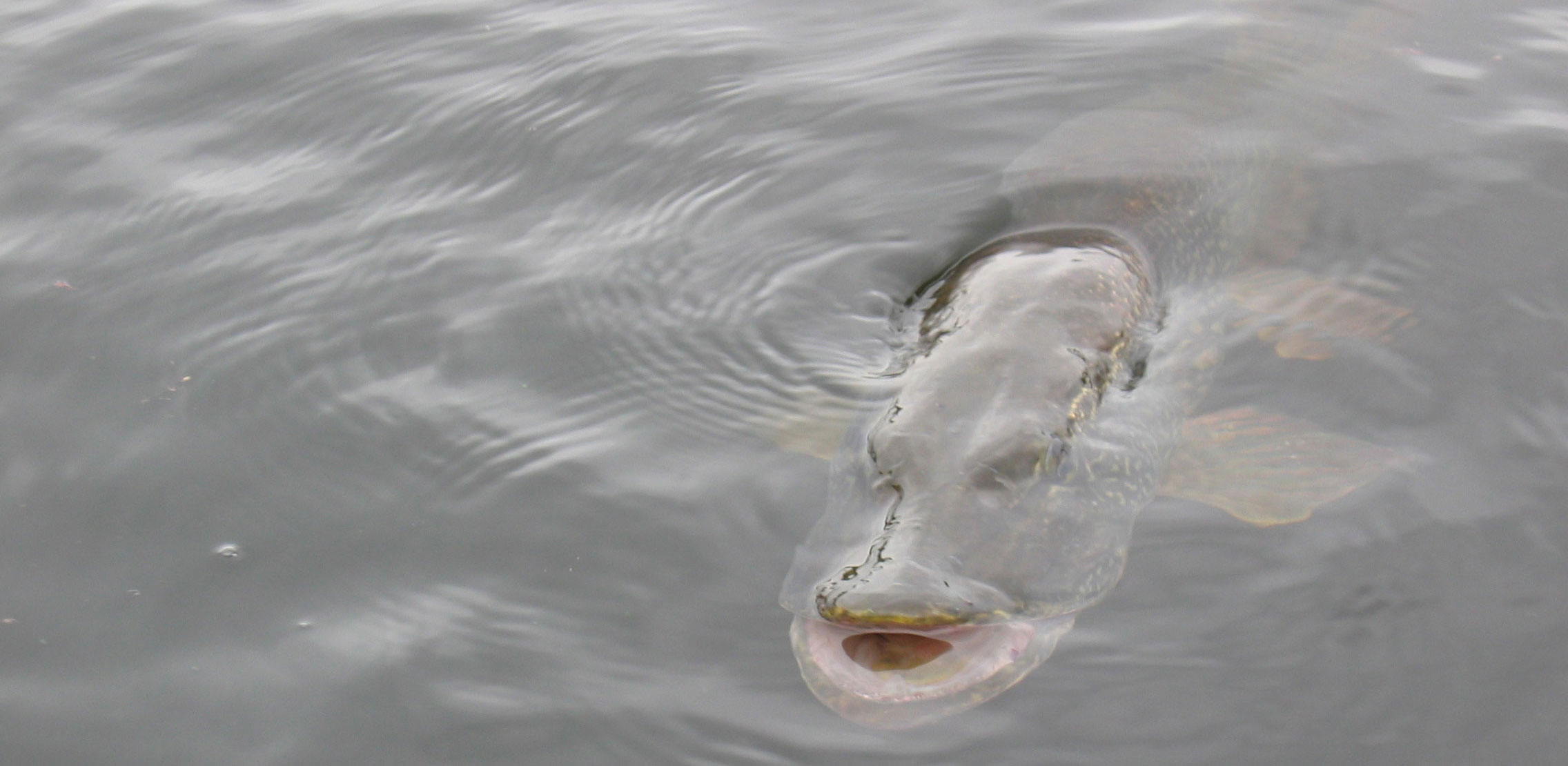
Every Trophy Pike Goes Back

The rules at camp

  • Keep 2 pike a day, 27 in or under. Smaller pike are great eating.
  • Pike 38 in or longer can be registered in Ontario’s Trophy Waters at camp with a witness and a photo, then released.
  • Sydney Lake guests registered the biggest pike in Trophy Waters in both 2023 and 2024, at 46 in.

Releasing a big pike

  • Unhook it in the net, in the water, if you can.
  • Hold it level with one hand under the belly. Never hang a big pike by the jaw.
  • Aim for about 10 seconds out of the water. Get the photo fast.
  • Hook swallowed deep? Cut it rather than dig.
  • Hold it upright in the water till it kicks away on its own.
A northern pike from Sydney Lake held level before release

Keep reading

More Ways to Plan Your Fishing