Fall fishing trips · September 2027
September on Sydney and Kilburn Lakes: the heaviest walleye, pike and lake trout of the year, lakers up on the shoals, gold birch on the shorelines, almost no bugs and long, dark nights for the northern lights.
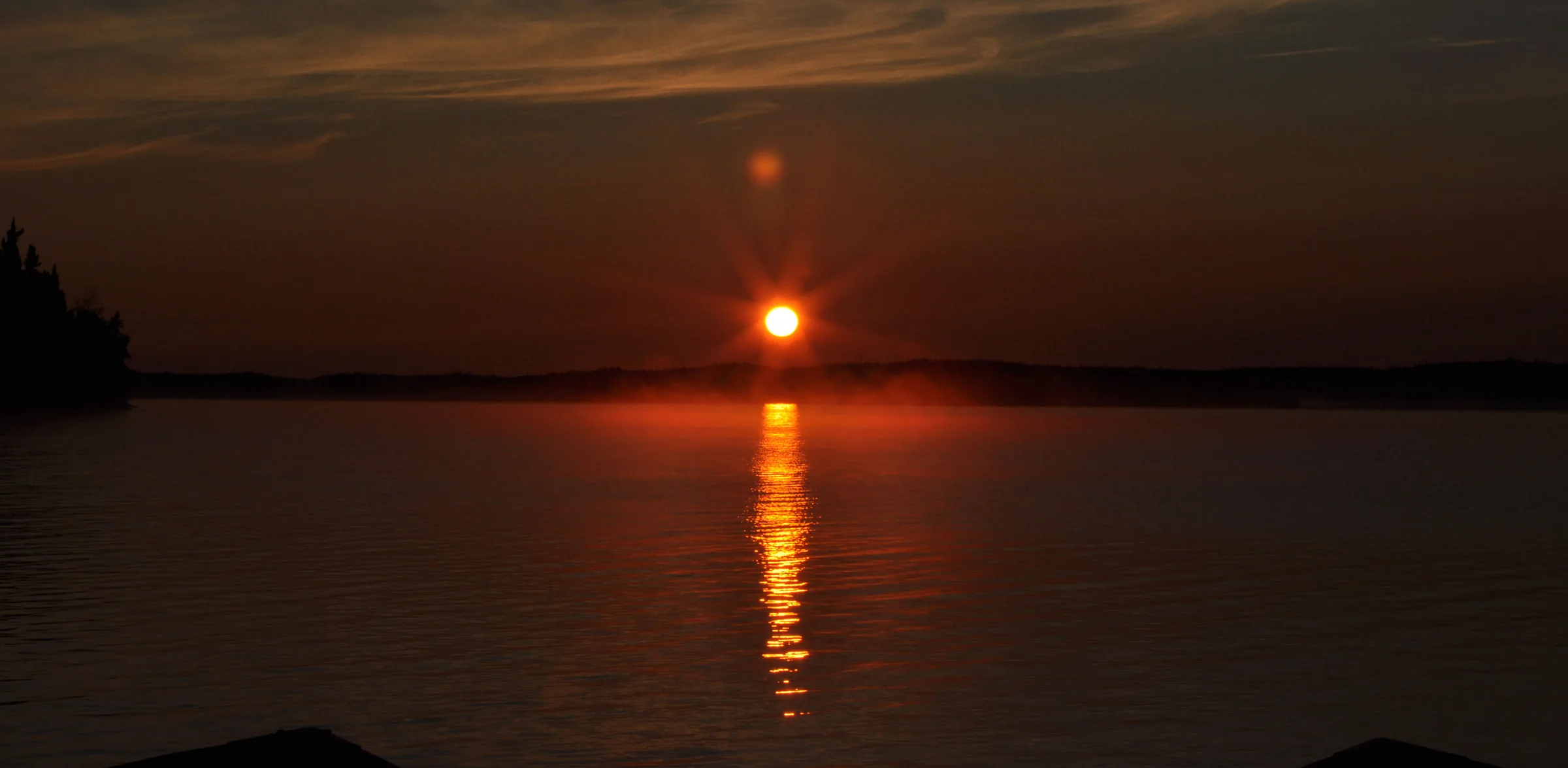
32″ walleye · Sydney Lake
70 → 10 ft
lake trout in September
They start the month about 70 ft down and rise about 15 ft a week, onto the rocky shoals by the last week.
Sept
our biggest fish of 2025
The season’s biggest walleye, northern pike and lake trout were all caught in September.
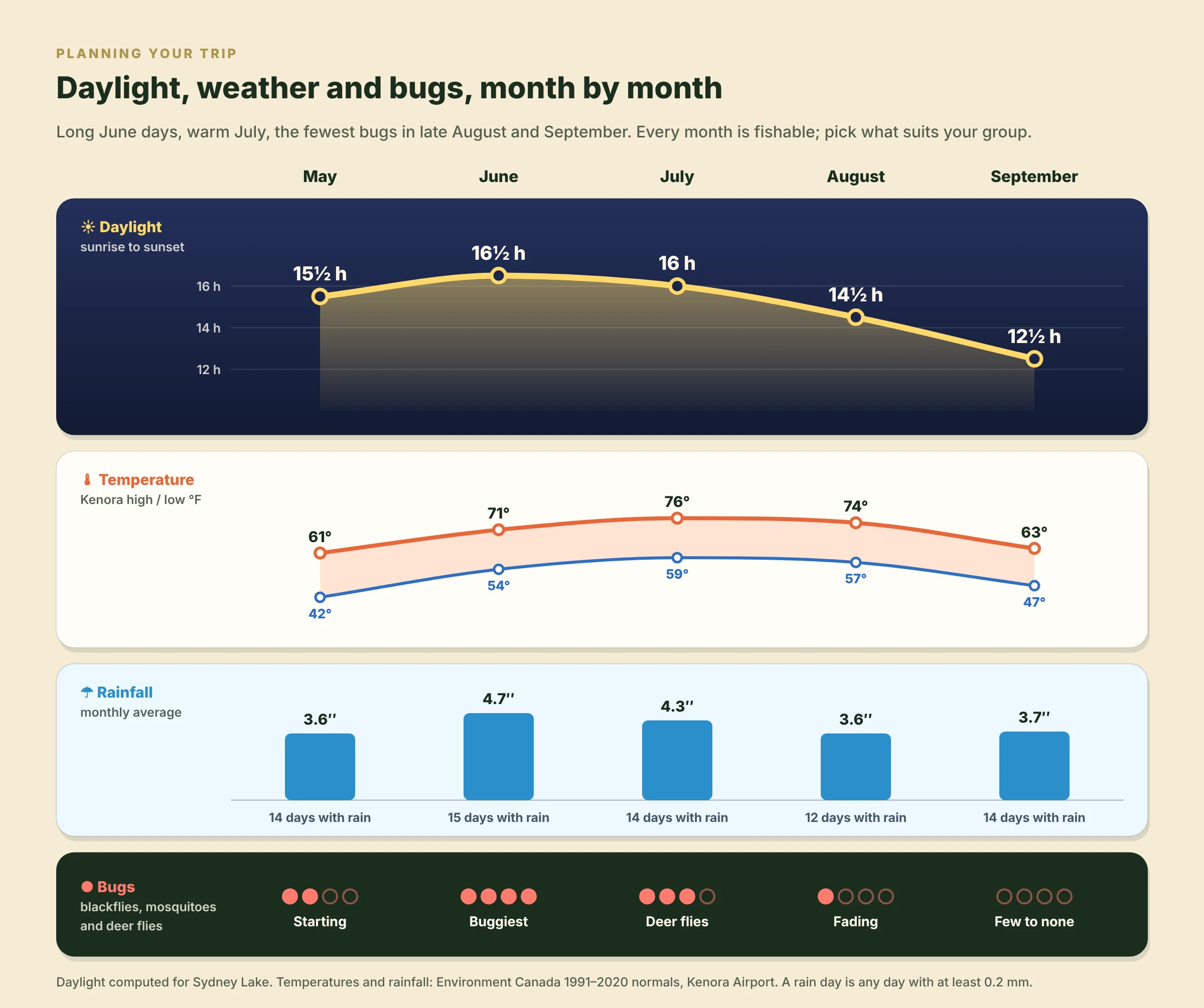
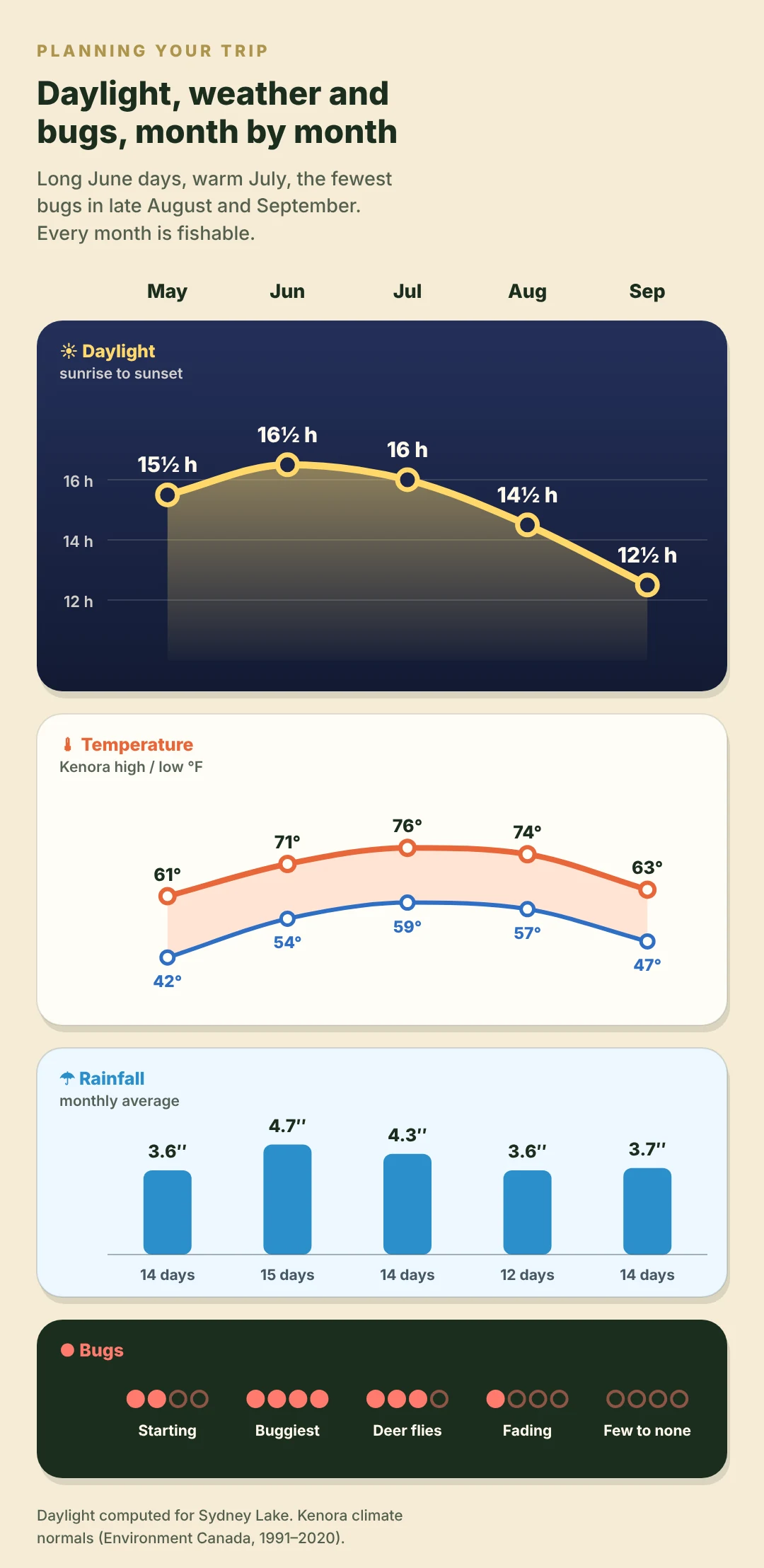
63 / 47 °F
September highs and lows
Kenora averages (17 / 9 °C): frosty mornings, warm afternoons and almost no bugs.
12½ h
of daylight mid-month
Sunrise about 6:55 a.m. and sunset about 7:30 p.m. at camp in mid-September.




The whole trip
Cool, clear and quiet: frosty mornings, warm afternoons, almost no bugs, gold birch on the shorelines and long, dark nights for the northern lights. It’s the month for big fish, and for anyone who’d rather pack a jacket than bug spray.
September averages
Highs about 63 °F, lows about 47 °F
Kenora’s September averages run from about 47 °F at night to 63 °F in the afternoon (9 to 17 °C), with bigger swings than in summer: frost on some mornings, shirt-sleeve afternoons on others. Clear skies and a light breeze are the norm.
Pack: warm layers, rain gear, a toque and neoprene gloves.
Few to none
The quietest month for bugs
Blackflies are long gone, mosquitoes and deer flies are done, and most September days have almost no bugs. A few blackflies may come back in the last week of the month.
Bring: a small bottle of repellent, just in case.
Mid-September
About 12½ hours of daylight
Sunrise is about 6:55 a.m. and sunset about 7:30 p.m. at camp in mid-September. The lake cools from about 64 °F to the mid 50s (18 to 13 °C) over the month: too cool for most swimmers, just right for the sauna.
Try: the evening bite, which comes earlier as the days get shorter.
Mid to late September
Usually best in the last week or two
The birch and aspen begin turning early in the month and are usually at their best in the last week or two of September: bright gold against dark spruce and pine, doubled in calm water.
Clear, dark nights
Usually from about 10 p.m.
After the bright nights of June and July, September nights are long and dark. On a clear night watch the northern sky for a green glow, usually from about 10 p.m. by late September. The darkest nights are near the new moon, September 29 in 2027.
Late September
Flocks overnight on the lake
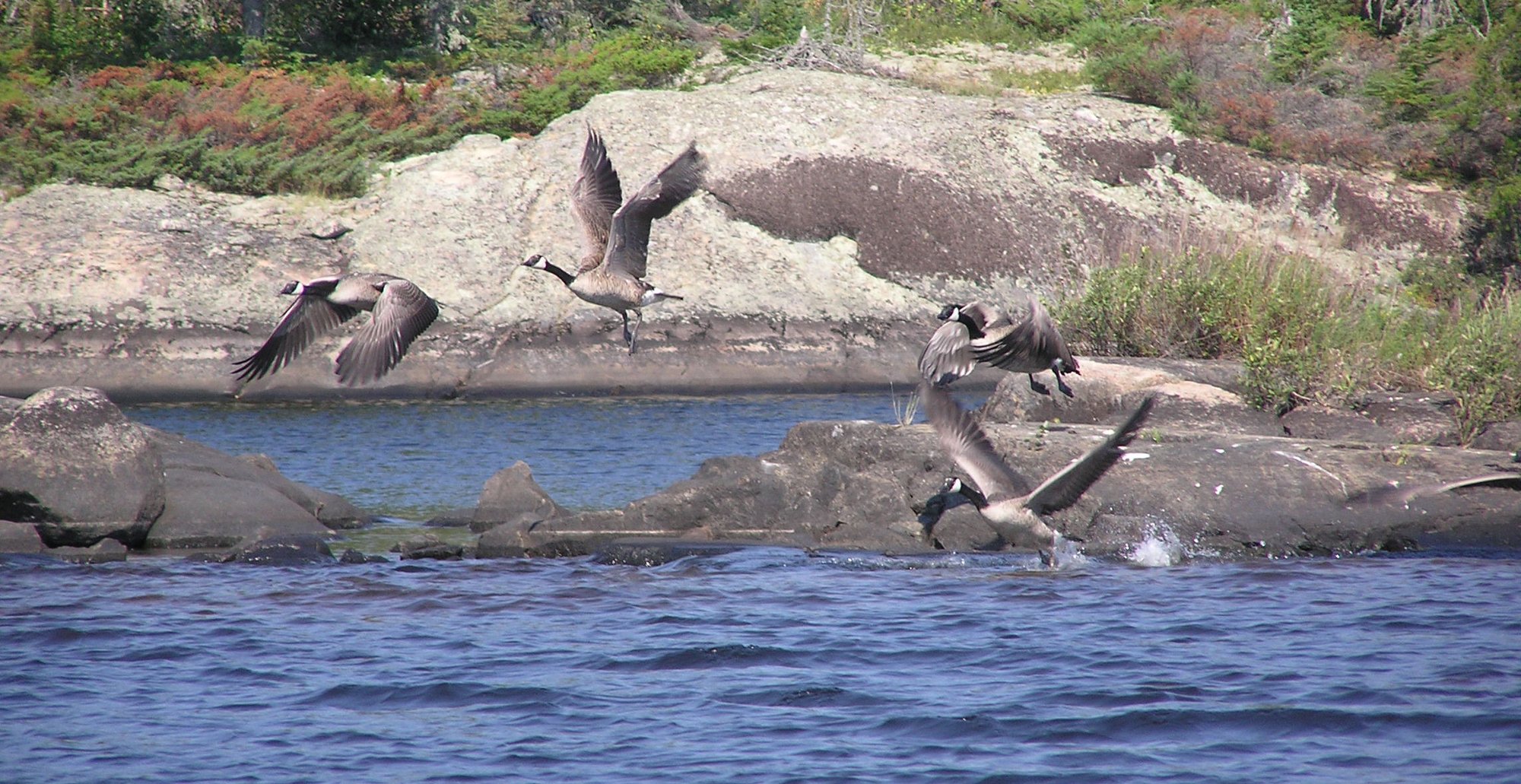
Canada geese and ducks start their migration late in the month. Listen for the honking and look for the big V overhead; flocks often spend the night on the lake. Bald eagles and loons are still around, and woodland caribou are seen on both lakes.
Every September week
One of our quietest months
September is one of our quietest months on the water, so it’s common to have a reef or a bay to yourself. One lodge, no roads and no cottages on either lake, and about 17,570 acres of water.
September 30
Lake trout season and camp close Sept 30
In Zone 2, lake trout season closes September 30, and so does our camp. The last two weeks bring together the heaviest fish, lakers on the shoals, fall colours and the northern lights.
The fishing
Deep walleye, lake trout coming up onto the shoals and big pike on the rocks: September has the heaviest fish of the year, and you can often catch all three species in the same spot.
Walleye · 23–32 ft
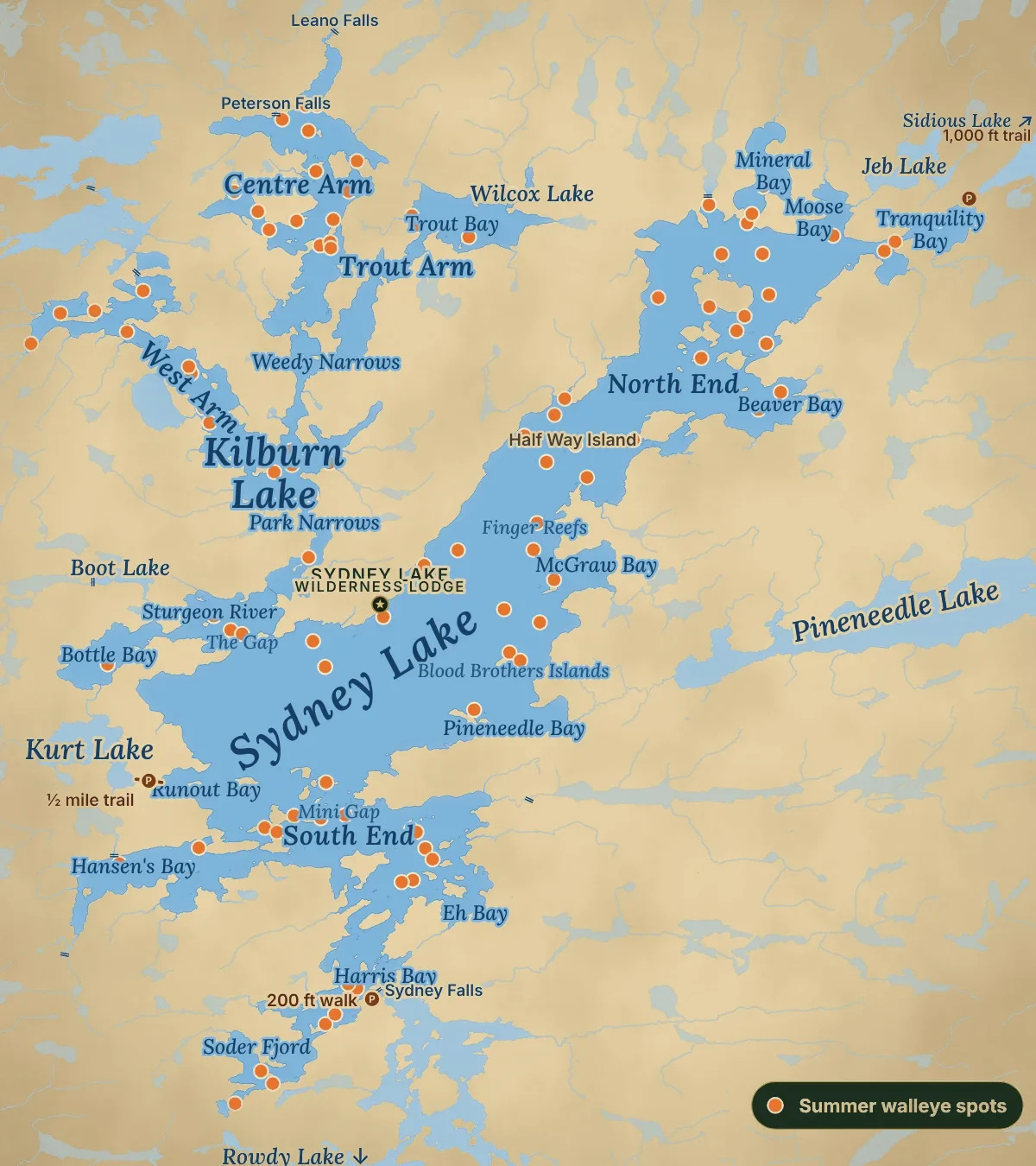
Most walleye hold on deep flats, humps and points beside deep water, close to the cisco. Reefs at 10 to 16 ft turn on at dusk as the water cools.
Try: a 3/8–1/2 oz jig in pink and white, slow, right on the bottom.
Northern pike · rocky shores
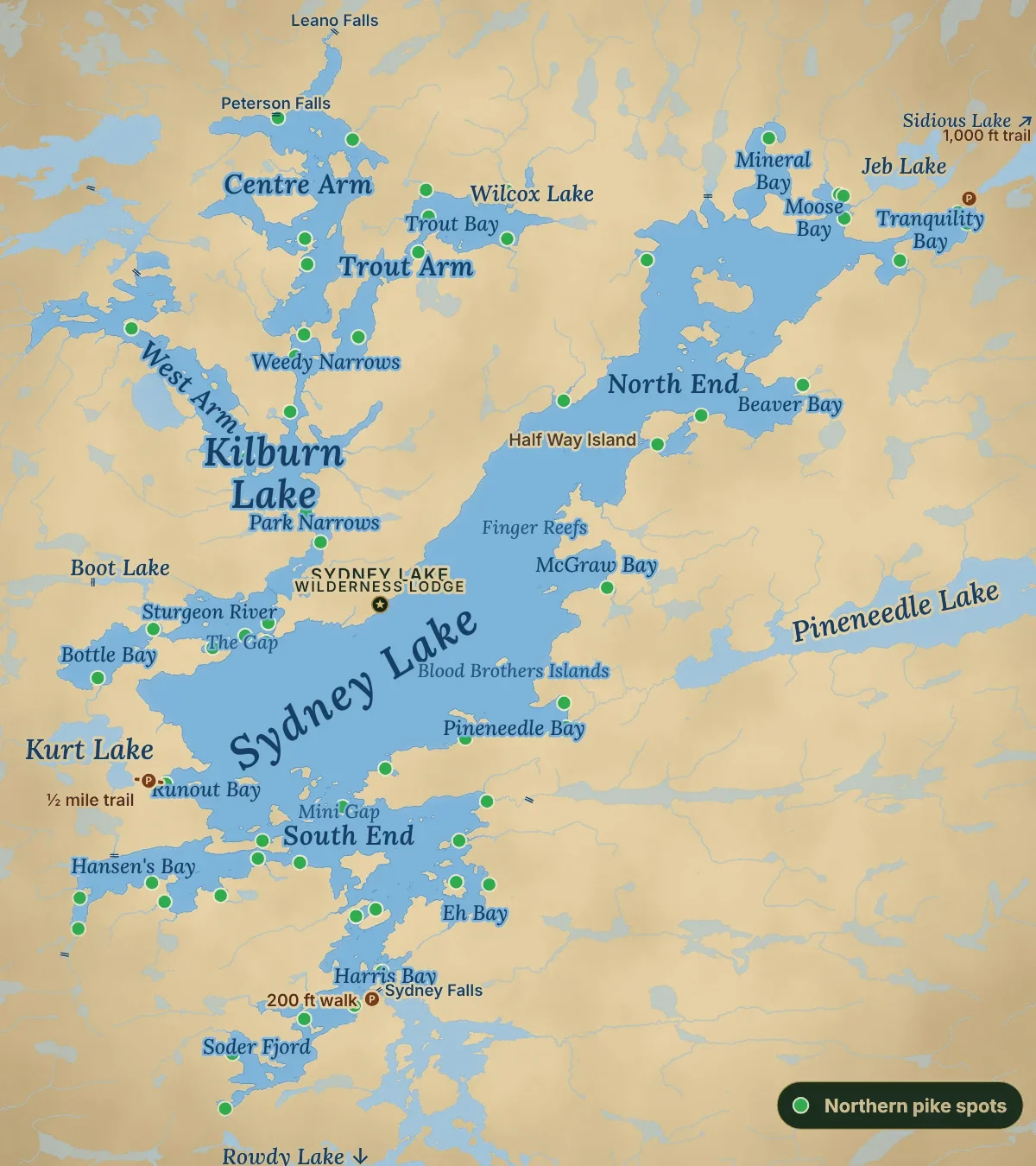
As the weeds die back, big pike move to rocky main-lake shores, points and narrows that lead to deep water, like The Gap. Plenty are caught by anglers fishing for lake trout.
Try: a suspending jerkbait along a rocky shore.
Lake trout · 70 ft to the shoals
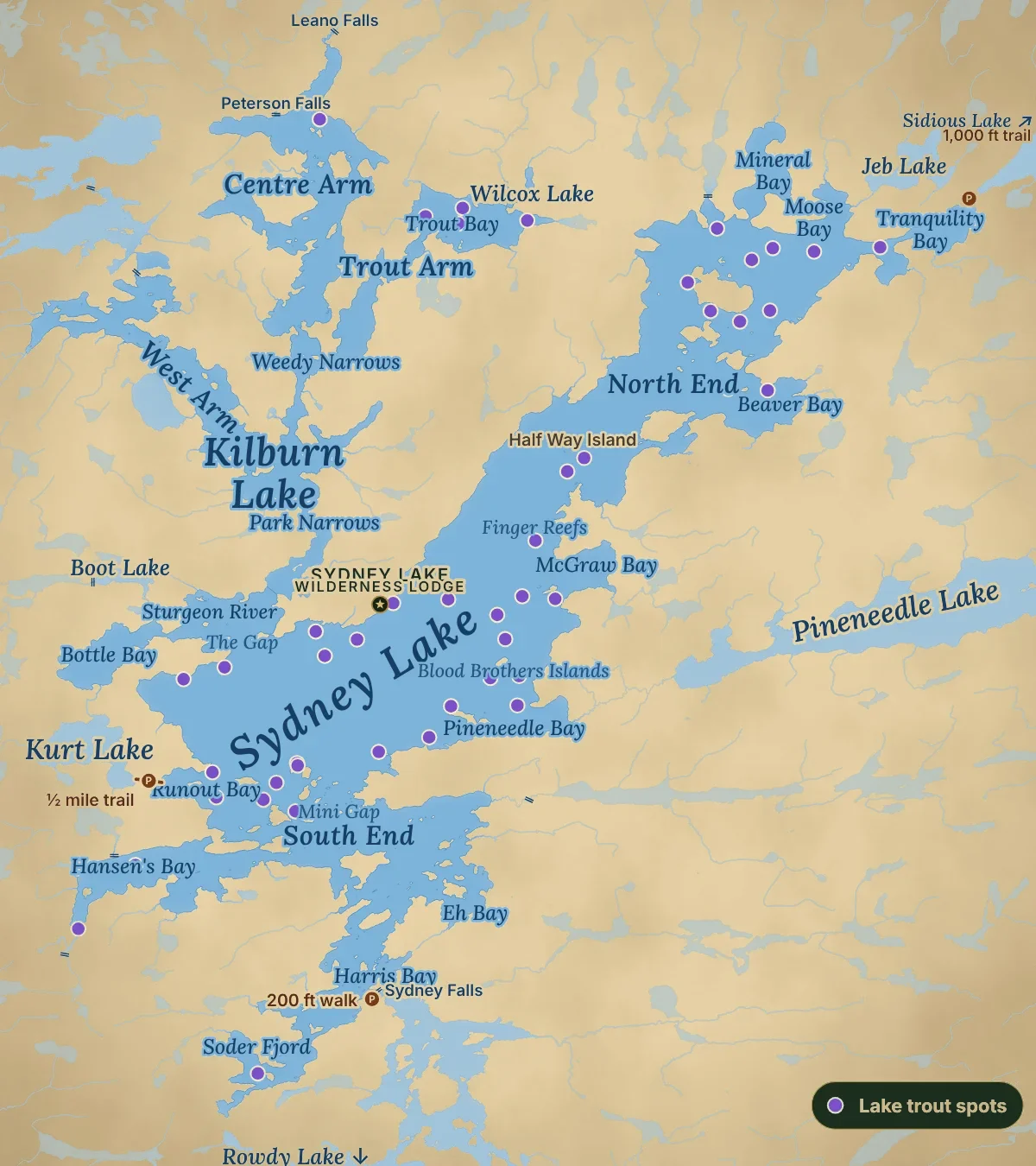
About 70 ft down on September 1, then roughly 15 ft shallower each week, until they gather on boulder patches, reefs and rocky shores in the last week. In spots like the Mini Gap you can catch walleye, pike and lake trout without moving the boat.
Try: a bright Little Cleo cast toward shore and worked back out.

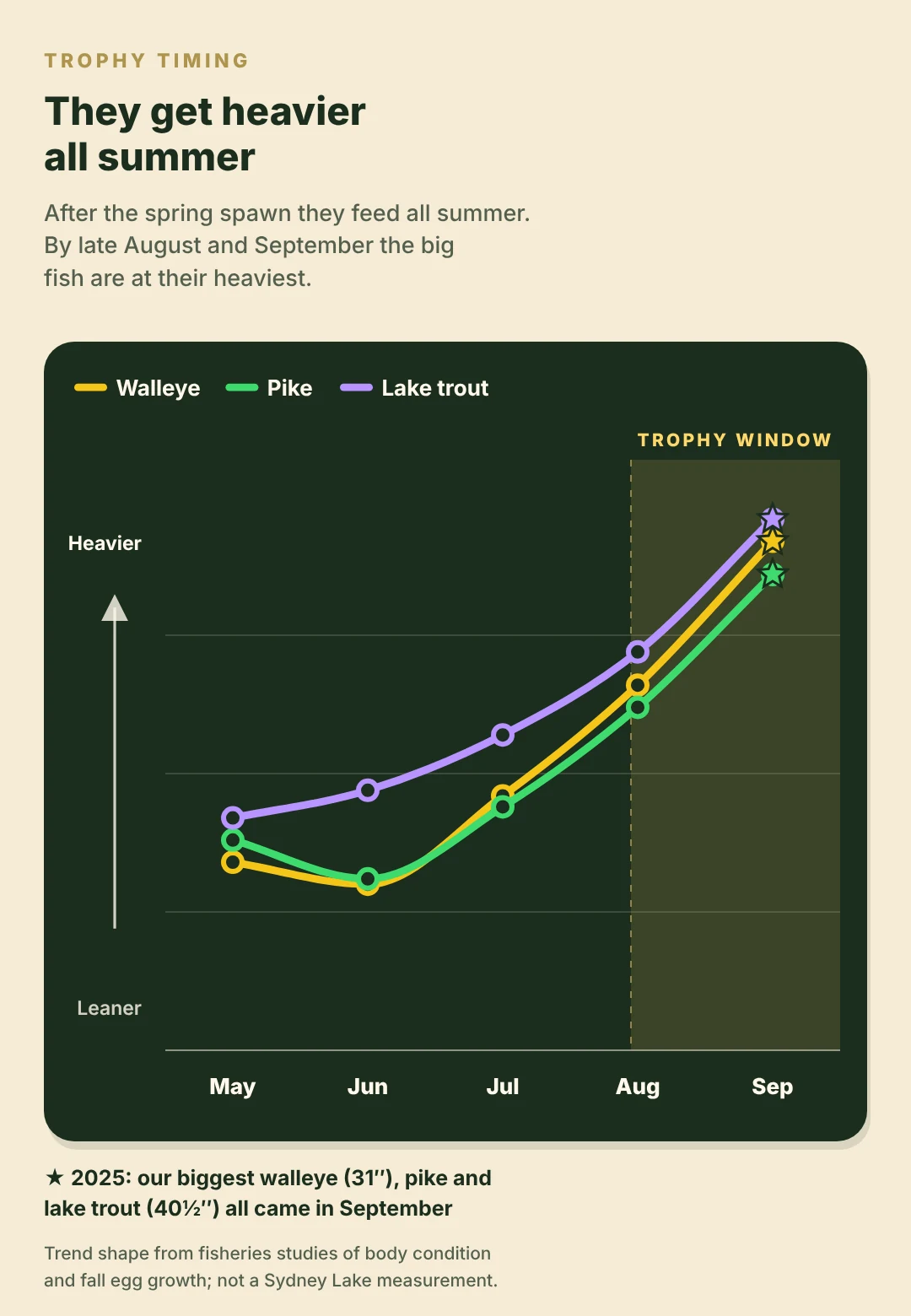
Trophy timing
Every species is at its heaviest in the fall. In 2025 our biggest walleye of the season (Bob Mangaudis’ 31-incher), our biggest northern pike and our biggest lake trout (Roger Anderson’s 40½-incher on September 24, the biggest in all of Ontario’s Trophy Waters that year) were all caught in September.
After a summer of feeding on cisco the fish are at their heaviest, and the females are building eggs for the next spawn. If a trophy is the main goal, book late August or September.
Trophy sizes in Ontario’s Trophy Waters: walleye 27″, northern pike 38″ and lake trout 32″, measured nose to pinched tail and released alive.
Ontario’s Trophy Waters →Why the biggest fish come in fall →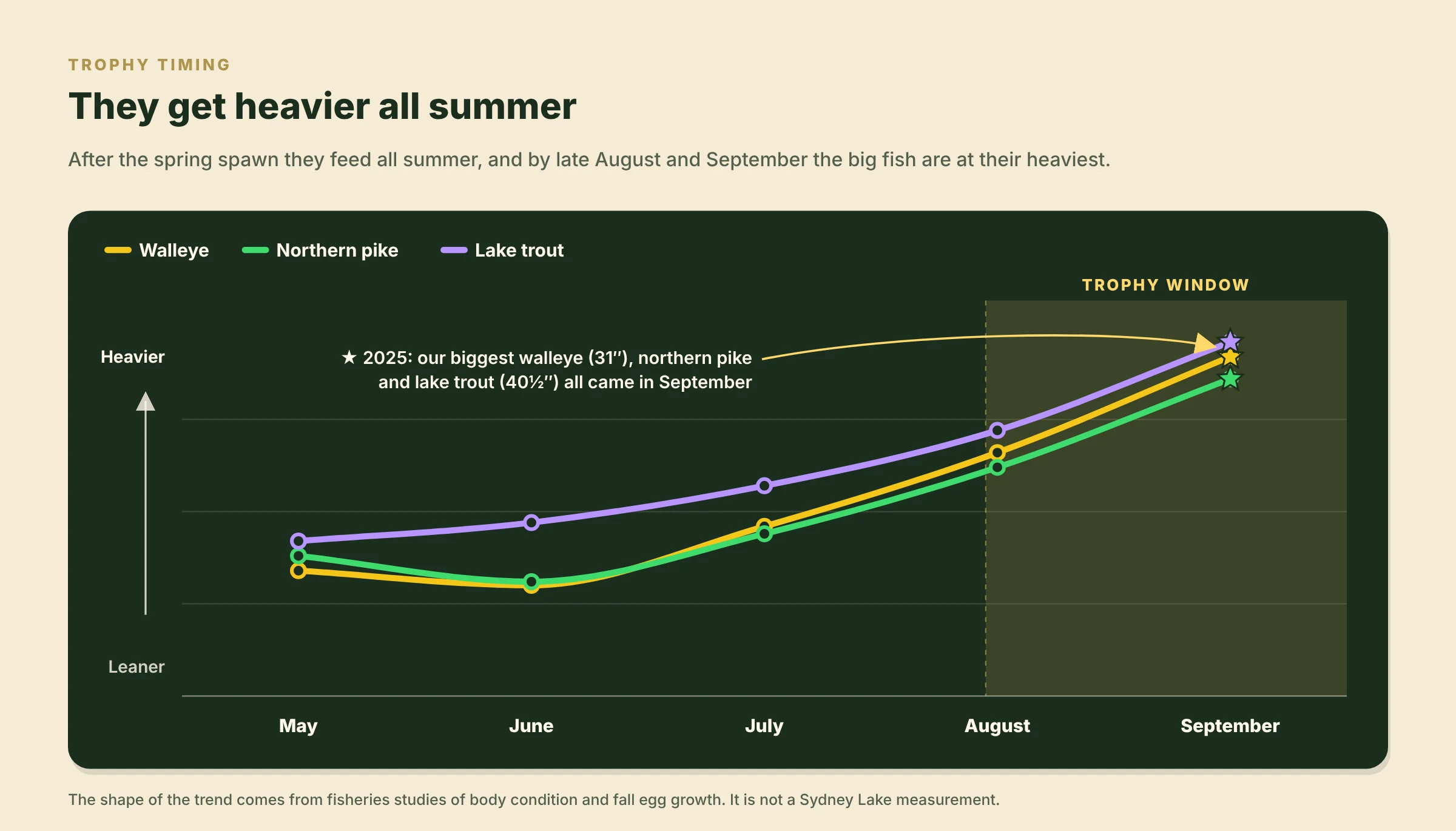
Life at camp
September days end early, so evenings at camp are for the sauna, the fire table and a fish fry with your group.
Your cabin
Each group has its own cabin with a full kitchen, showers, a screened porch and electricity around the clock. Beds are at floor level with good mattresses, and we do the housekeeping, dishes included.
After fishing
Warm up in the sauna, then gather around the fire table in the screened gazebo. On a clear night, look north for the northern lights.
Every day
Your boat is gassed and cleaned every day, and we’ll tell you what’s working and where. Text us for more bait or a hand on the water.
Noon
Shore lunch kits with pots, pans, burners and propane are ready to go. Pick an island, fry up a couple of walleye and watch the colours on the shoreline.
Any day
Want the shoals or the deep humps figured out fast? Our head guide, David Quinlan, can take you out for a day.
Where the fish are
Tap a map to open it with that layer of spots turned on. In September, start with the summer and fall walleye spots and the lake trout shoals. Every group also gets a waterproof lake map, and we’ll mark what’s working that week when you arrive.
Questions
September. On Sydney and Kilburn the fish are at their heaviest, the lake trout come up onto the shoals, the bugs are nearly gone and the fall colours peak in the last week or two. Our season runs to September 30.
Kenora’s September averages are highs of about 63 °F and lows of about 47 °F (17 and 9 °C). Expect frosty mornings and warm afternoons, and pack layers, rain gear and gloves.
Very few. Mosquitoes and deer flies are done by September, though a few blackflies may come back in the last week of the month.
Often. September nights are long and dark, and clear nights give you a real chance, usually from about 10 p.m. by late September. The darkest nights are near the new moon, September 29 in 2027.
Usually in the last week or two of September, when the birch and aspen turn gold against the spruce and pine.
In Zone 2, where Sydney Lake is, lake trout season closes September 30, the same day our camp closes. Walleye and northern pike stay open past our season. Check the current Ontario regulations before your trip.
Fall trips
Tell me which week in September you’d like and how many are in your group, and I’ll let you know what’s open. Every September week brings heavy fish, few bugs and long, dark nights.
More fishing: Walleye · Northern pike · Lake trout · Ontario fishing · Check dates