Spring fishing trips · May 15 to early July 2027
The walleye opener on Sydney and Kilburn Lakes: hungry walleye packed into shallow bays, lake trout off the rocks at first light, black bears at the spawning creeks, fresh green leaves and the longest days of the year.

Spring creek · Hansen’s Bay
May 15
2027 walleye opener
The third Saturday in May. Camp opens the Friday before, and we fish until September 30.
3–12 ft
walleye depth in May and June
Hungry after the spawn, they’re in the creek mouths, dark bays and mud flats.
Apr 25–May 10
typical ice-out
One to two weeks before the opener. Kilburn’s dark bays warm first; Sydney’s deep basin warms slowly.
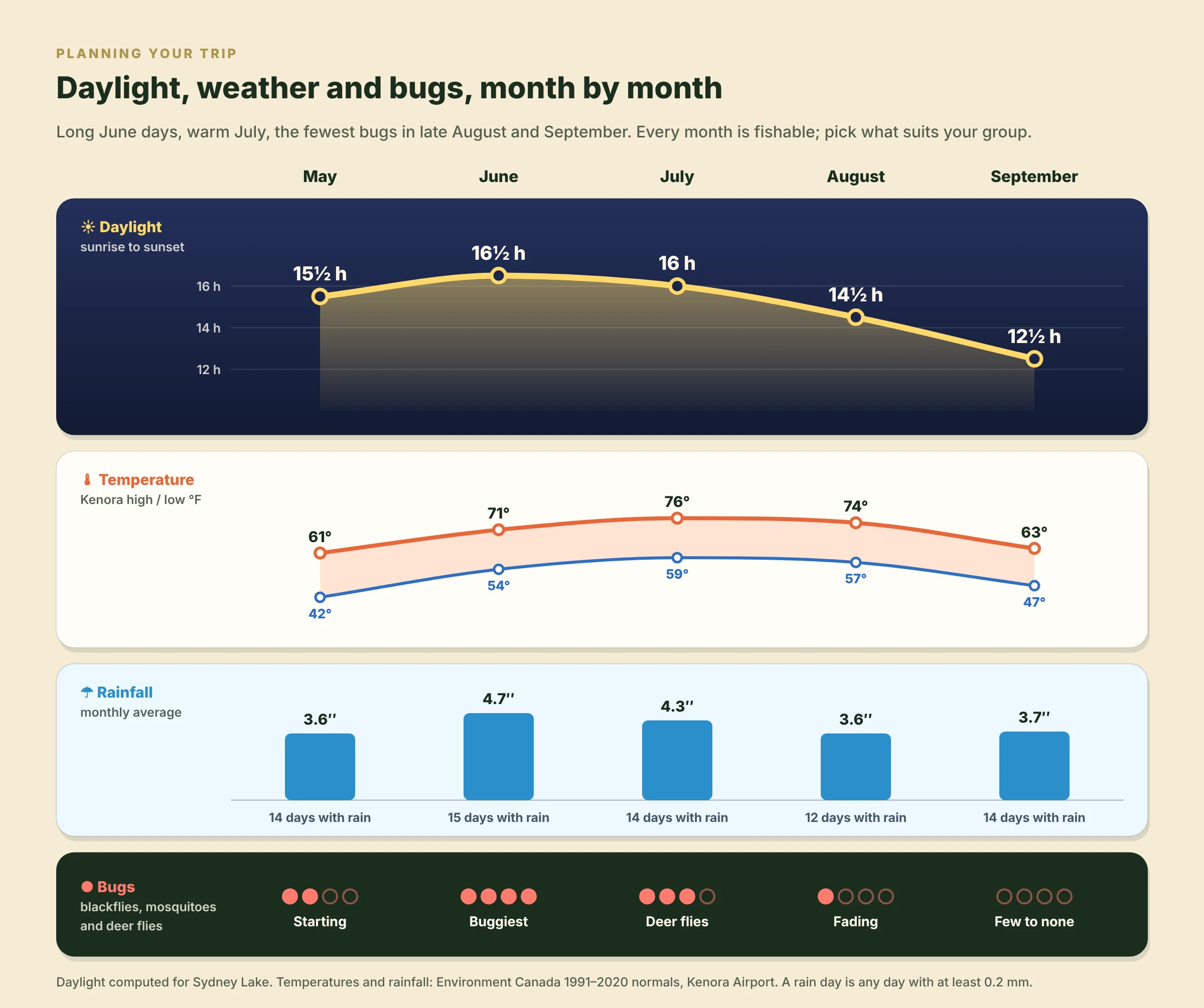
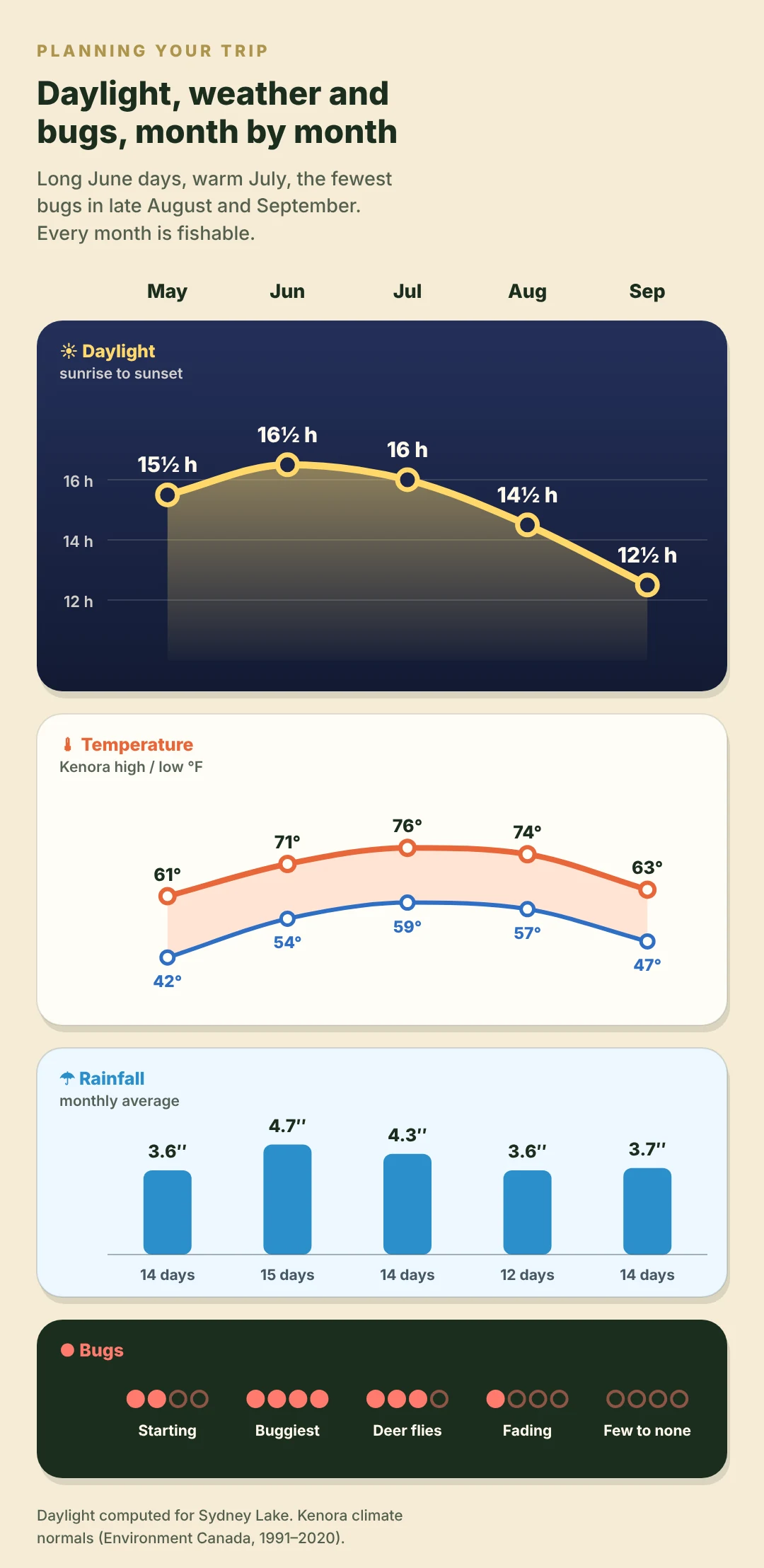
16½ h
of daylight in June
Sunrise about 5:05 a.m. and sunset about 9:35 p.m. at camp, with fishing light past 10.




The whole trip
Fresh green leaves, cold clear water, hungry fish and the longest days of the year. Spring is also bug season, so come prepared; the reward is the shallow-water walleye bite people wait all winter for.
May and June averages
May highs 61 °F, June highs 71 °F
Kenora averages run from highs of 61 °F and lows of 42 °F in May to 71 °F and 54 °F in June (16/6 °C to 22/12 °C). Spring swings more than summer, with frosty mornings and warm afternoons, and June is usually the wettest month.
Pack: layers, rain gear, and neoprene gloves for May.
Late May to mid-June
Blackflies, then mosquitoes
Blackflies come out in late May and are usually gone by mid-June, biting in daylight. Mosquitoes are worst in June at dawn and dusk. Opener week usually comes before the blackflies.
Bring: repellent, and a head net in June.
Ice-out to July
About 45–55 °F in May, 55–68 °F in June
Ice-out comes between April 25 and May 10 almost every year. Kilburn’s dark, shallow bays warm first and pull in the walleye, while Sydney’s deep basin stays cold, which keeps the lake trout shallow until about mid-June.
Try: the dark bays on a sunny afternoon, when they’re warmest.
May and June
At the spawning creeks
Black bears work the creeks while the fish spawn. Good places to look: Sidious Creek in Tranquility Bay, the waterfall at the far end of Boot Lake, Leano Falls at the north end of Kilburn’s Centre Arm and Middle Falls at the north end of Kilburn’s West Arm.
May
Geese, eagles and loons
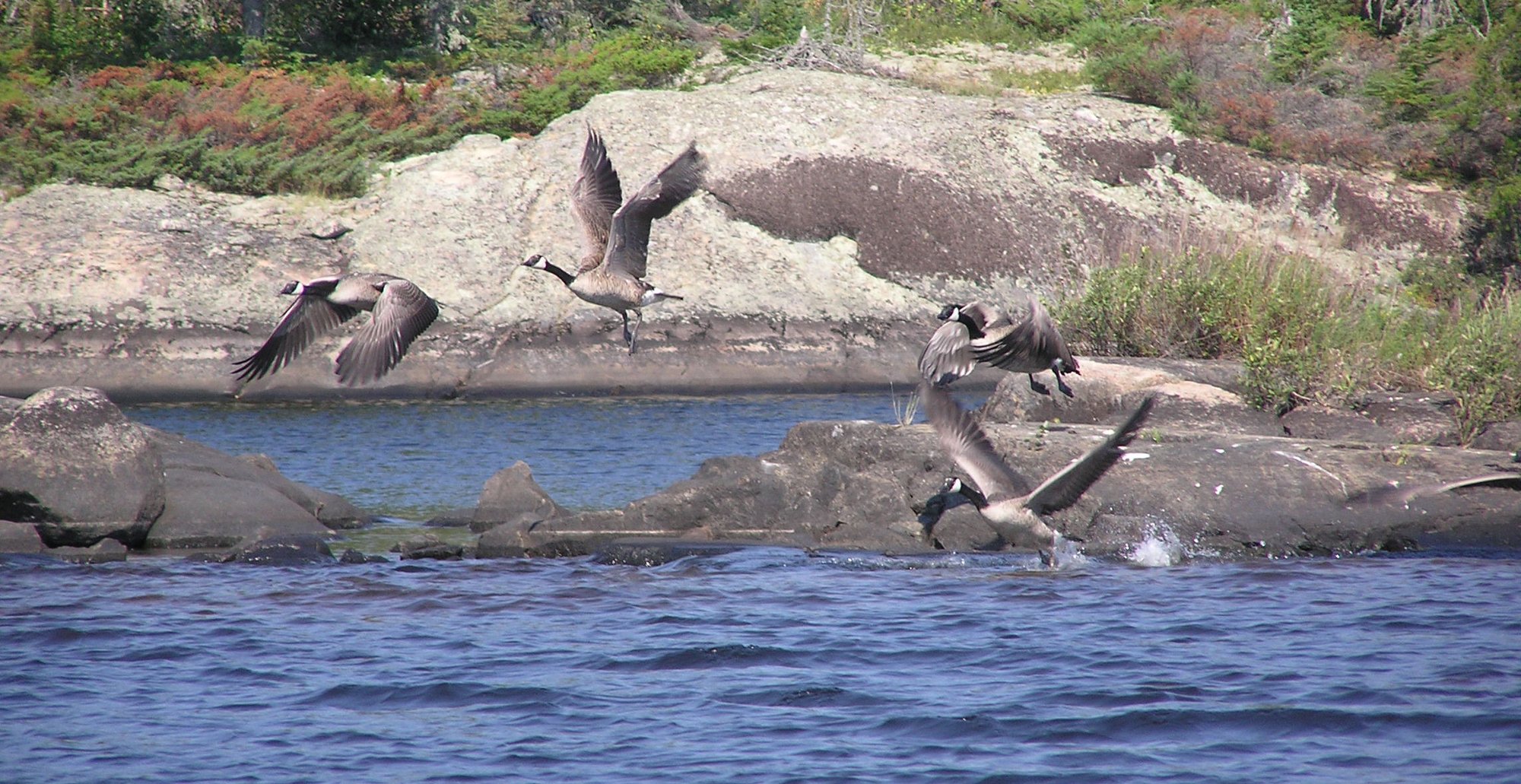
Flocks of Canada geese head north in May. Bald eagles and loons are back on the lake for the season, and woodland caribou are seen on both Sydney and Kilburn, sometimes swimming across.
Late June
Fishing light past 10 p.m.
Near the longest day the sun rises about 5:05 a.m. and sets about 9:35 p.m. at camp, with fishing light until about 10:20. Many groups fish the morning, rest in the middle of the day and go back out after supper.
Late June to early July
Big flies, big feed
The big Hexagenia mayflies hatch off the soft-bottom flats, usually in late June or early July. Walleye spread across the flats to eat the larvae, and slow trolling finds them fastest.
Every spring week
Even in June, our busiest month
One lodge, no roads and no cottages on either lake. Even in June, our busiest month, the boats spread out over about 17,570 acres of water.
The fishing
After the spawn in early to mid May the walleye are hungry, bunched up and shallow, and the pike and lake trout are shallow too.
Walleye · 3–12 ft
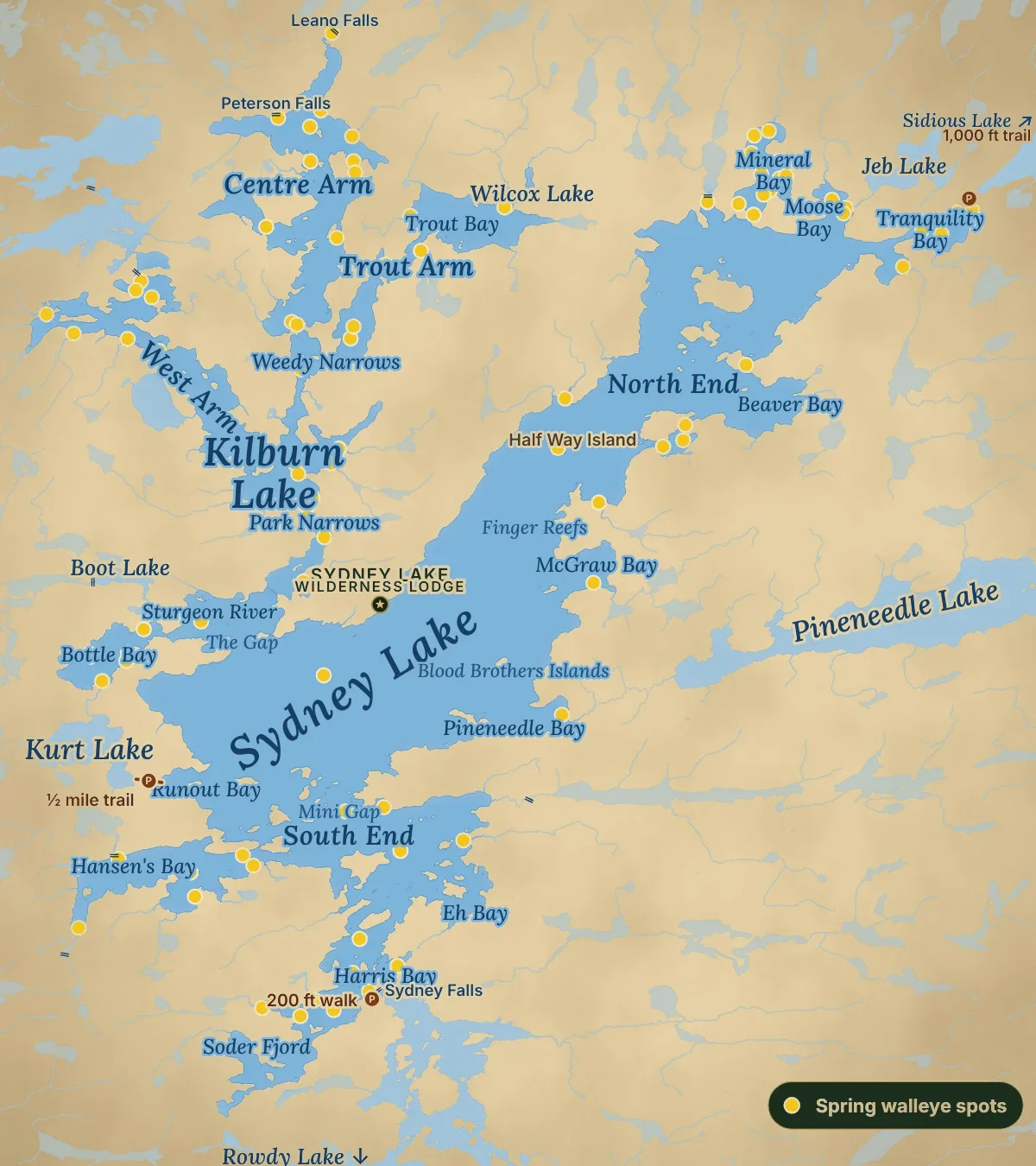
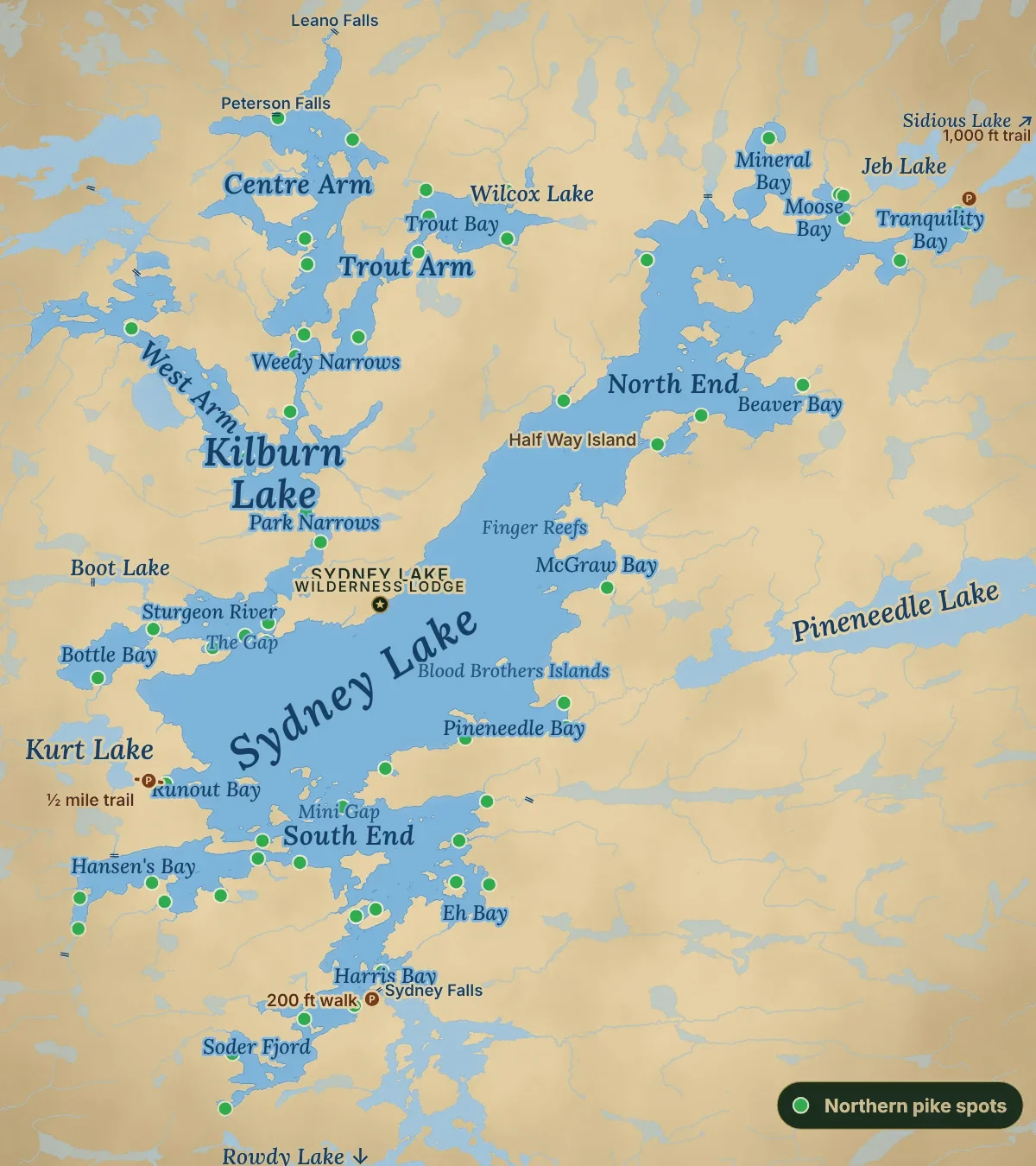
In May, start where creeks push current into the lake and in the dark bays that warm first: Kilburn’s arms and Mineral, Tranquility, Hansen’s and Bottle Bays. In June they settle on the mud flats and weedy edges at 6 to 12 ft, and spread over the flats when the mayflies hatch.
Try: a 1/8–1/4 oz jig and minnow, slow, on the bottom. No fish in 10 to 15 minutes? Move over a bit.
Northern pike · 2–12 ft
Pike spawn first, right after ice-out, and by the opener they’re cruising the same warm bays and creek mouths as the walleye. The big ones often lurk just down the shore from the walleye action.
Try: a spoon cast to the deep and shallow sides of a creek mouth.
Lake trout · surface to 60 ft
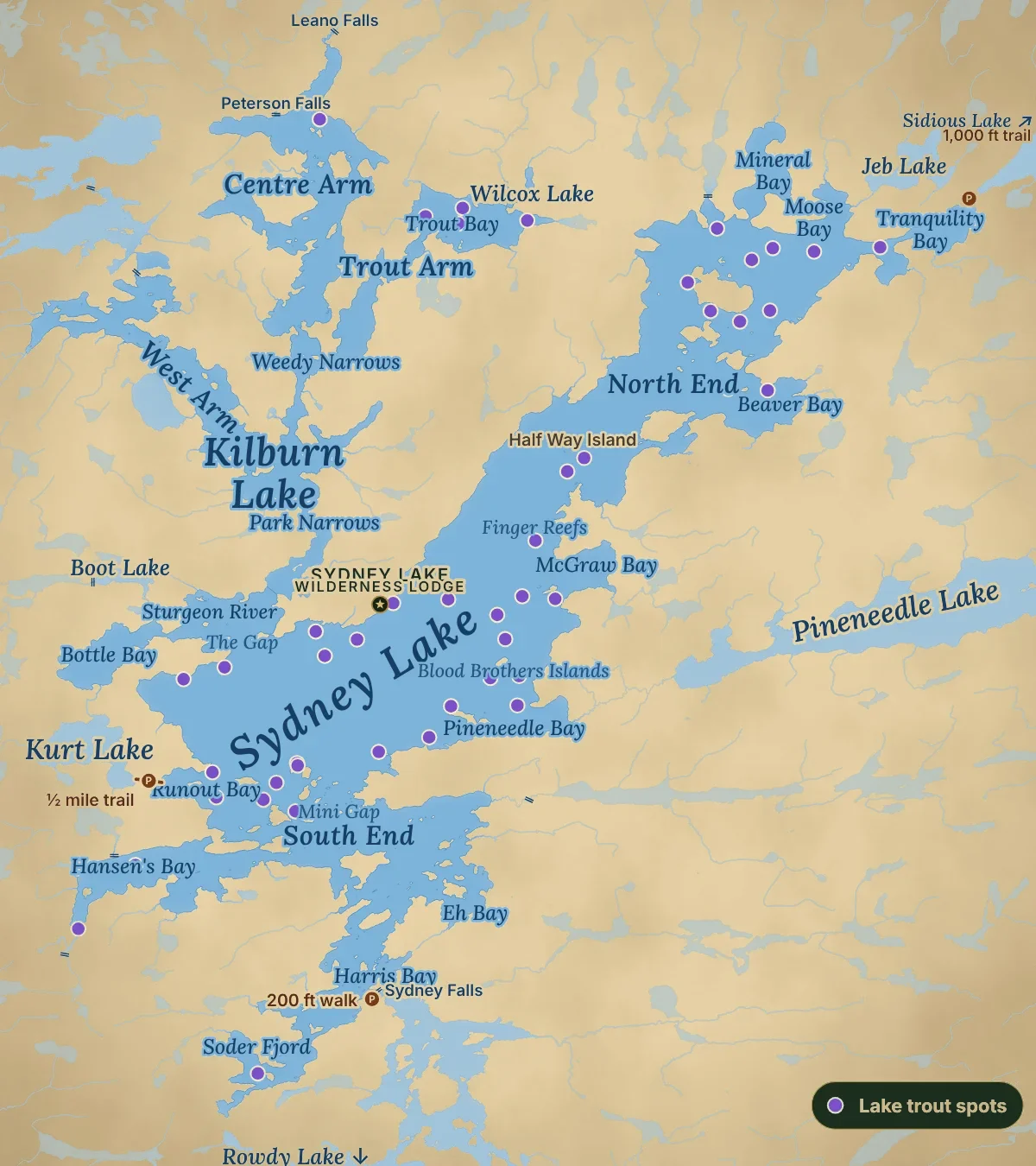
In May the whole lake is cold, so lake trout roam shallow: cast off the rocks at camp at first light. From mid-June, jig the edges of flat plateaus in 40 to 60 feet.
Try: a 1 oz spoon off a rocky point at dawn.
Life at camp
Cool mornings, long evenings and the first shore lunches of the year.
Your cabin
Each group has its own cabin with a full kitchen, showers, a screened porch and electricity around the clock. Beds are at floor level with good mattresses, and we do the housekeeping, dishes included.
Bug season
When the bugs are out, the screened porches and the screened gazebo with its fire table are where groups gather after fishing.
After a cold morning
May mornings on the water can be cold. Warm up in the sauna before supper.
Every day
Your boat is gassed and cleaned every day, and we’ll tell you what’s working and where. Text us for more bait or a hand on the water.
Noon
Shore lunch kits with pots, pans, burners and propane are ready to go. Pick an island and fry up a couple of walleye: you can keep two per angler per day, 18 inches and under.
Where the fish are
Tap a map to open it with that layer of spots turned on. In May and June, start with the spring walleye spots: creek mouths, dark bays and mud flats. Every group also gets a waterproof lake map, and we’ll mark what’s working that week when you arrive.
Questions
Any week from the opener, May 15 in 2027, to early July. Walleye are shallow and hungry after the spawn in May, settle into the bays and mud flats in June, and spread over the flats during the mayfly hatch in late June or early July.
In Zone 2, where Sydney Lake is, walleye season opens the third Saturday in May: Saturday, May 15, 2027. Our camp opens the Friday before. Check the current Ontario regulations before your trip.
Usually around May 5, and between April 25 and May 10 almost every year, one to two weeks before the opener. Kilburn’s dark bays warm first.
Blackflies arrive in late May and are usually gone by mid-June, and mosquitoes are worst in June at dawn and dusk. Opener week usually comes before the blackflies. Bring repellent, and a head net in June.
Kenora averages highs of 61 °F in May and 71 °F in June, with lows of 42 °F and 54 °F (16/6 °C and 22/12 °C). May mornings can be frosty, and June is usually the wettest month.
Usually in late June or early July, off the soft-bottom flats. Walleye spread out over the flats to feed on the larvae, and slow trolling finds them.
Spring trips
June is our busiest month and fills first, so tell me early which week you’d like and how many are in your group, and I’ll let you know what’s open.
More fishing: Walleye · Northern pike · Lake trout · Ontario fishing · Check dates