Fly-in lake trout fishing · Northwest Ontario
Sydney Lake’s main basin drops to 240 feet and is full of cisco for lake trout to feed on. Catch lakers shallow in spring and fall, deep on the humps all summer, with trophies to 41 inches. Thirty minutes by float plane north of Kenora, Ontario.

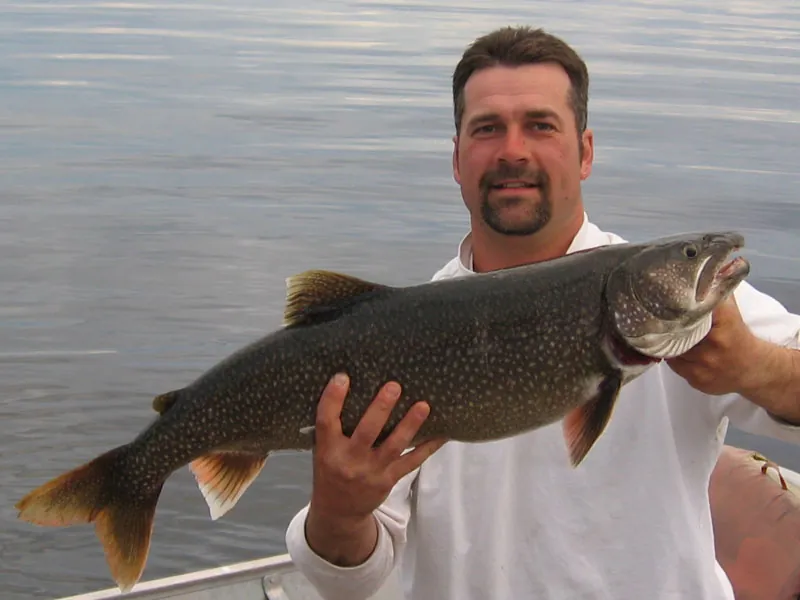
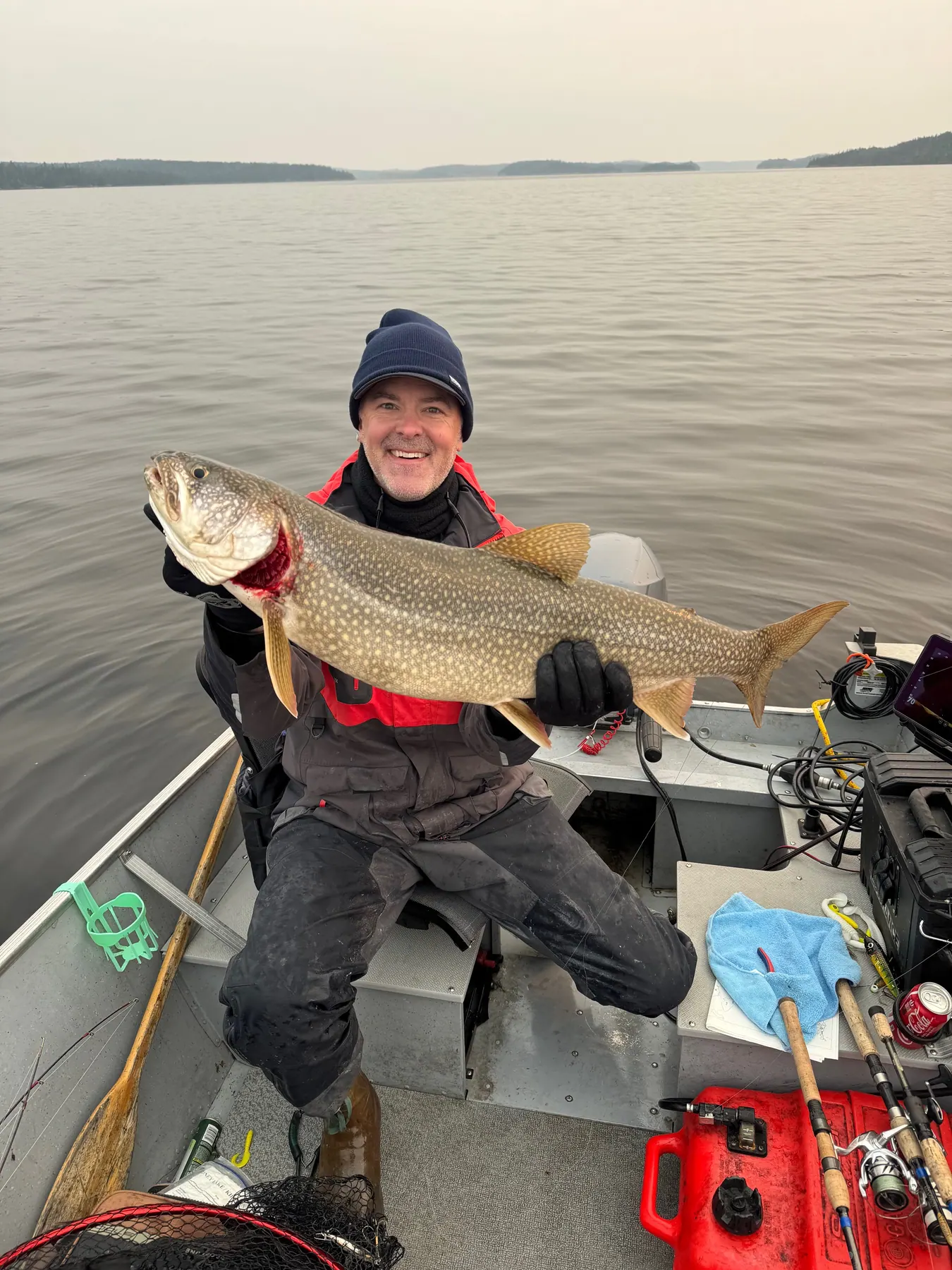
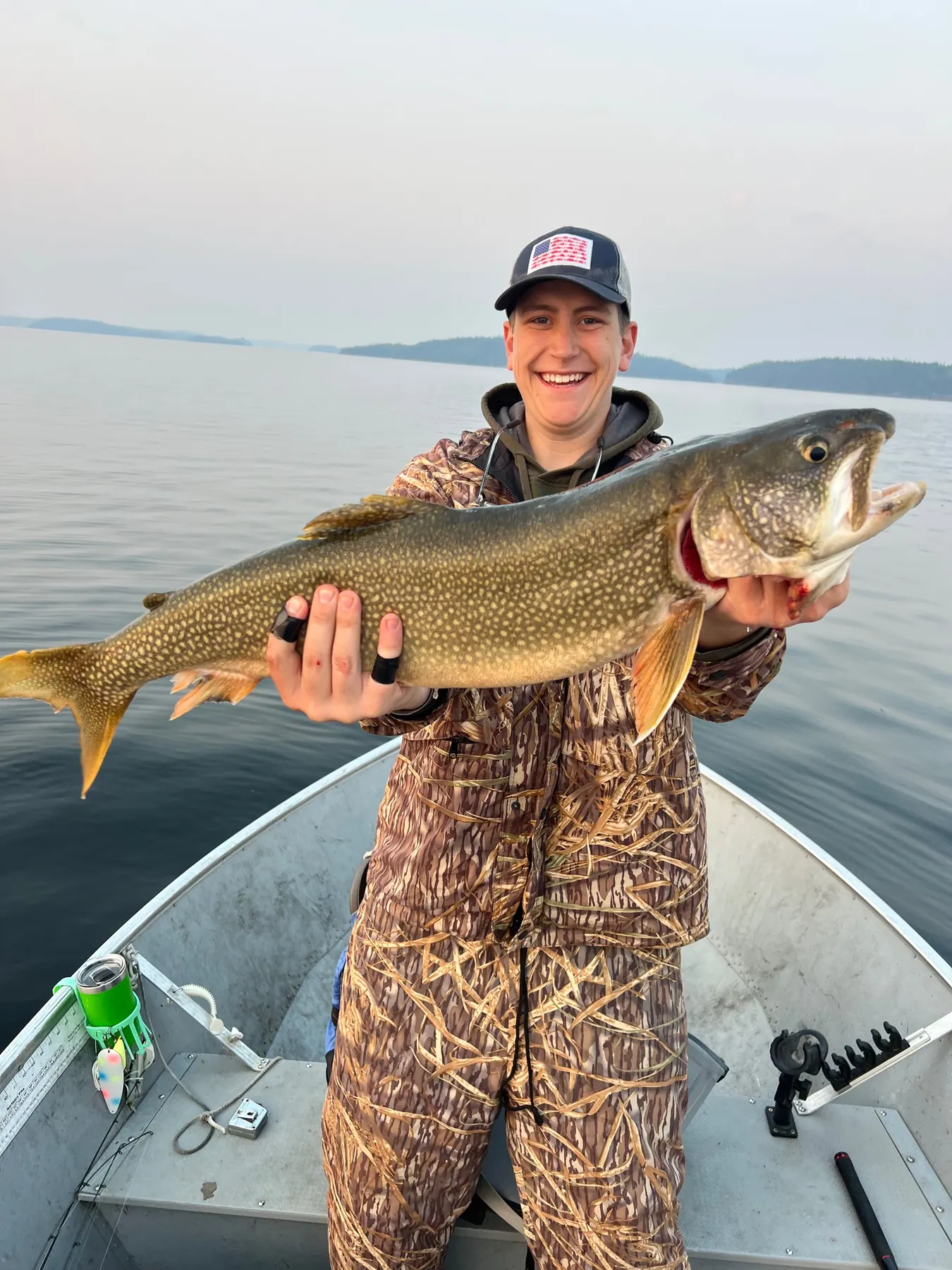
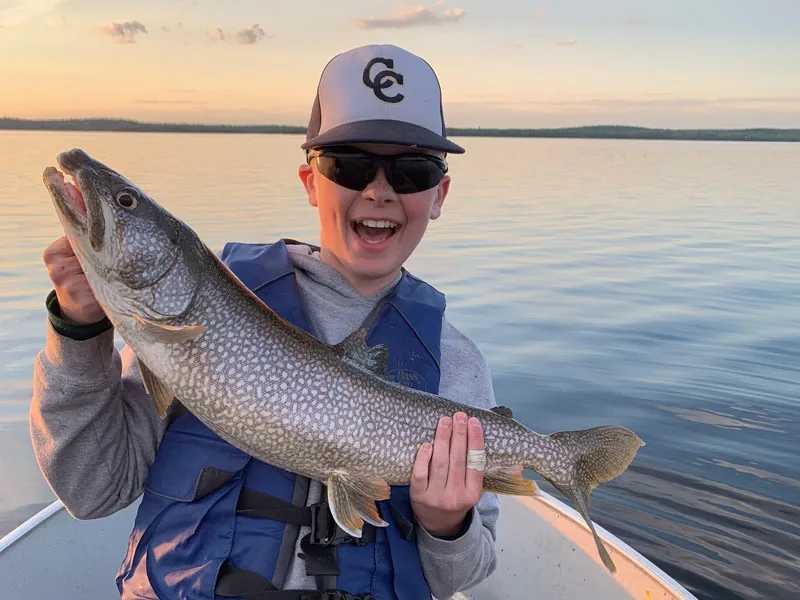
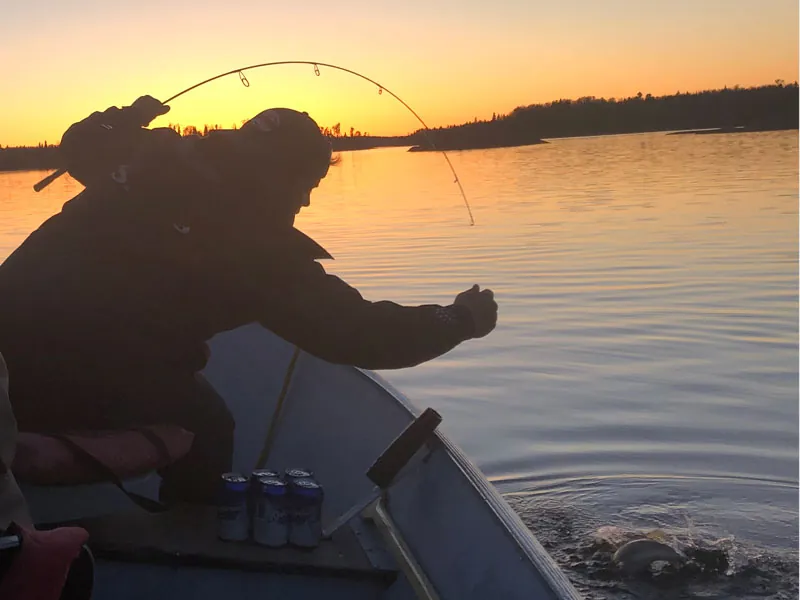
A Sydney Lake laker at sunset · July 2025
3
kinds of lake trout
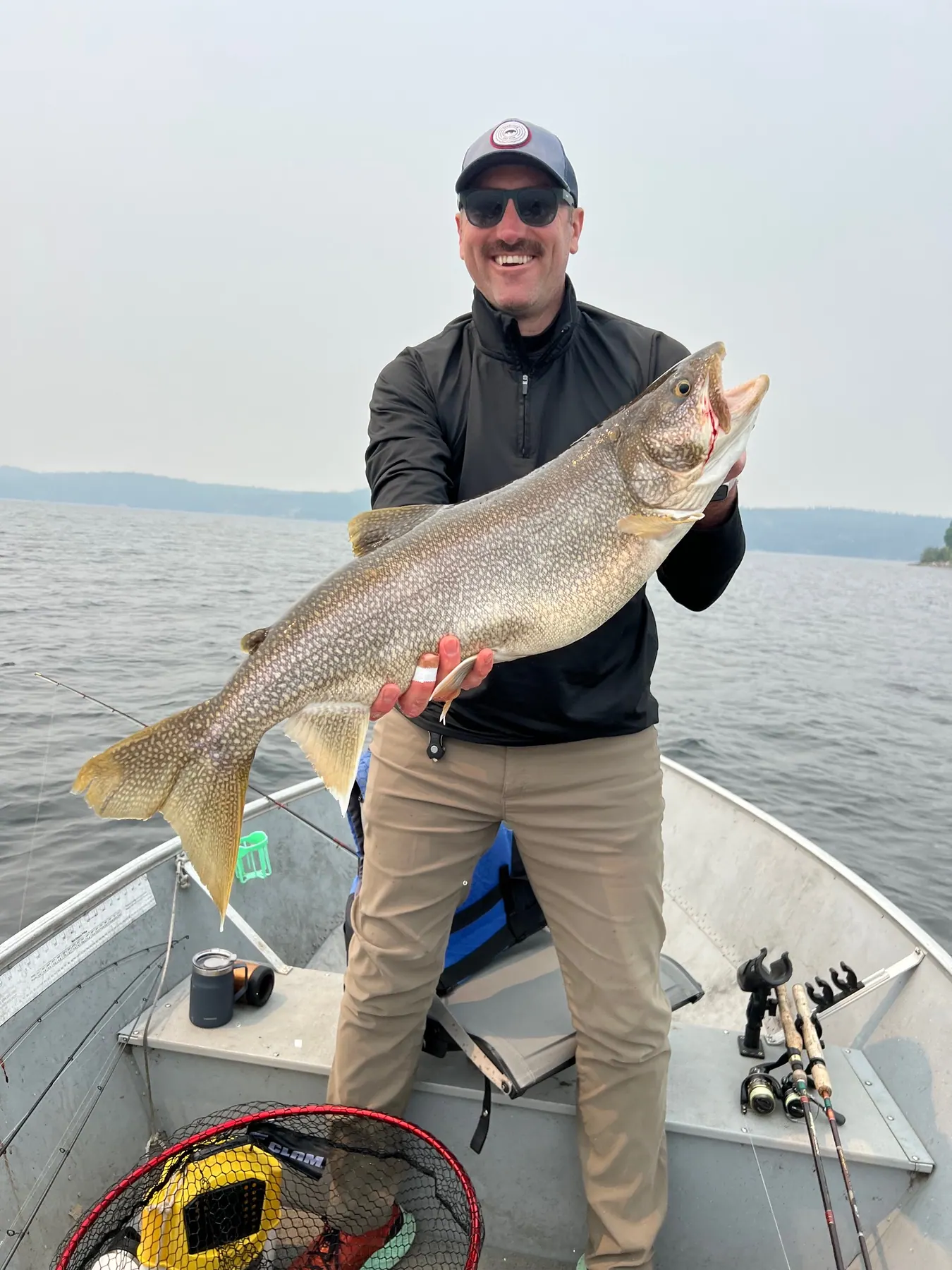
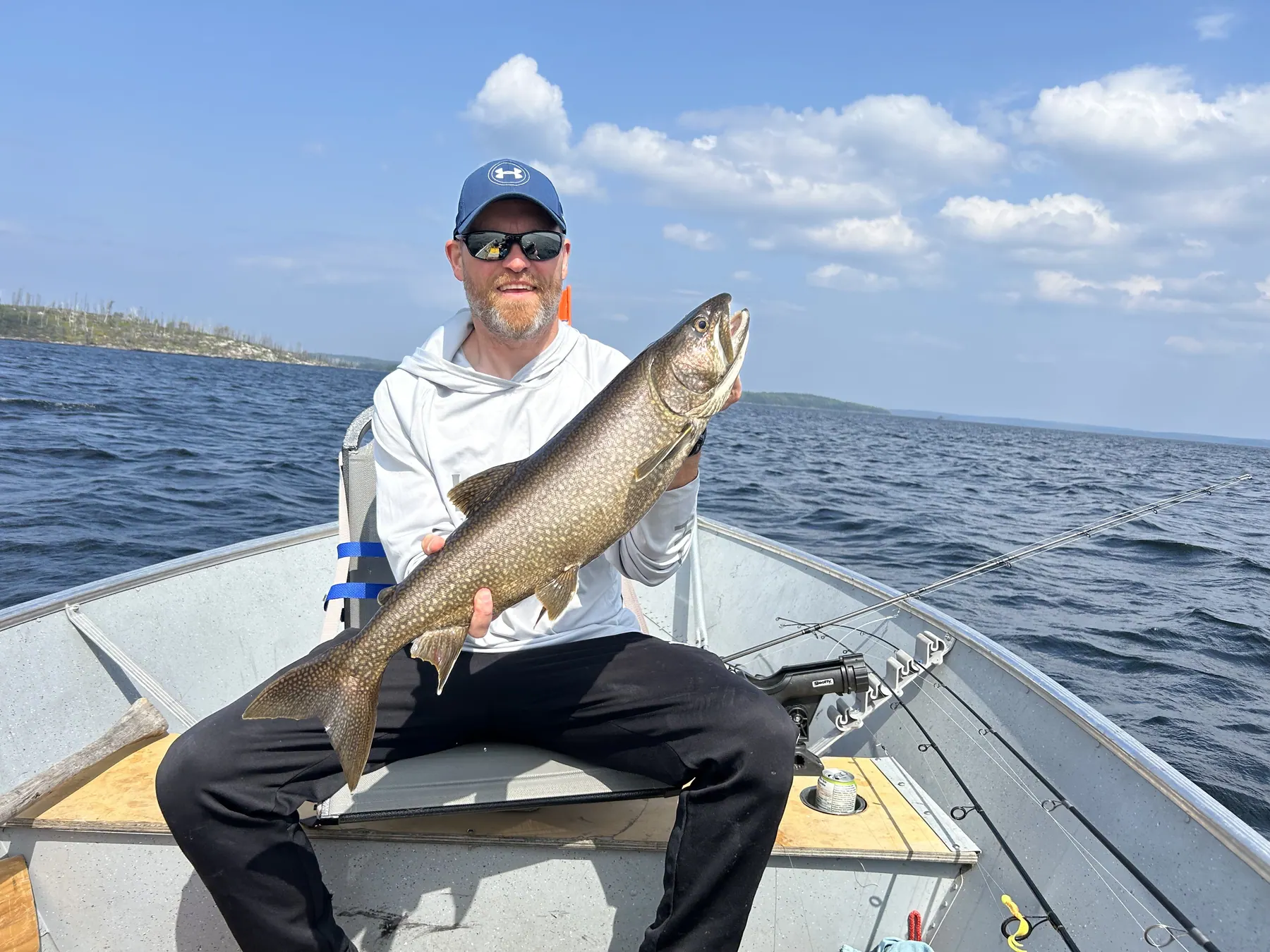
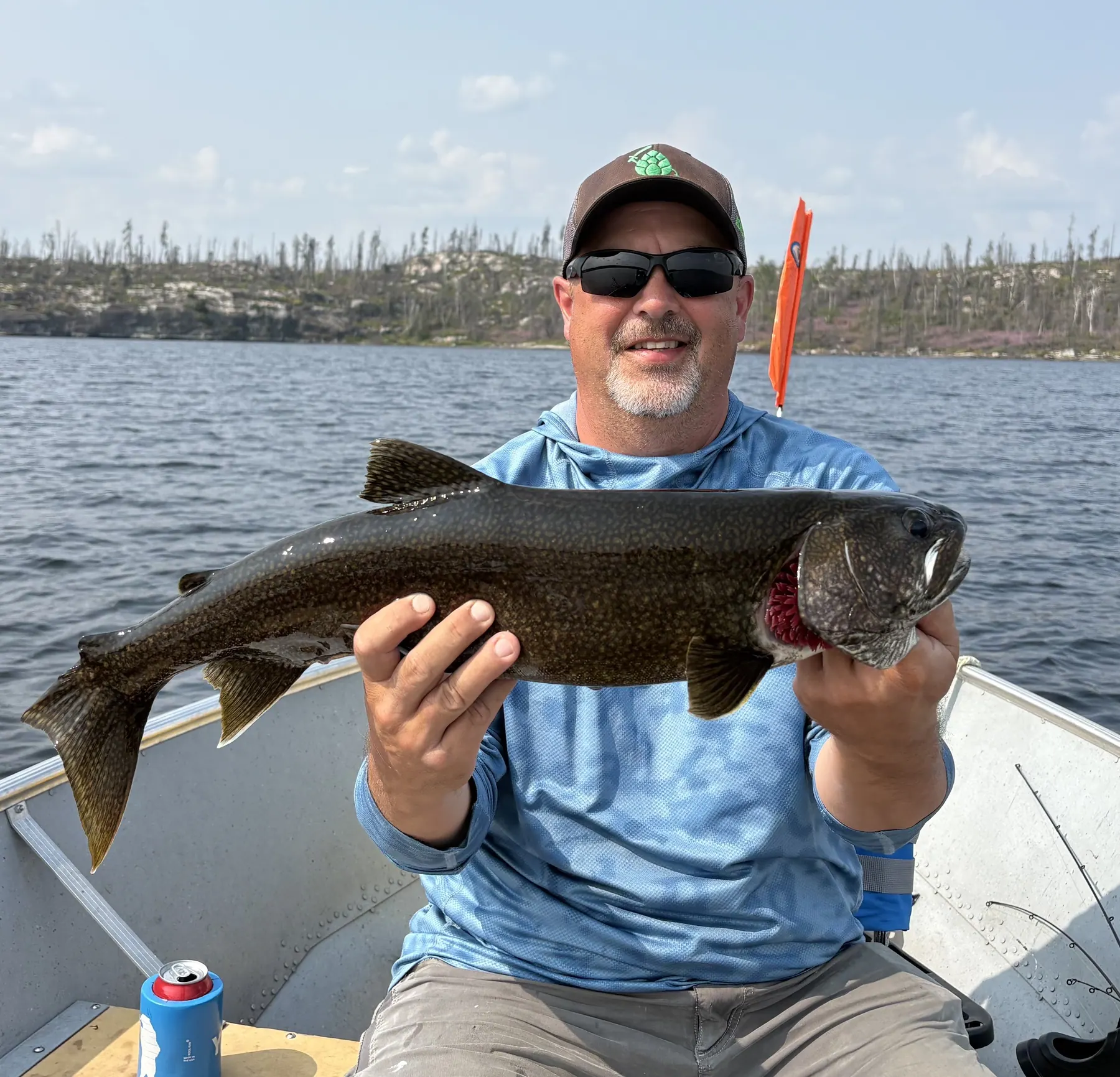
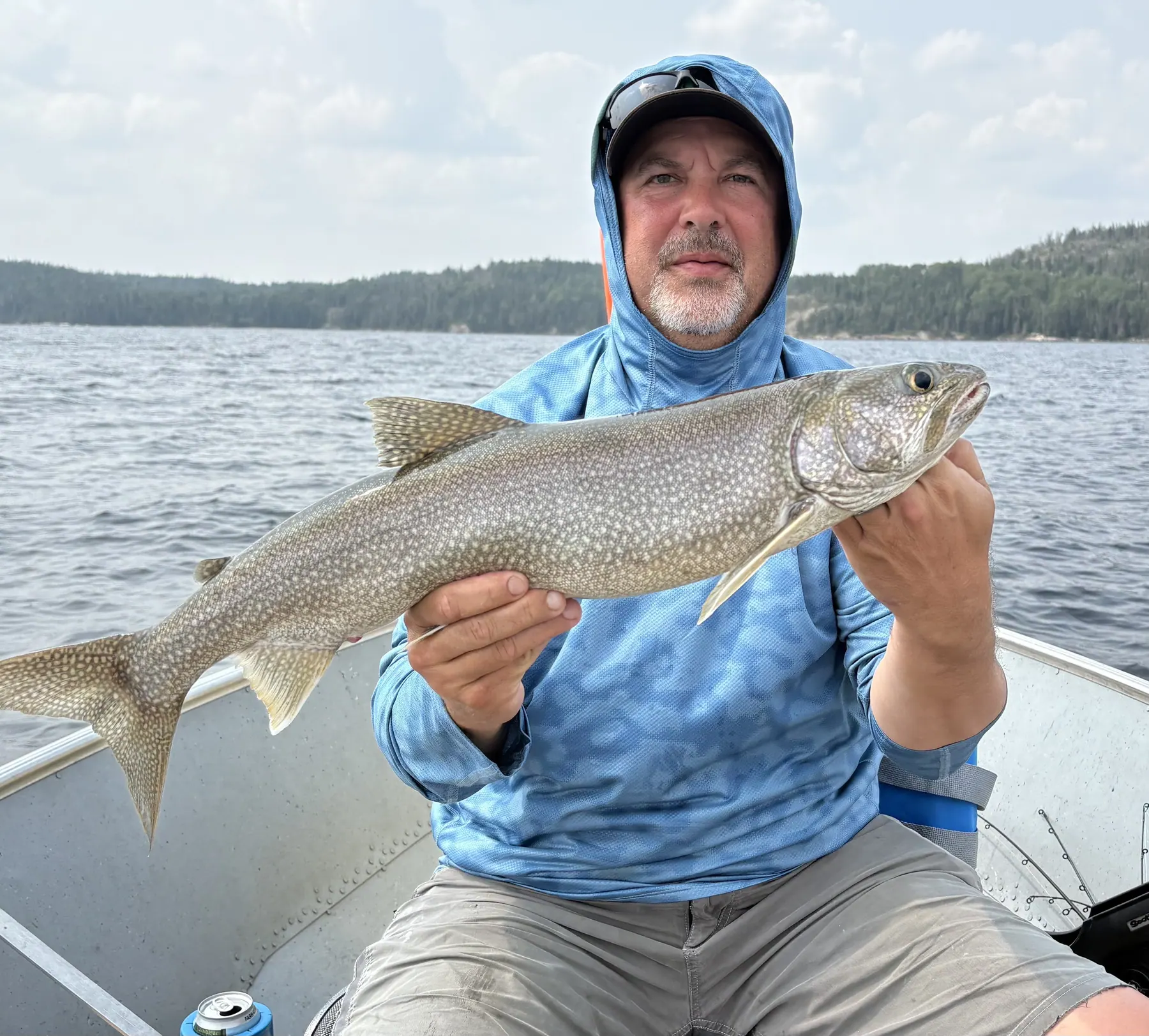
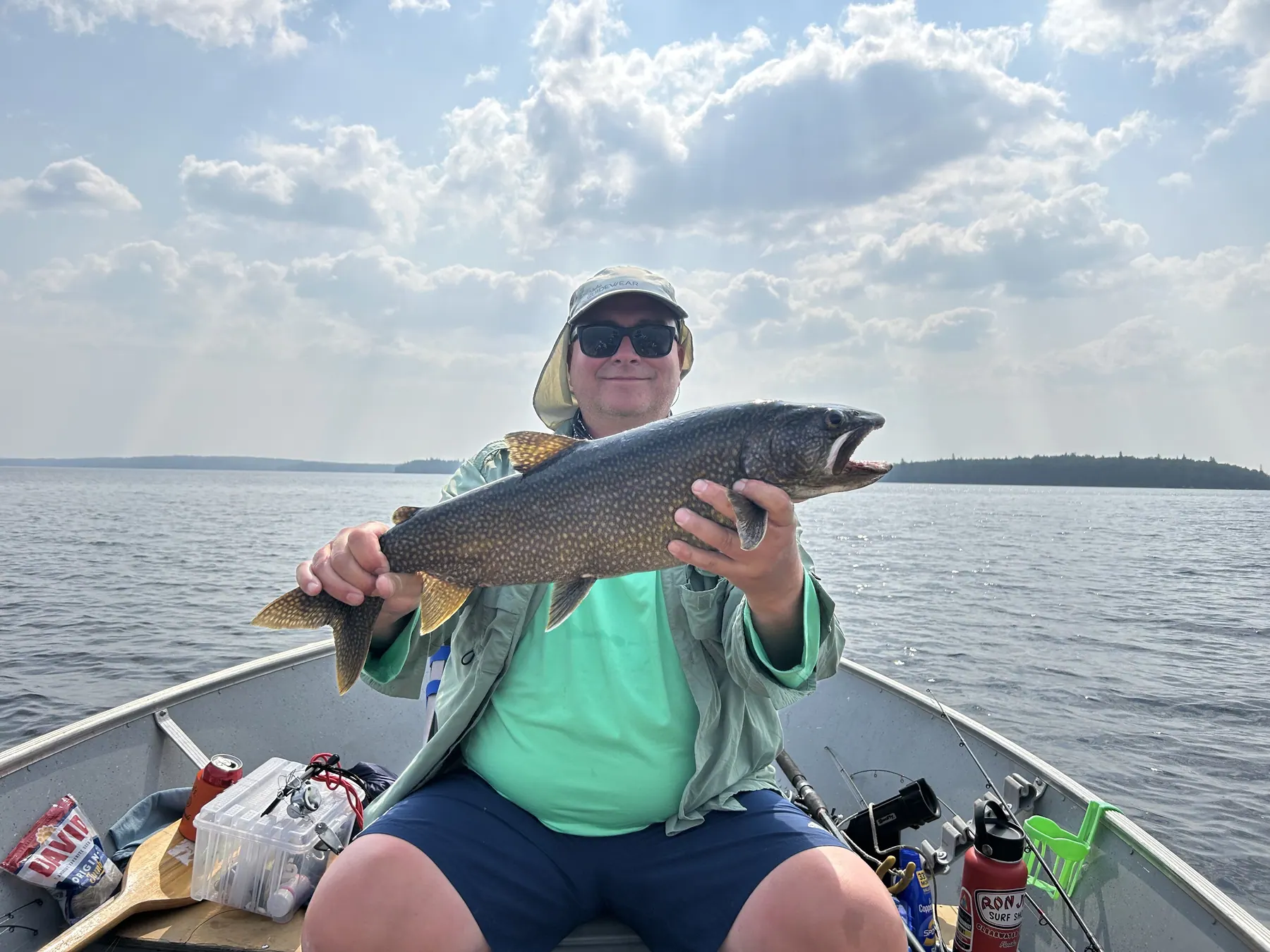
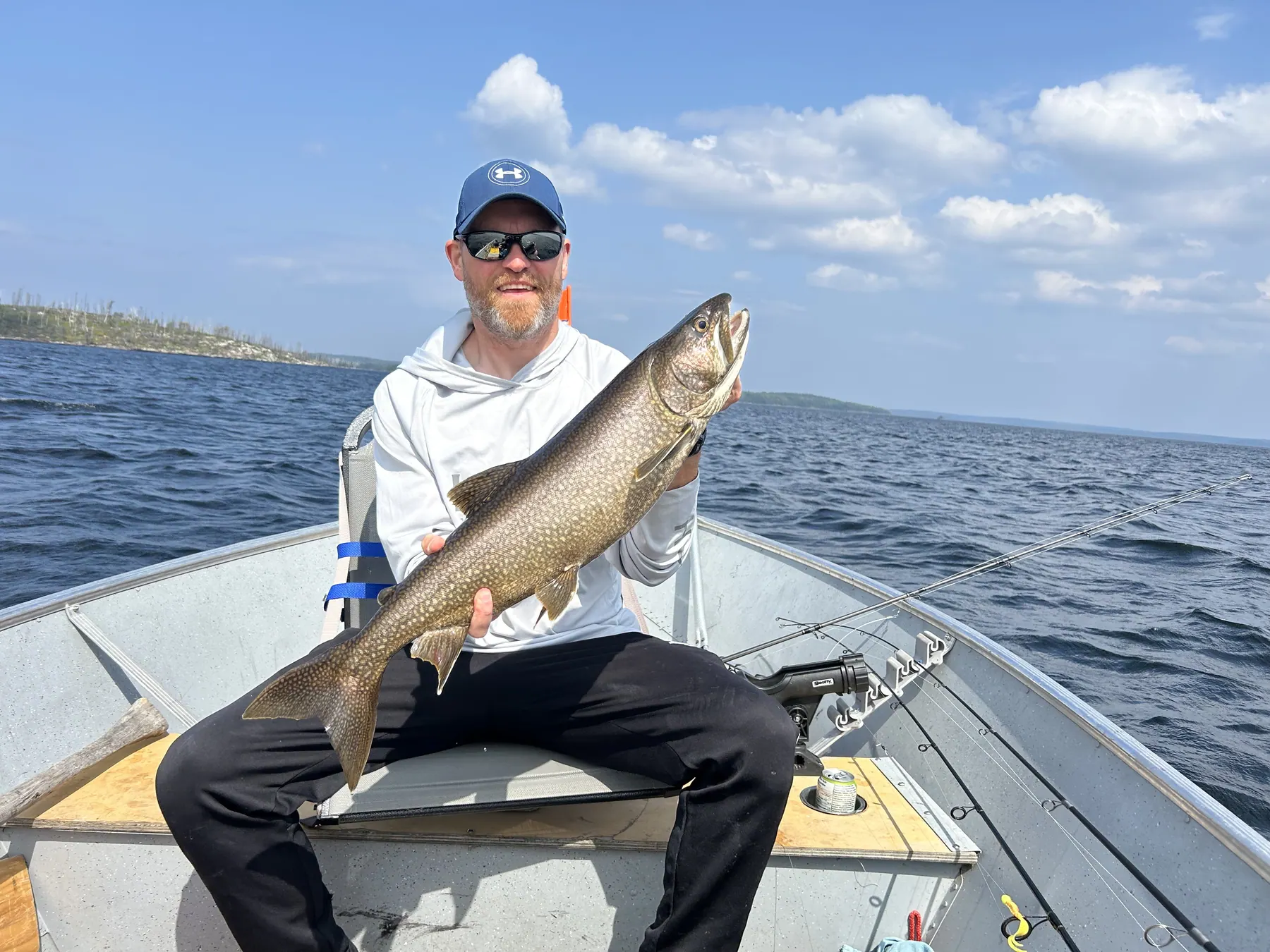
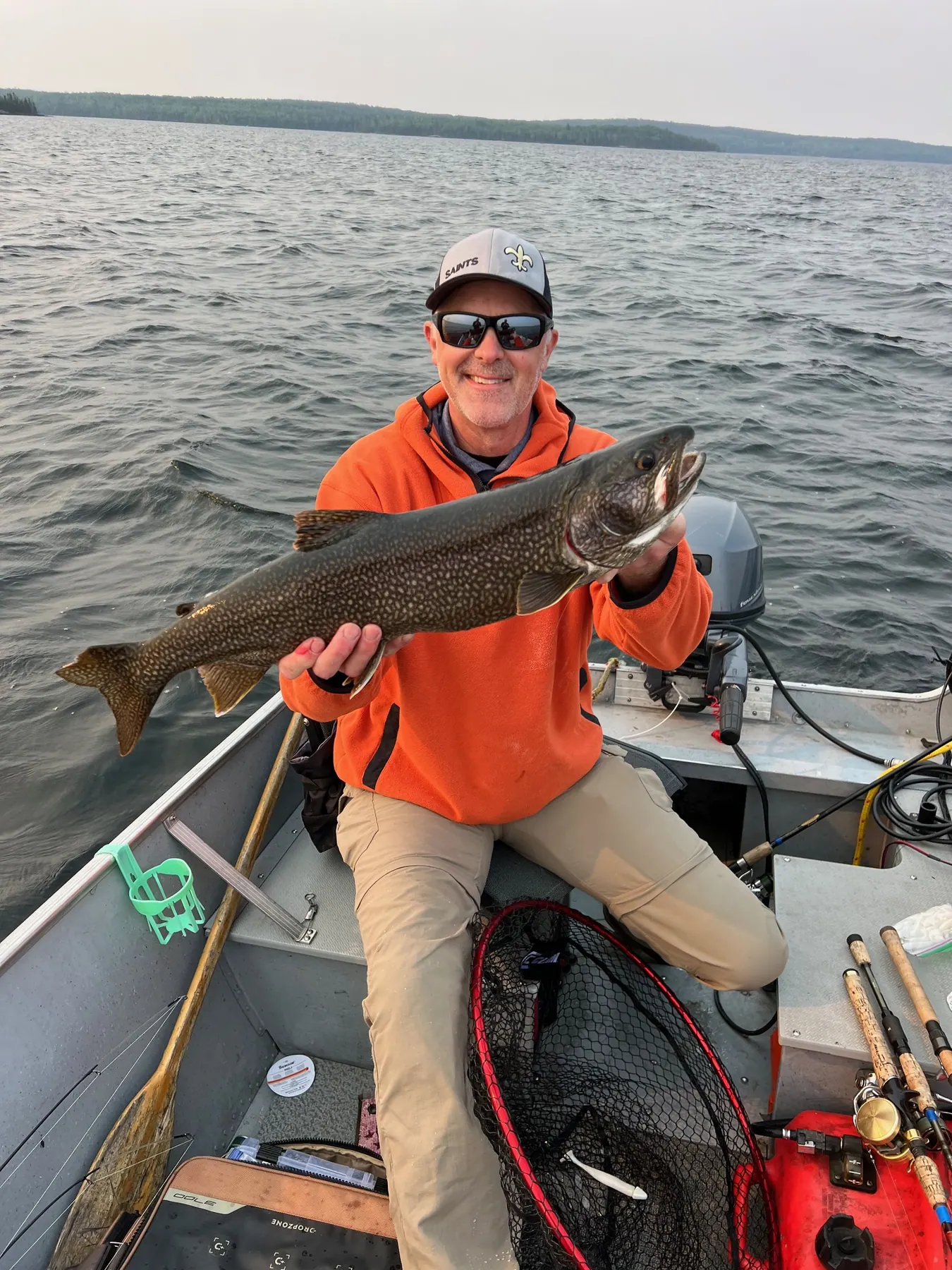
Near-black, brown and silver lakers, shaped by where they feed.
240ft
deep main basin
Sydney averages 65 feet deep, with a big area over 200 feet. Cold, clear and full of cisco.
41″
Trophy Waters winner
Biggest lake trout in all of Ontario’s Trophy Waters in 2016. Sydney Lake guests have won it again and again.
100%
wild fish
No stocking, ever. Lakers over 30 inches go back in the lake to grow.







Why lakers thrive here
Lake trout need deep, cold, clean water, and Sydney has a lot of it. The main basin drops to 240 feet and averages about 65 feet deep, with a large area of water over 200 feet. That’s a lot of lake trout habitat for one lake.
That deep water is full of cisco (tullibee), a small, oily whitefish that lake trout grow fat on. Around the edges, many shallow, dark bays and creeks feed the whole system. The mix of warm, tea-stained bays and a big, cold main lake makes our water highly productive.
The pressure stays low: one lodge, no roads or cottages, no stocking and conservation fishing since 1987. Big lakers go back in the lake to keep growing.
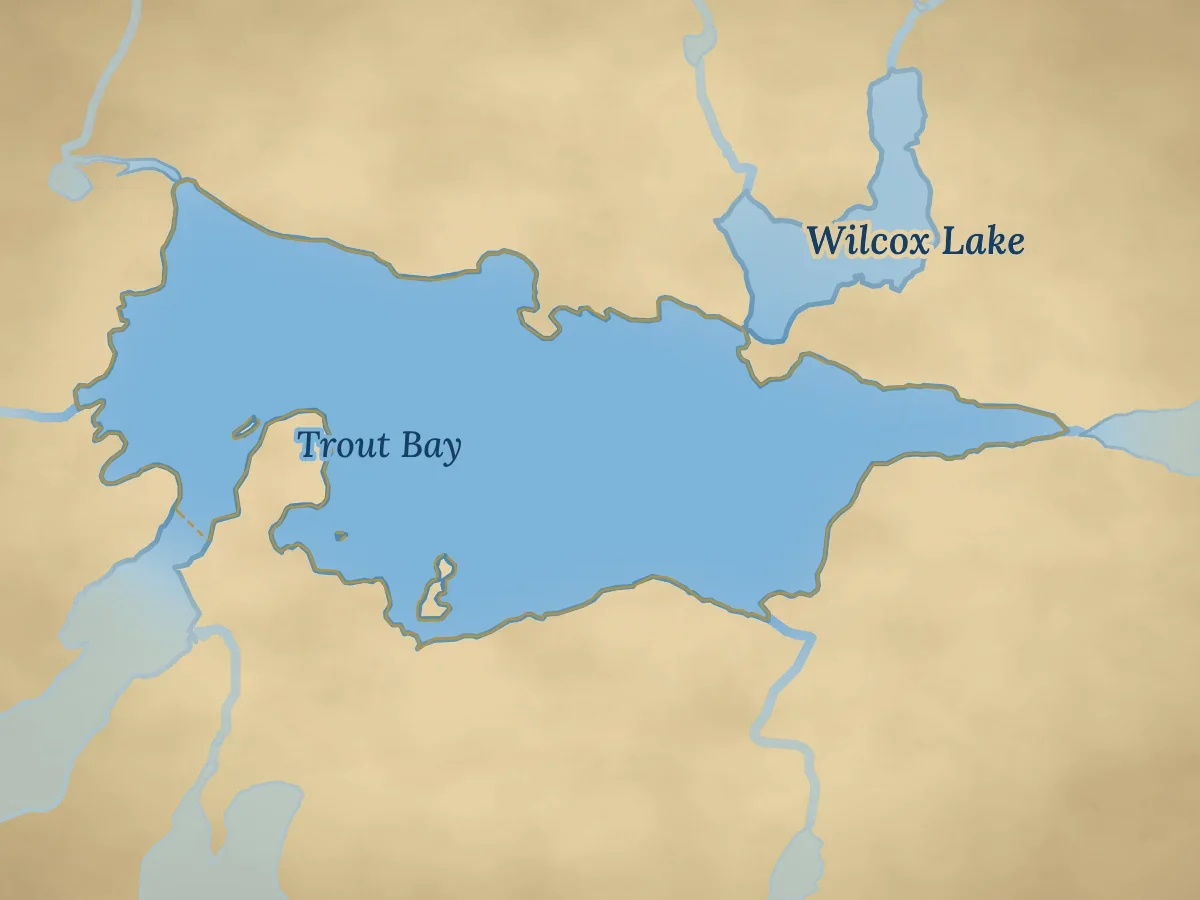
Kilburn Lake has deep water too. Trout Bay, at the end of Kilburn’s Trout Bay Arm, is ringed by high cliffs and drops past 200 feet. As the name says, it’s the best place to catch trout on Kilburn.
Why these lakes →Trophy lake trout
The biggest lake trout registered each season across Ontario’s Trophy Waters wins a free trip the next year. These Sydney Lake fish took the title.
33½″
2019 · Jon Edstrom. Biggest lake trout of the season in Trophy Waters.
38–38½″
2015 and 2017. Terry Davis (38½″) and Glen Lefko (38″), each the season’s winner.
39″
2014 · Todd Peterson. Top lake trout in Trophy Waters that year.
40½″
2025 · Roger Anderson. Caught September 24, near the end of the season.
41″
2016 · Tom Long. The biggest on our list so far.
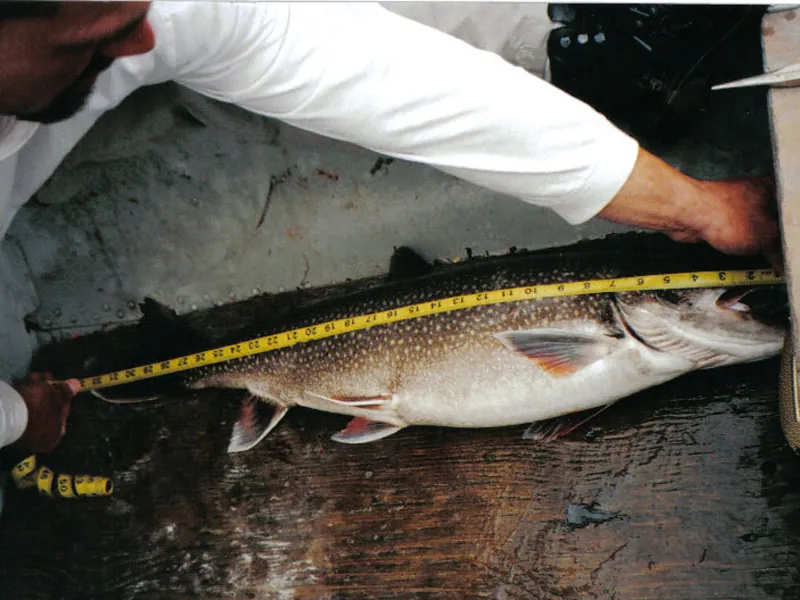
In Ontario’s Trophy Waters a lake trout 32 inches or longer is a trophy. Register yours at camp with a witness and a photo. Lake trout are measured for length and girth, which gives an estimate of weight. Then let it go to grow and be caught again.
When to come
Lake trout follow the cold water. Our season opens the third Saturday in May (May 15 in 2027) and runs to September 30. The fishing is good the whole way through; what changes is depth, as the lakers move from the shallows to the deep and back again.
Mid May to early June
Shore to 45 ft · cold water top to bottom
Right after ice-out the water is cold all the way up, so lake trout roam shallow. In mid May you can catch them from shore right at camp. Early mornings and evenings are best.
Try: casting spoons off rocky points; trolling 25–45 ft in front of camp.
Mid June to end of July
40–60 ft off the break
As the surface warms, lakers drop to the edges of big, flat plateaus. Jigging is best from mid June to the end of July, often around 55 feet. With light tackle and a little practice you can catch them in walleye-like numbers.
Try: Getzit tube jigs and airplane jigs on the drop-off.
July and August
50–70 ft plateaus · trophies 90–120 ft
Once the surface passes about 58°F, lake trout go deep and settle in water of about 46–54°F. They’ll still move out of position to feed. Fish the edges of 50 to 70 foot plateaus where they drop into deeper water.
Try: deep trolling with plenty of weight, or vertical jigging over the humps.
September
Rocky shores and reefs · surface to 20 ft
Lakers start September about 70 feet down and come up roughly 15 feet a week. By the last week they’re on the boulder patches, reefs and rocky shores, getting ready to spawn. After a summer of feeding on cisco they’re at their heaviest, and casting can be fast and furious. Roger Anderson’s 40½-inch Trophy Waters winner came on September 24, 2025.
Try: bright spoons like Little Cleos, cast toward shore and back out.
Black, brown and silver
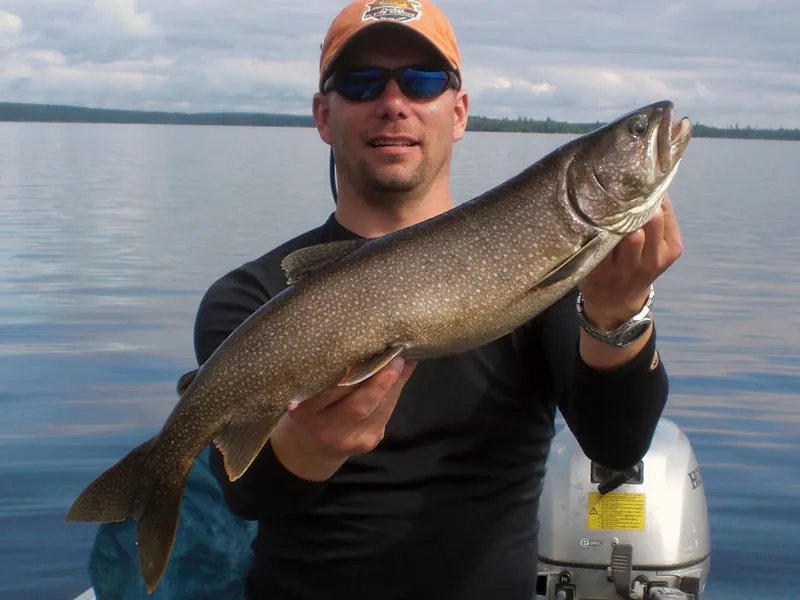
Our shallow, dark bays and deep, clear main lake feed lake trout differently, and it shows. Guests catch three distinct types of laker, each with its own skin and flesh colour.
Trout Bay, Kilburn
Near-black skin · white flesh
The darkest of our lake trout, almost black. They’re most common in Trout Bay, the large, deep bay at the end of Kilburn Lake’s eastern arm.
Look for: a dark back that looks nearly black in the water.
Rare
Brown skin · orange flesh
Brown-skinned lakers with orange flesh are the rarest of the three. If you land one, take a good picture before it goes back.
Look for: a brown body instead of grey or silver.
Silvery
Light silver skin · pink, salmon-coloured flesh
A bright, silvery lake trout with pink, salmon-coloured flesh. Three types in one lake makes for more interesting trout fishing, and good stories at shore lunch.
Look for: a light, silvery body and pale spots.
Why the difference
Shallow dark bays + deep clear lake
Our many shallow, dark bays and the big, deep main lake make highly productive feeding zones, with plenty of food for a large population of lake trout. Differences in feed appear to produce the three types.
Try: catching all three in one trip.
Where to find them
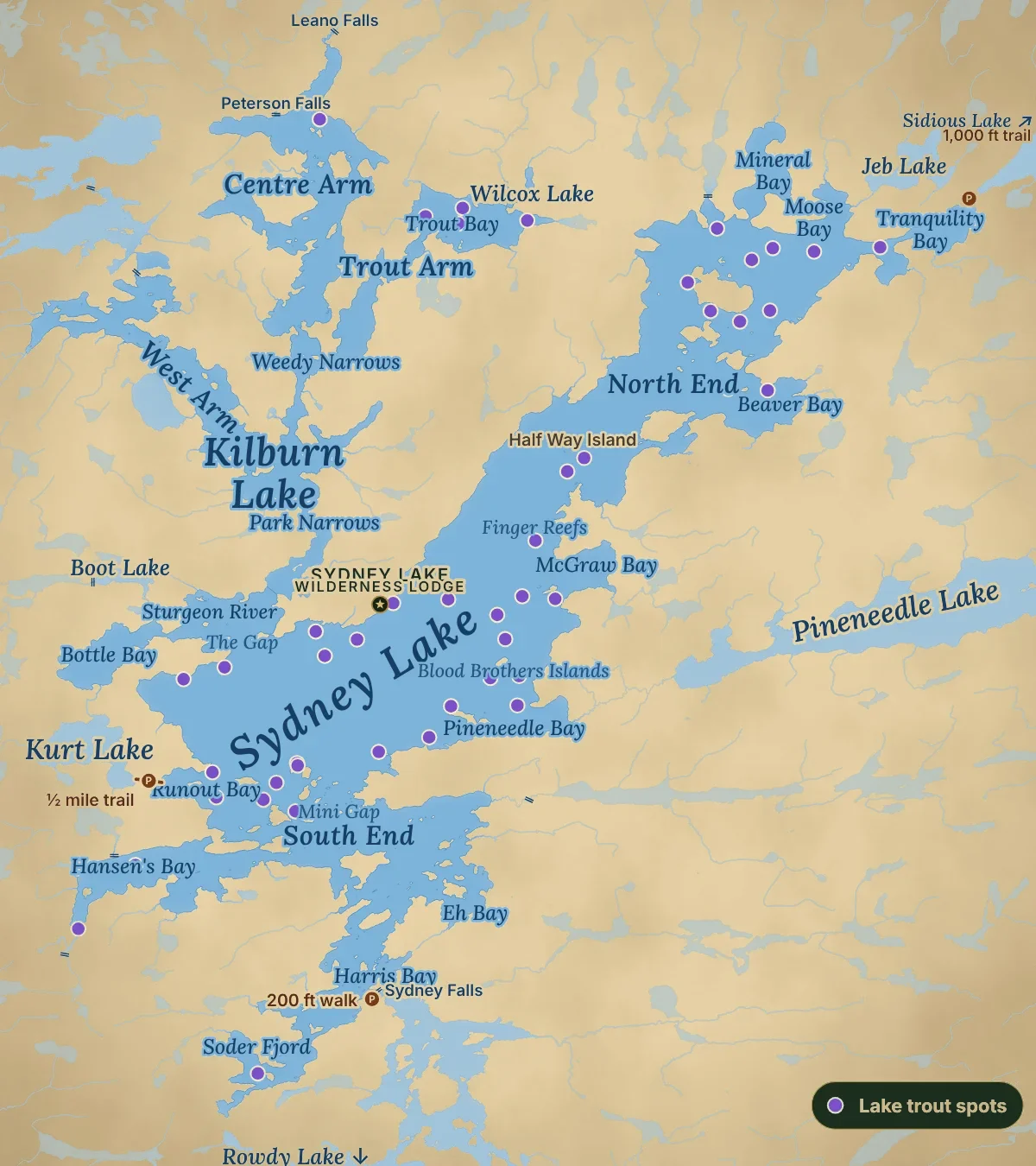
Every group gets a waterproof lake map. We’ll mark the trout spots, and the depths that are working that week, when you arrive.
In front of camp
In mid May you can cast for lakers from shore at camp. Troll spoons 25 to 45 feet down right in front of camp and across the lake.
Blood Brothers Islands
Across the lake from camp. A great spring trolling spot at 25 to 45 feet, and one of the best fall spots when the trout move shallow.
Pineneedle Bay
On Sydney’s east side, where the best fall lake trout fishing is. Cast the boulder patches and reefs in late September.
Half Way & Waiting Lady Islands
More east-side fall water. Fish the rocky shores and reefs. Early morning is best, but you can catch lakers all day.
The Deep Hole islands
Work all around the islands on the south side of the Deep Hole, and the southern islands, when the trout come shallow in late September.
North to Tranquility Bay
From the east side, fish your way north through the islands toward Tranquility Bay at the north end of the lake. Good fall trout water the whole way.
Main-lake plateaus and humps
In summer, find plateaus of 50 to 70 feet and fish the edge where they drop into deeper water. Humps topping out near 50 feet can hold walleye and lake trout together.
Trout Bay, Kilburn Lake
High cliffs around the deepest part of Kilburn, over 200 feet. The best place to catch trout on Kilburn. Take it slow through the boulder field on the way in.
Kurt Lake & Middle Kilburn
Portage lakes where we keep boats. Kurt Lake is 208 feet deep, with good trout fishing off the first point on the west side and on the lake side of its two reefs. Middle Kilburn, an easy portage off Kilburn’s West Arm, has lake trout, pike and walleye.
The Mini Gap
A narrows through the islands to the south side, 8 to 25 feet deep. In late September you can catch walleye, pike and lake trout without moving 10 feet.
How to catch them
Lake trout follow the temperature. They do best in water of about 46–54°F (8–12°C), close to 50°F, so if you can find that temperature at depth, you’re well on your way to finding them. Here’s what works for us, season by season.
Mid May
Mornings and evenings · right at camp
In the first two weeks of the season, lakers are often shallow, especially in the morning. Cast spoons and plugs off shore at camp. Even when the shallow bite is good, try a few casts a little deeper; it often pays off.
Try: a 1 oz Little Cleo off a rocky point at dawn.
Spring
25–45 ft
Troll spoons 25 to 45 feet down in front of camp and across to the Blood Brothers Islands. Speed up and slow down: changing speed changes your lure’s depth quickly, so you find the depth where the action is.
Try: hammered silver, or silver and blue spoons.
Late June and July
40–60 ft · light tackle
Jig off the break on large, flat plateaus. With the right technique, many of our guests jig lake trout just like walleye, with big numbers in a few hours. It takes a little practice to get the feel.
Try: a Getzit tube jig or an airplane jig.
Summer
1/2–1 oz, heavier as you go deeper
Drop straight down on fish you see on the depth finder. Use a lead head with a 3-inch white twister tail, or better, a Getzit: a hollow tube jig that looks like a squid, with the jig head inside. Sometimes it pays to tip the jig with a minnow.
Try: matching jig weight to the depth you’re fishing.
July and August
Surface above 58°F · lots of weight
When the surface warms past about 58°F, lakers go deep. Troll with deep divers and plenty of weight, and keep varying your speed. It gets the trout’s attention and covers different depths. Spoons, Rapalas, Cicadas and airplane jigs all work.
Try: 8–14 lb line so your lures run deeper.
Trophy hunting
90–120 ft · 3–6 oz weights
The biggest lakers may sit 90 to 120 feet down. Bright 8-inch Flatfish or Lazy Ikes with 3 to 6 ounces of weight work well for trophies. Larger spoons and hooks catch more big trout, and use a leader that’s up to a long, heavy fight.
Try: a depth finder to stay on the edge of deep water.
Late September
Rocky shores · about 20 ft on calm days
On dark, choppy days the trout move shallower. On clear, calm days they hang off about 20 feet deep and move in now and then. Cast toward shore and away from it; both work. Mornings are best, then late afternoon and early evening.
Try: bright colours; they work best in fall.
Every season
Soft mouths · gentle hook set
Lake trout have soft mouths and usually strike twice. Wait for the second hit, and don’t set the hook too hard. Then enjoy the fight: lakers are a favourite of experienced anglers for the way they pull.
Try: a smooth, steady sweep instead of a hard jerk.
What to bring
✓Medium-heavy rods with baitcasting reels for deep jigging and speed trolling
✓Medium to medium-heavy rods, baitcasting or spinning, for casting
✓12–30 lb line for casting and jigging; 8–14 lb helps lures run deep when trolling
✓A strong leader for trophy trout
✓Spoons: hammered silver, Dr. Spoons, 1 oz Little Cleos
✓Jigging: airplane jigs, Getzit tube jigs, 1/2–1 oz jig heads, white twister tails
✓Colours that work here: silver and blue, silver, gold, silver and chartreuse; bright colours in fall
✓A depth finder: Garmin units are available to rent at camp
Learn to read your graph
Reading a depth finder is the most important lake trout skill, especially for jigging deep. Learn to spot the drop-offs, the bait and the trout on the screen, and you’ll catch a lot more fish.
Fish the edges: lakers sit where a plateau drops into deeper water, and they’ll move out of position to feed. Early mornings are the best time of day, with evenings a close second.
Full packing & tackle list →Lures and gear
Lure #1
Hammered silver · Dr. Spoon · Little Cleo
Spoons catch lakers all season: trolled in spring, run deep with weight in summer, and cast at the shoals in fall. Silver, gold, silver and blue, and silver and chartreuse are our go-to colours.
Try: a bright 1 oz Little Cleo in September.
Jigging
Getzits · airplane jigs · 1/2–1 oz heads
For jigging plateaus and humps. A Getzit looks like a squid and is hollow, so the jig head sits inside. A plain lead head with a 3-inch white twister tail works too.
Try: tipping your jig with a minnow.
Casting and trolling
Rapalas · Shad Raps · Rattle Traps · Cicadas
Floating Rapalas, Shad Raps and Rattle Traps for casting and trolling in spring and fall. Cicada blade baits for summer. Erie Dearies with a single hook, 3/8 to 1/2 oz, round it out.
Try: changing trolling speed to change depth.
Rods, reels and boats
Medium-heavy rod · baitcaster · 12–30 lb line
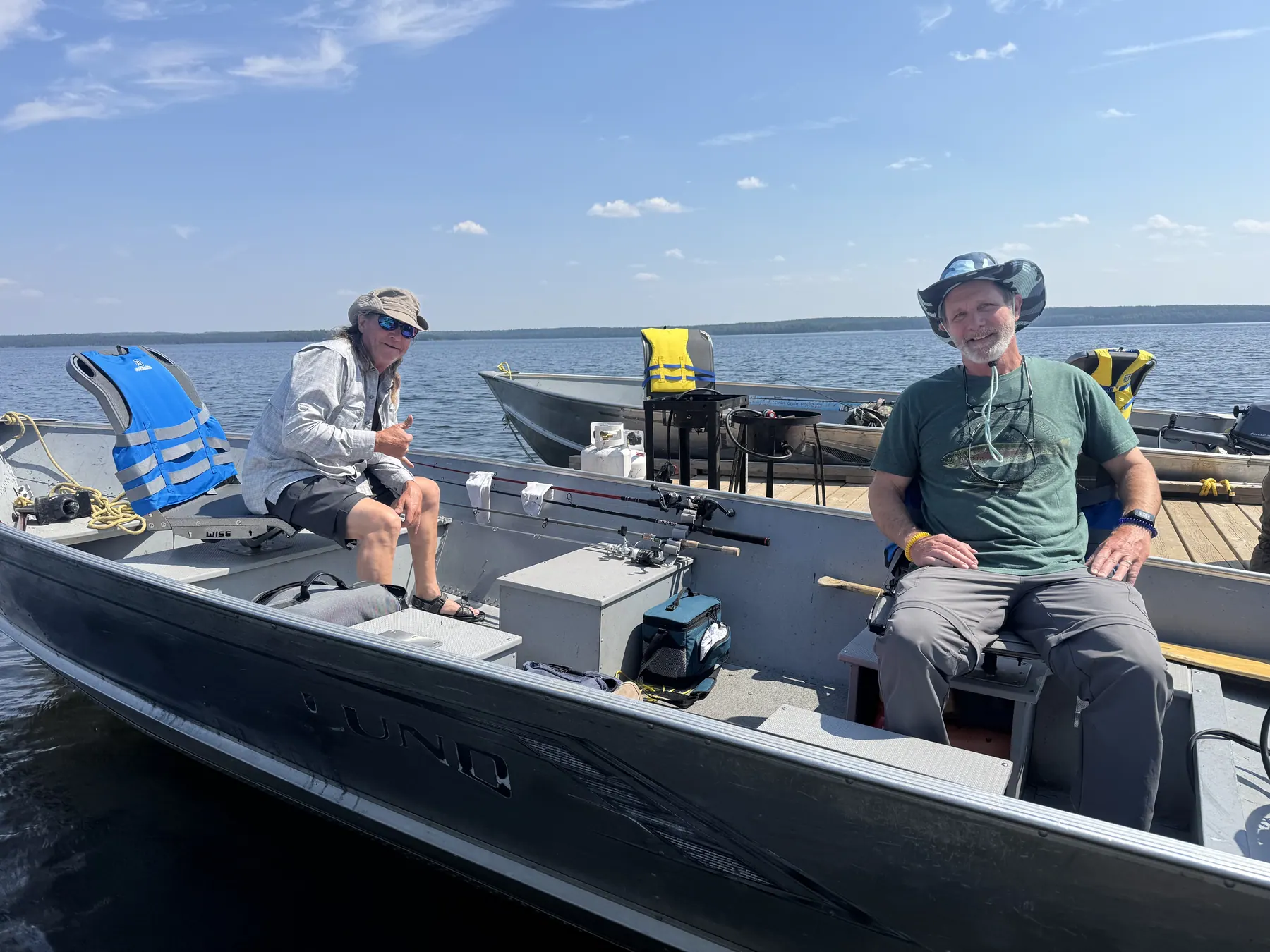
A medium-heavy rod with a baitcasting reel handles deep jigging and fast trolling. Your boat is a 16-foot Lund with an electric-start Yamaha four-stroke, and you can rent a Garmin depth finder at camp.
Try: heavier line and a good leader for trophies.
Shore lunch, limits and release
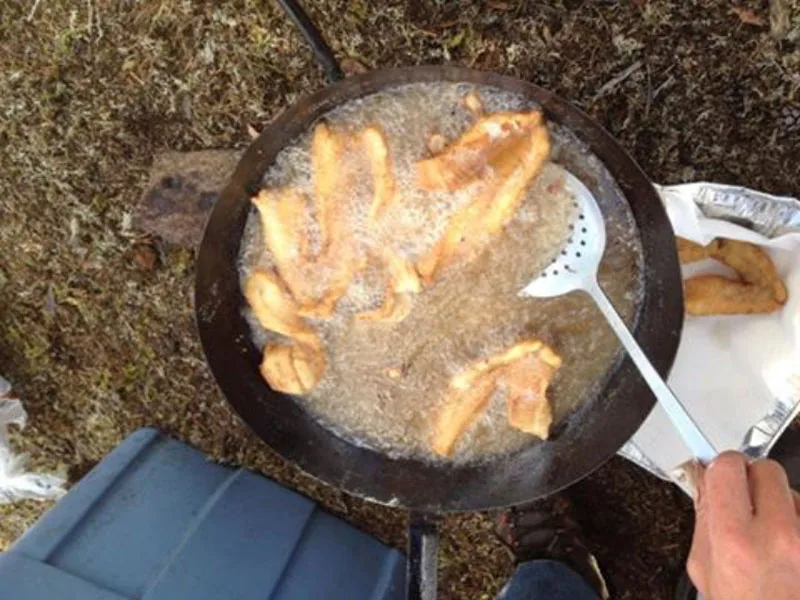
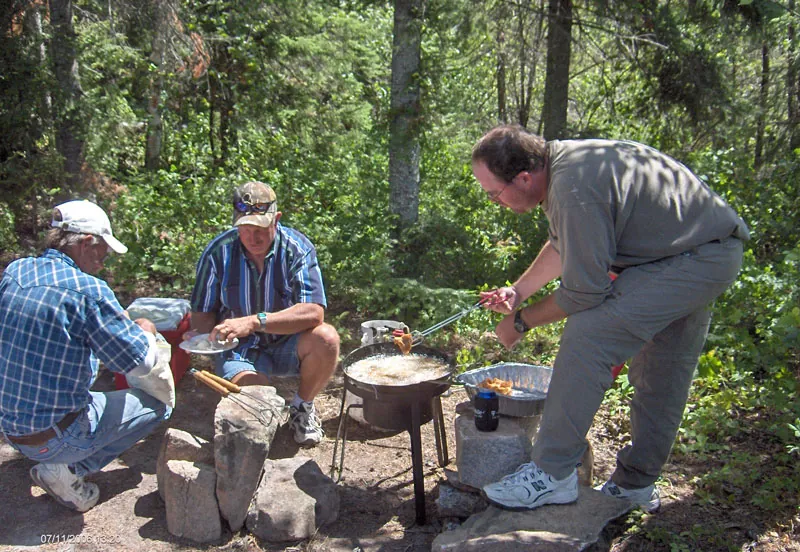
Every cabin has a shore lunch kit with pots, pans, racks and utensils, and propane burners are ready at the dock. A fresh lake trout makes a nice change from walleye at shore lunch.
Our camp rule is simple: keep 1 lake trout, 30 inches or under. Every bigger laker goes back alive. The lake trout season here closes September 30.
Lake trout come up from deep water, so time out of the water matters even more than with walleye. Pinch your barbs, keep the fish wet, take your photo quickly and let it swim back down. Once a laker is back at depth, it will be fine. Fish on stringers shouldn’t be released.
Camp rules for keeping fish: 2 walleye 18″ or under, 2 northern pike 27″ or under, 1 lake trout 30″ or under. The official Ontario limits for the Sydney Lake area are on our licences and limits page.
Licences & limits →Guest reviews
★★★★★
“We caught quality fish every day, with incredible walleye, lake trout and northern pike action.”
★★★★★
“Wonderful fishing lake with Walleye, Pike, and Lake Trout.”
★★★★★
“Best fishing trips of my life”
5.0 on Tripadvisor from 12 reviews · 5 stars on Google · Read all guest reviews →
Fly-in lake trout trips
Plenty of anglers travel to the Northwest Territories or Lake Athabasca for lake trout. You can catch big lakers much closer to home: Sydney Lake is a 30-minute float plane flight north of Kenora. Most guests come for the walleye and pike, and the lakers are a bonus that can make the trip.
Lake trout have always been part of camp life here. John Johnston Fahlgren, who built our first cabin in 1947, used to float out in front of camp in the evening and fish for trout. The family story is that his biggest weighed 58 pounds and took him 45 minutes to land: he eased the boat into two feet of water by shore and jumped in to grab it. Camp stories from the 1950s also tell of a 63-pound laker, the Sydney Lake record. We can't weigh them today, but they're part of why we still release the big ones.
See trip packages →More fishing on Sydney Lake: Walleye · Trophy northern pike