Northwest Ontario fishing trips
How the three kinds of fishing trip compare on fishing pressure, wilderness, cost and travel time, with drive times from Midwest cities to 11 hub towns from Fort Frances and Kenora to Red Lake, Pickle Lake and Nakina.
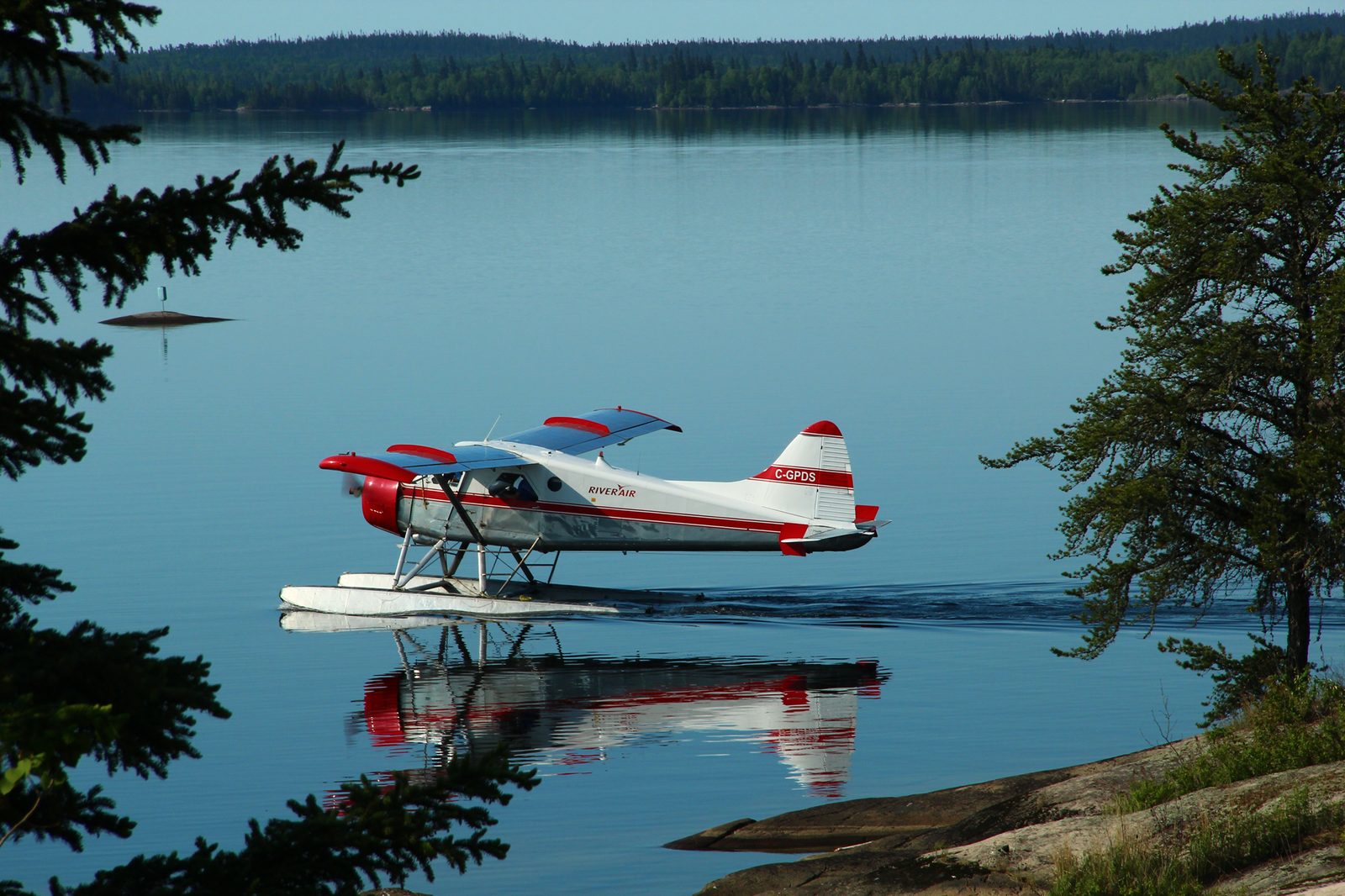

Fly-in water starts where the roads end
3 ways
Onto the water
Drive to a lakeside resort, boat out to an island camp, or fly past the end of the road.
11
Hub towns
From Fort Frances and Kenora north to Red Lake and Pickle Lake, and east to Nakina.
0 roads
Into Sydney and Kilburn
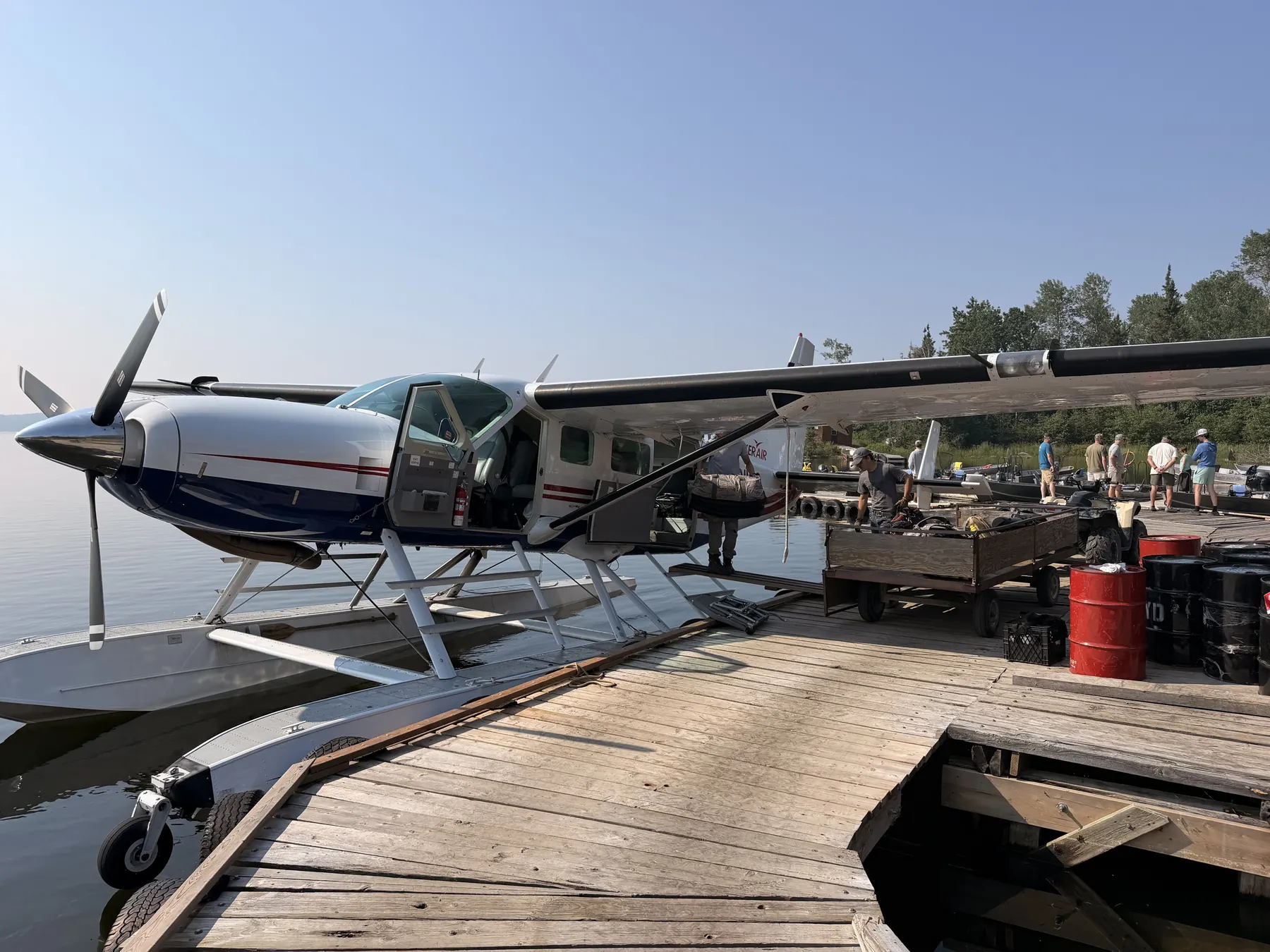
No public launches or cottages, and ours is the only camp on either lake. The float plane is the only way in.
430 mi
Minneapolis to Kenora
The largest hub town and our float base. Red Lake is 533 miles, Sioux Lookout 475.
Three kinds of trip
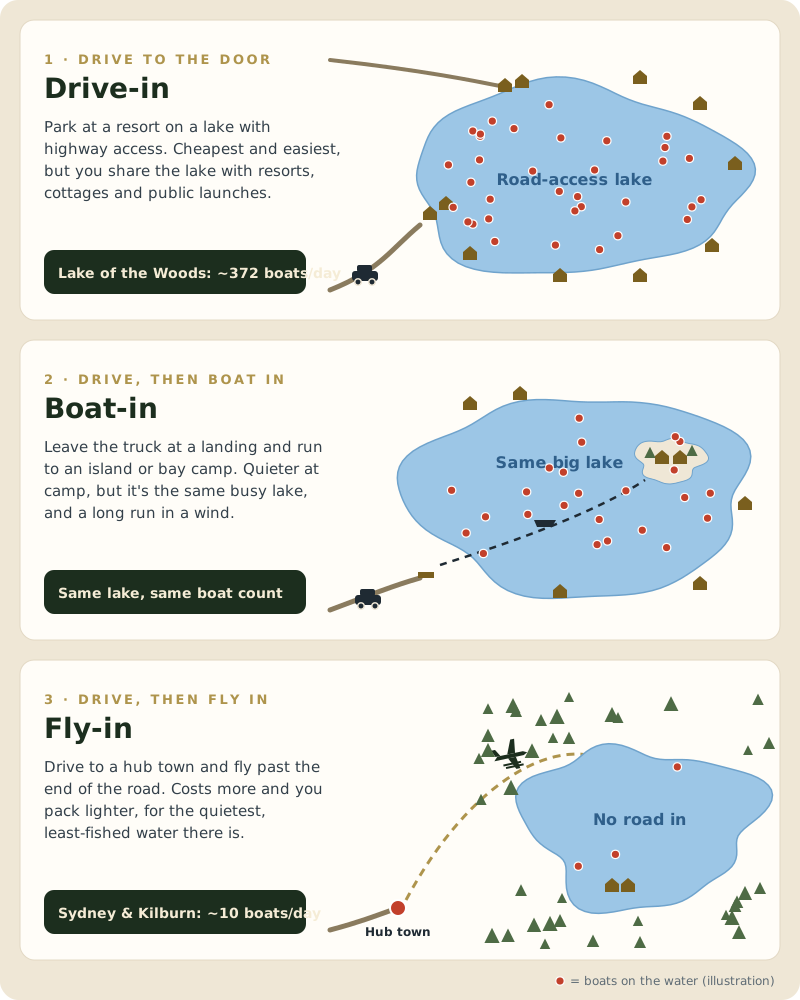
Northwest Ontario has more lakes than anyone could fish in a lifetime, and almost every trip here starts the same way: you drive north across the border to a hub town. What you do next decides the kind of week you'll have.
Drive-in: you park at a resort on a road-access lake like Lake of the Woods, Eagle Lake or Lac Seul. It's easy, flexible and usually the cheapest, but you share the water with every other resort, cottage and public launch on the lake.
Boat-in: you leave your vehicle at a landing and run by boat to an island or bay camp. You have fewer neighbours at camp, but you're still on a big, busy lake, and the run in can be long and rough in a wind.
Fly-in: a floatplane takes you past the end of the road to a lake with no road, no launch and few or no other camps. It costs more and you pack lighter, but it's the quietest, least-fished water you can reach.
Compare 16 walleye lakes side by side →Drive times to hub towns
Pick where you're leaving from, then tap a hub town. You'll see the road miles, the driving time, the border crossing and the route on the map, plus how every other hub town compares.
Fly-in vs boat-in vs drive-in
The same week off looks very different on a road-access resort lake and on a fly-in lake. Here's how the three kinds of trip compare on the things anglers ask us about most.
The fishing
Fish respond to how many lines are in the water. These four things explain most of the difference between a good week and a great one.
Fishing pressure
Hundreds of boats, or a handful
Every resort, cottage and public launch adds boats. On an average summer day Lac Seul has about 339 boats and the Ontario side of Lake of the Woods about 372. Sydney and Kilburn average about 10*, all from one camp.
*A season average: some weeks there are as many as 20 boats on Sydney and Kilburn, some weeks almost none. Even at 20, each boat has about 880 acres.
Intact wilderness
0 towns, dams, mines or mills on Sydney Lake
Many drive-to lakes are hydro reservoirs or sit downstream of towns, mines or pulp mills. A fly-in headwaters lake inside a provincial park has clean water and fish you'll be happy to eat at shore lunch.
Sydney Lake is in Woodland Caribou Provincial Park.
Lake size
1 to 2 rough-water days a season on Sydney
On a huge lake you can spend an hour each way running to the fish, and a strong wind can keep you off the main lake. A smaller lake with sheltered arms and a camp in the middle puts more of your day into fishing.
Lac Seul averages about 8 rough days a season; Big Traverse Bay on Lake of the Woods about 85.
Fishing quality
Keep 2 walleye a day, 18 inches or under
Tighter limits leave more big walleye in the lake. Our camp rule releases every walleye over 18 inches, and Sydney sits in an Ontario area with its own lower limits for visiting anglers.
Compare limits, clarity, forage and depth for 16 walleye lakes.
When to go
The season runs from the walleye opener in mid-May to the end of September, and each part of it fishes differently.
May and June
Walleye are shallow in the bays after the spawn, lake trout are near the surface and the days are long. Bugs start in June.
July and August
Walleye move to reefs, points and mid-depth structure. The water is warm enough to swim, blueberries ripen, and hot days make air conditioning worth having.
September
Walleye and pike are at their heaviest, lake trout move back into the shallows, the colours turn and the bugs are gone.
Hub town guide
Where you start decides where you sleep, shop and fly from. Bigger towns have more hotels, groceries and flights; smaller ones put you closer to the water but you'll want to stock up before you get there.
| Hub town | From Minneapolis | Gateway to | Airport | Floatplane bases | Groceries | Liquor and beer | Hospital with ER | Hotels and big stores |
|---|---|---|---|---|---|---|---|---|
| Kenora pop. 14,967 | 430 mi | Lake of the Woods, the Winnipeg River and fly-in lakes north to Woodland Caribou Park | YQK, paved. North Star Air to Thunder Bay | River Air (our float base), Kenora Air Service | Safeway, No Frills, Wholesale Club, Walmart | LCBO and Beer Store | Yes, Lake of the Woods District Hospital | Chain hotels; Canadian Tire and Walmart |
| Nestor Falls pop. 304 | 355 mi | Lake of the Woods, Sabaskong Bay | Private paved strip, no airline | Northwest Flying, Canada Outfitters | One small grocery store | Nearest is an LCBO outlet in Sioux Narrows | No. Clinic; nearest ER Kenora or Fort Frances | Lodges and motels |
| Fort Frances pop. 7,466 | 297 mi | Rainy Lake and the Rainy River | Paved, no airline. Delta flies to Minneapolis from International Falls, across the bridge | Rusty Myers Flying Service | Safeway, Einar's, Walmart | LCBO | Yes, La Verendrye Hospital | Super 8; Canadian Tire and Walmart |
| Vermilion Bay pop. 1,012 (Machin) | 436 mi | Eagle Lake and the Hwy 105 lakes | Grass strip, no airline | Clark's Air Service, on Cedar Lake about 25 mi north | Co-op; big stores in Dryden, 28 mi east | Liquor store | No. Nearest is Dryden | Two motels |
| Ear Falls pop. 924 | 489 mi | Lac Seul, Pakwash Lake and the English River | Paved, no airline | KayAir | Limited | Local outlets | No. Health centre | Motels on Hwy 105 |
| Red Lake pop. 4,094 | 533 mi | Red Lake, Trout Lake and fly-ins into Woodland Caribou Park | YRL, paved. Bearskin, North Star and Wasaya | Superior Airways and outfitters on Howey Bay | IGA, Food Fair | LCBO (the Beer Store closed in 2025) | Yes, Margaret Cochenour Memorial; the ER has had temporary closures | Super 8 and local motels |
| Sioux Lookout pop. 5,839 | 475 mi | Lac Seul, Pelican and Minnitaki lakes | YXL, paved. North Star, Perimeter and Wasaya | Slate Falls Airways | Fresh Market Foods | LCBO (the Beer Store closed in 2025) | Yes, Meno Ya Win Health Centre | Best Western, Days Inn and others |
| Ignace pop. 1,206 | 484 mi | Agimak and Raleigh lakes, and fly-ins north along Hwy 599 | Paved, no airline | Ignace Airways | Shoprite | LCBO | No. Nearest is Dryden, about 1 hour | Four motels |
| Pickle Lake pop. 398 | 666 mi | Lake St. Joseph and the far-north fly-ins | YPL, paved. Wasaya | Floatplane base at the town beach | Northern Store | LCBO, Tuesday to Saturday | No. Clinic | Hotels and a motel |
| Armstrong pop. 146 | 500 mi | Wabakimi Park, the Ogoki Reservoir and the Albany River | Paved, no airline | Outfitters at the Mattice Lake seaplane base | General store only | Not found | No. Clinic | A motel and a B&B |
| Nakina pop. about 500 | 555 mi | Fly-ins to the Ogoki and Albany river country | Paved. Nakina Air Service | Nakina Air Service, Leuenberger Air Service | None in town; shop in Geraldton, 45 minutes away | Not found | No. Nearest is Geraldton | One motel |
Populations are from the 2021 census. Services change, so call ahead if you're counting on one. Miles are the road routes in the drive-time tool above.
FAQ
Where our trips start
Kenora is the largest of the hub towns and one of the closest to Minneapolis and Winnipeg. Hotels, groceries, the LCBO and Beer Store, and tackle shops are all a few minutes from the River Air float base downtown. From there it's a 30-minute flight north to Sydney Lake, the only camp on Sydney and Kilburn.
Getting to Kenora: map and directions →Explore more: Sydney Lake · Kilburn Lake · Portage lakes · Ontario’s Trophy Waters · Woodland Caribou Park