Fly-in northern pike fishing · Northwest Ontario
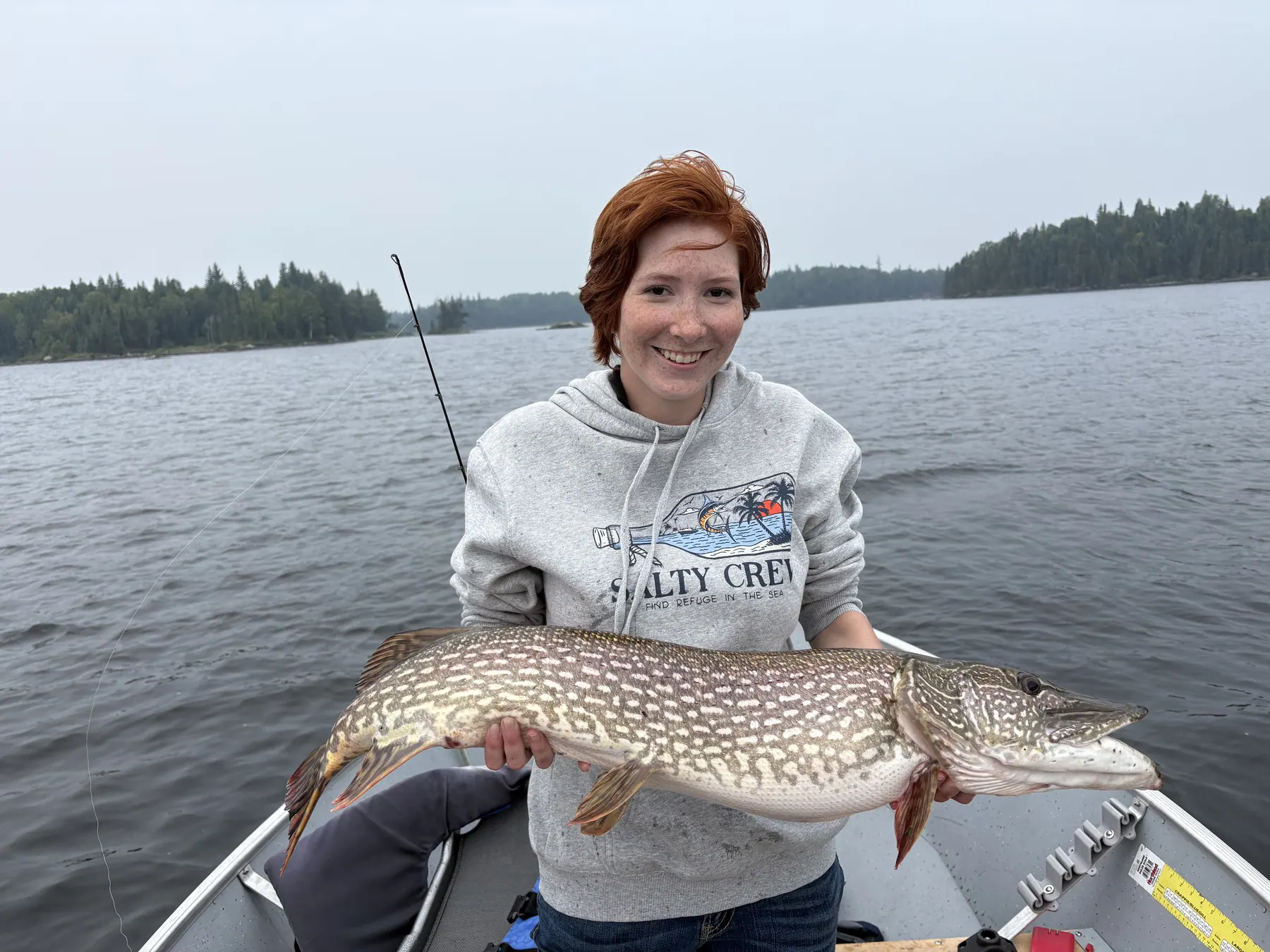
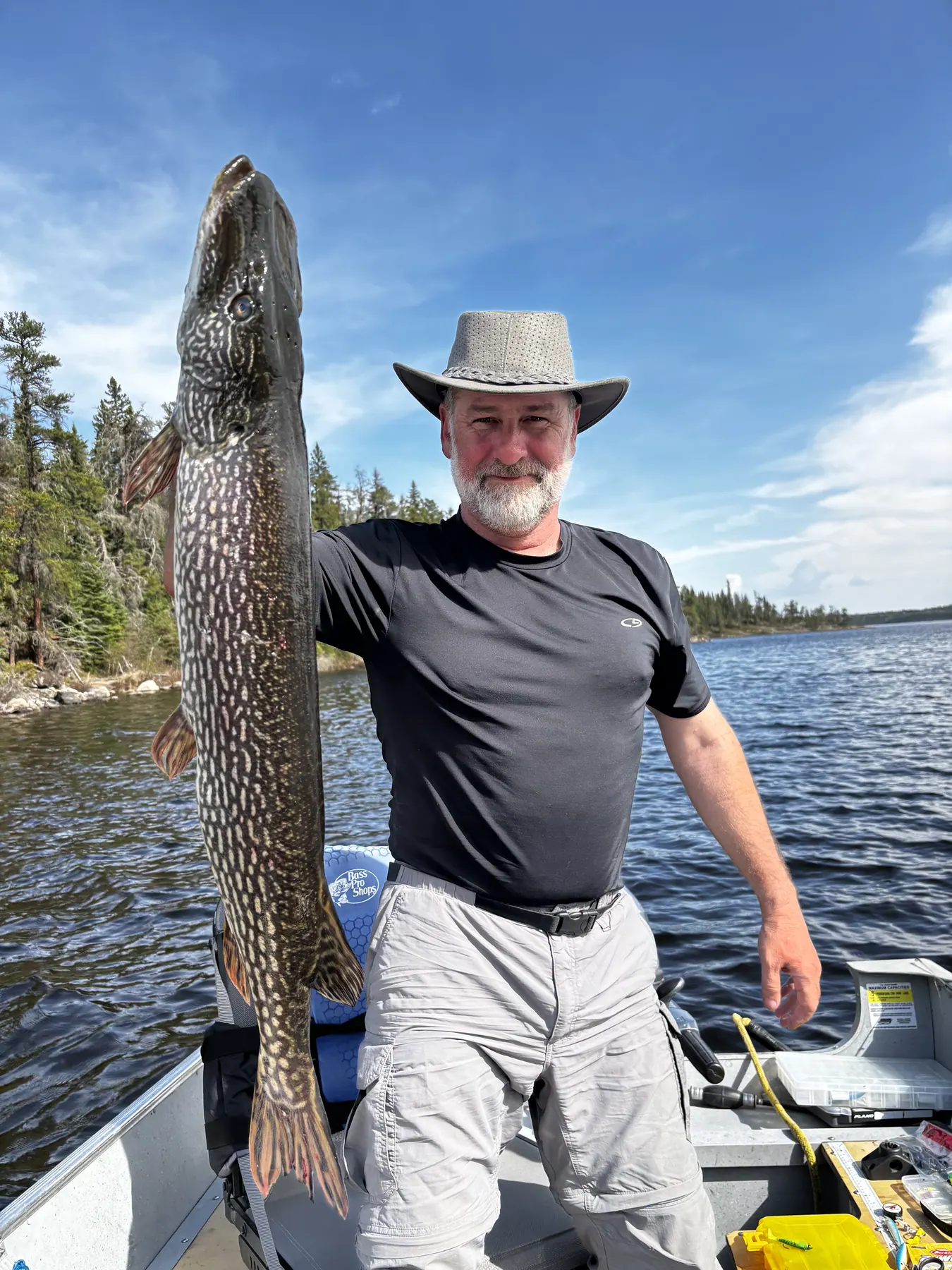
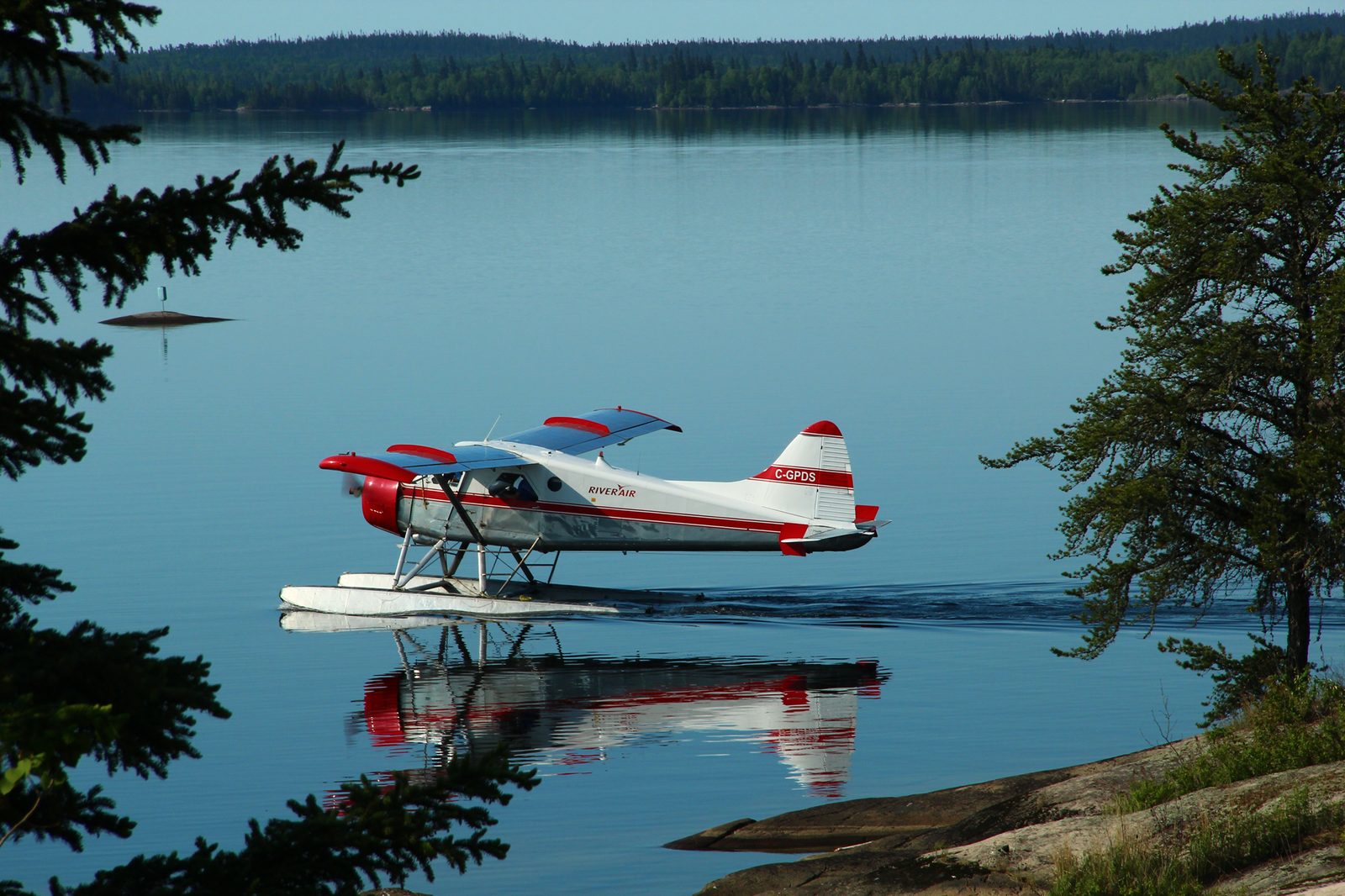
Back-to-back Trophy Waters champions: our guests caught the biggest pike in Ontario’s Trophy Waters in 2023 and again in 2024, both 46 inches. Thirty minutes by float plane north of Kenora, Ontario.

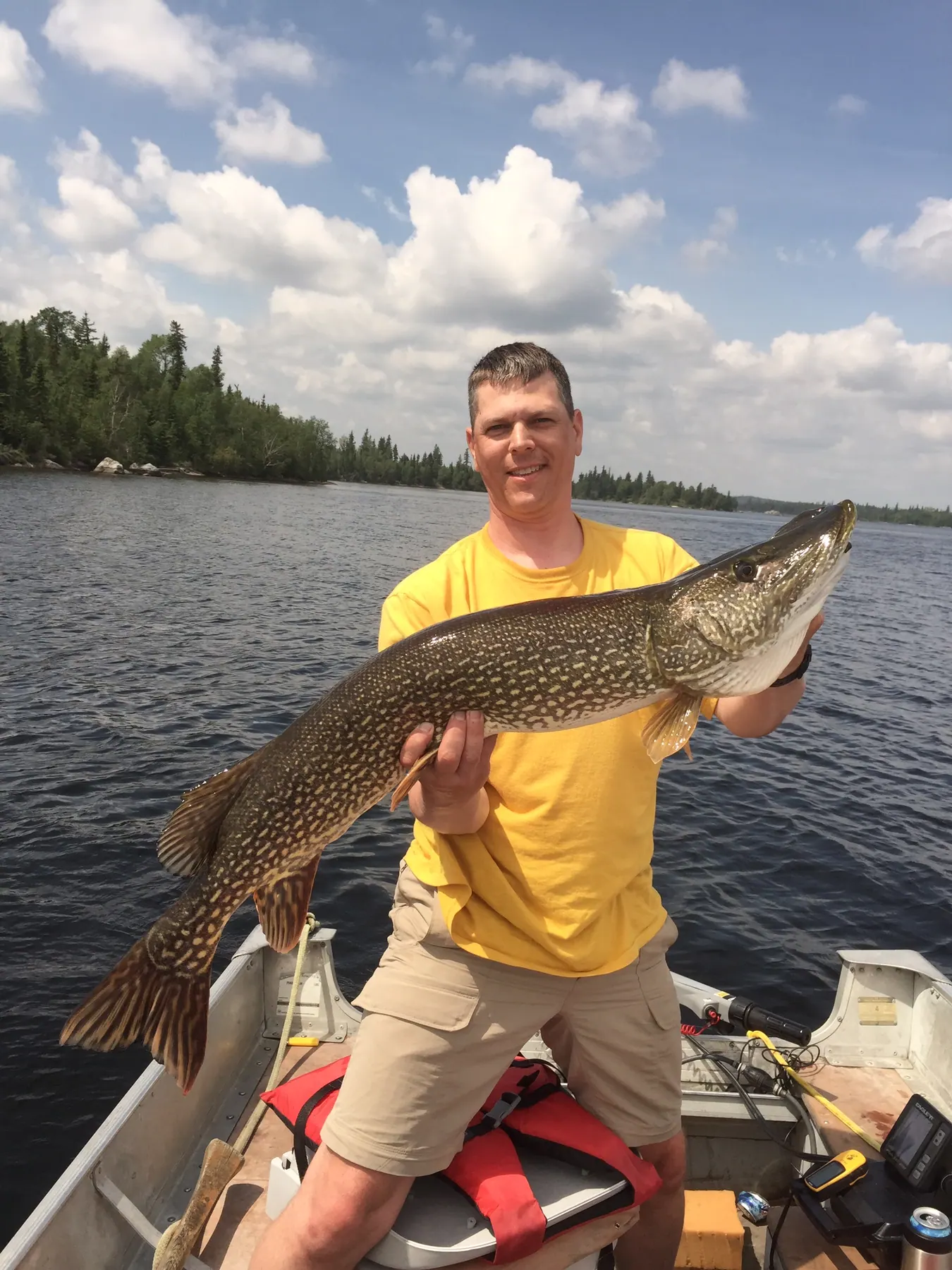
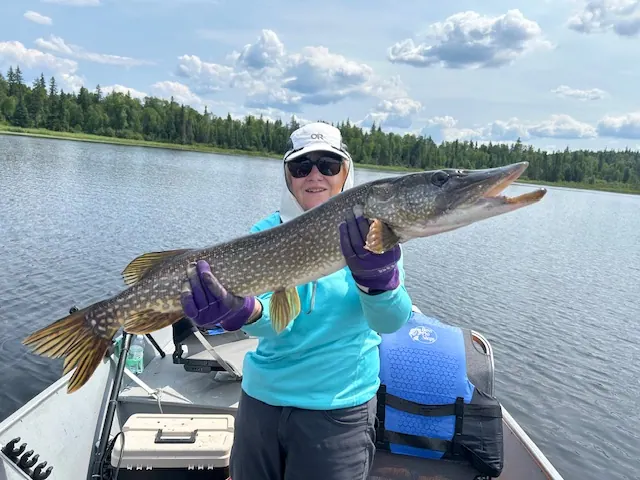
Steve Wilhelm · 46-inch pike · 2023 Trophy Waters winner
46″
Trophy Waters winners
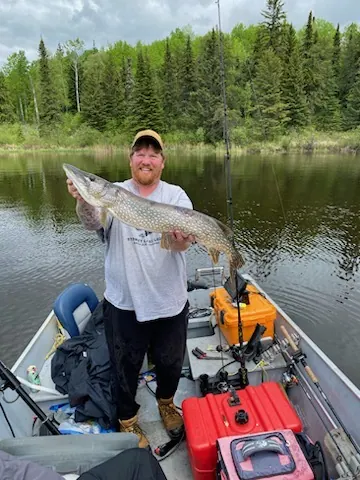
The biggest pike in Ontario’s Trophy Waters in 2023, and again in 2024. Each won a free trip.
30lb+
pike in our lakes
Several pike in the mid-40-inch range every year. Some big ones are hooked and never landed.
38″
makes a trophy
About 17 pounds. Measure it, snap a photo, let it go, then register it at camp.
1987
catch and release since
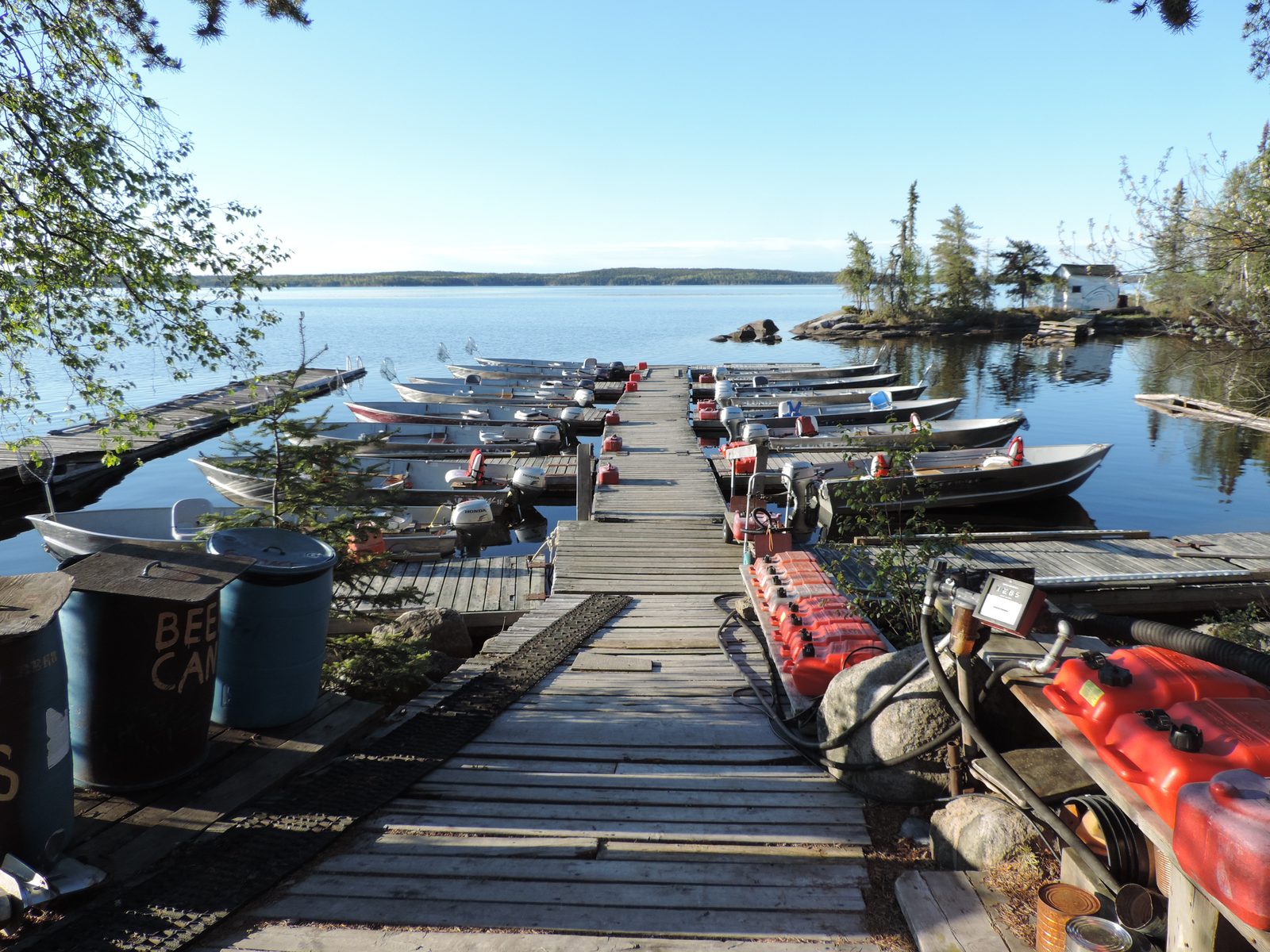
Big pike go back alive. One lodge, no roads, no cottages and no stocking.





Why pike grow big here
Big pike need three things: room, rich food and time. Sydney Lake has all three. Its main basin is up to 240 feet deep and averages about 65 feet, so the water stays cold and clear all summer. That cold water is full of cisco (tullibee) and whitefish, oily baitfish that put weight on a pike fast.
Around the edges is everything else a pike wants: tea-stained bays, weed beds, creek mouths, reefs and rocky points that fall off into deep water. Kilburn Lake adds miles of darker, shallower bays and narrows. A big pike can hunt the shallows, then slide back to cold water whenever it likes.
Then there’s the pressure, or the lack of it. We’re the only lodge on the lakes. There are no roads, no cottages and no stocking, and we’ve fished catch-and-release for trophies since 1987. Big pike have gone back into these lakes for decades, and they keep coming back bigger.
Sydney Lake sits in Ontario’s Trophy Waters, a remote fly-in area that runs south to the English River and west to the Manitoba border. Two seasons running, the biggest pike registered anywhere in the Trophy Waters came from here.
Why these lakes →What you’ll catch
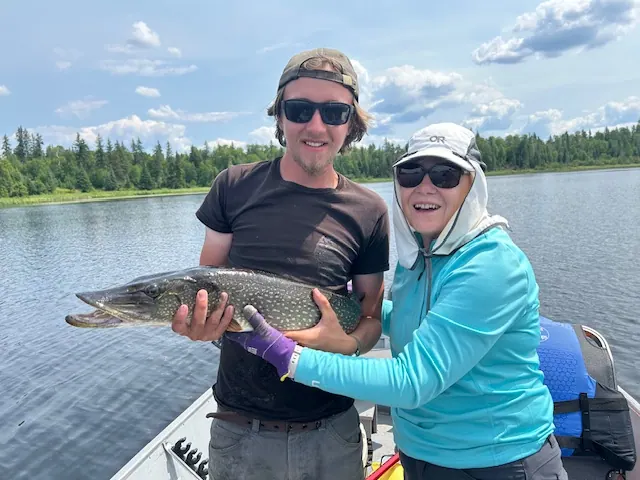
Most groups catch pike every day, from the shallow bays to the deep points. Here’s how the sizes usually shake out over a trip, measured nose to pinched tail.
Under 24″
Hammer handles. A few, mostly in the shallow bays.
24–30″
The everyday pike. The most common size, and a real fight on walleye gear.
30–38″
Big pike. Most groups catch a good number of these on a trip.
38–42″
Trophies, about 17 lb and up. Likely if you fish for them.
42–46″+
Fish of the season, 25 lb and more. Several every year; a few top 30 lb.
What is a trophy northern pike? In Ontario’s Trophy Waters it’s 38 inches or longer, measured from the tip of the nose to the end of the pinched tail, and it only counts if it goes back alive. That’s about 17 pounds on average. Register it at camp with a photo and a witness and you’ll get a Trophy Waters hat and your name in the annual trophy listings.
When to come
Pike bite all season, from the opener on the third Saturday in May (May 15 in 2027) to September 30, and every month gives up trophies. What changes is where you find them. They follow the water temperature, from the spring bays to the summer weed edges and points, then out to the narrows in fall. For the heaviest pike, come in late August or September. After a summer of feeding on cisco they’re at their heaviest, and our biggest pike of 2025 was caught in September.
Mid May to June
Shallow, warming bays · near the walleye
Pike spawn first, right after ice-out, so by the opener they’re done and hungry. Big pike lurk near creek entrances and close to wherever the walleye fishing is hot. You’ll often catch them while fishing for walleye.
Try: casting a little further down the shore from the walleye action, to the shallow and deep sides.
Late June and July
Weedy bays, rocky points · next to deep water
As the bays warm up, big pike move to sheltered shallow spots right next to deeper water. They’re most comfortable at about 61–70°F (16–21°C), a little cooler than small pike like it. Look for weed edges, rocky points and reefs.
Try: fan-casting spoons and plugs, both shallow and deep.
August
Points, reefs and weed edges
After a summer of feeding, the big pike are getting heavy by late August. Fish hardest in the morning and evening. When a big pike is spooked it slides off to deeper water, so work the deep side of every point too.
Try: topwater baits over the weeds on a calm evening.
September
Narrows that lead to deep water
The pike are at their heaviest now. The biggest September pike come from narrows that lead off to deeper water, like The Gap. Lots of pike are caught by lake trout anglers in late September, and in spots like the Mini Gap you can catch walleye, pike and lake trout without moving the boat.
Try: a heavy spoon, counted down before you start reeling.


Where to find them
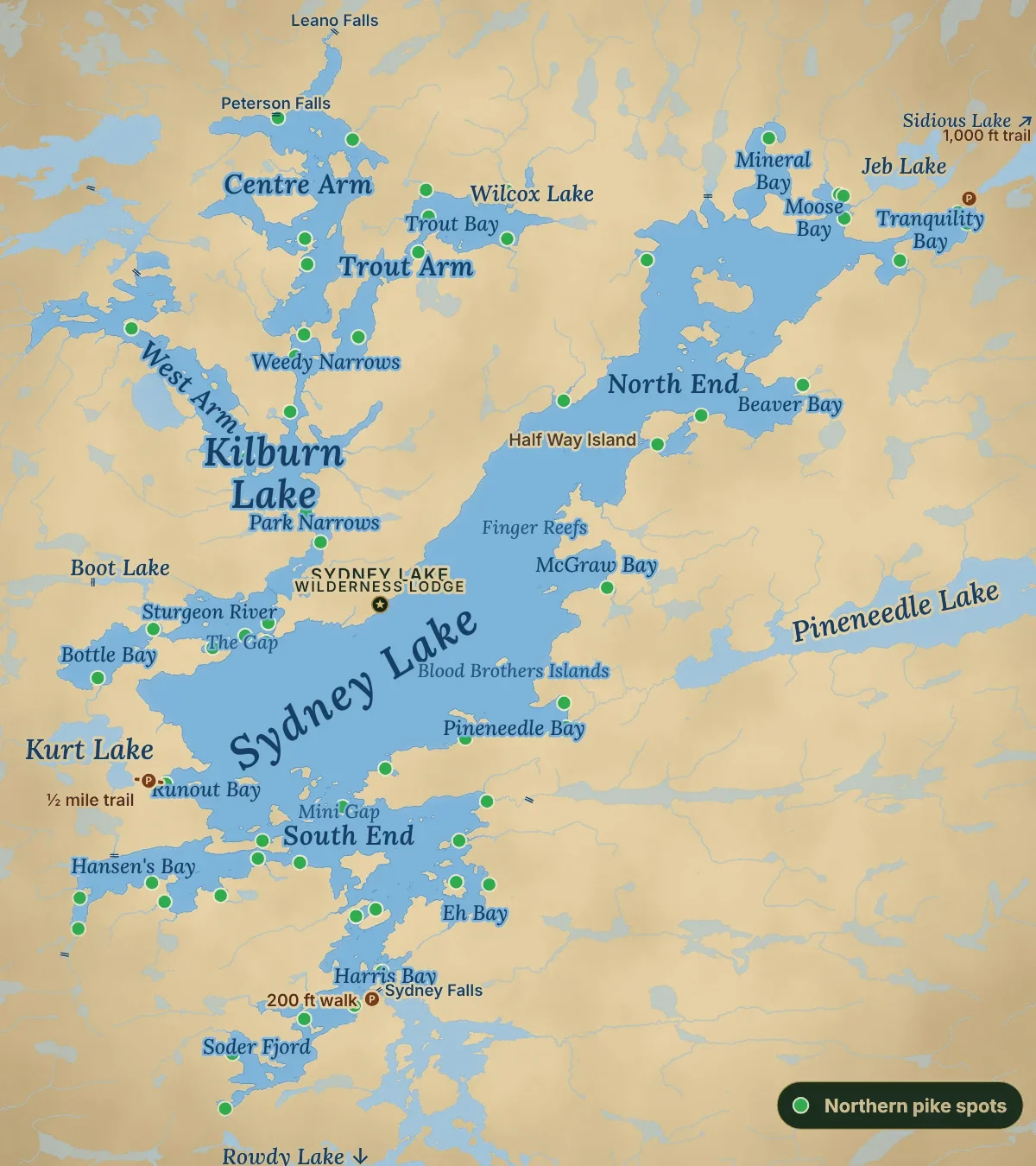
Pike live all over Sydney and Kilburn: off rocky points, near moving water, in weedy bays and down deep. Every group gets a waterproof lake map, and we’ll mark these spots and what’s working that week when you arrive.
Boot Lake falls
In most years you can run up the creek from Bottle Bay, no portage. At the small waterfall, cast one way for walleye and the other way for pike. There are big ones in here.
The Gap
Where the Sturgeon River enters Sydney. Narrows leading off to deep water like this give up the biggest pike in September.
Kilburn’s Centre Arm
The best pike water on Kilburn: the large weedy bay at the south end of the arm, and the rocky points along its west side.
Behind Trout Bay
At the north end of Trout Bay, a small lake you can run into in high water. It’s seldom fished and holds a lot of pike, plus some walleye.
The Mini Gap
A narrows through the islands to the south side, 8 to 25 feet deep. In late September you can catch walleye, pike and lake trout without moving 10 feet.
Leano Falls
At the north end of the Centre Arm, the creek from Leano Lake tumbles through a boulder field. In high water, follow the opening in the reeds to the base of the falls and cast into the hole.
Spring walleye bays
Mineral, Tranquility, Hansen’s and Bottle Bays fill with walleye in spring, and big pike are never far behind. Work the creek mouths and the drop-off outside.
Portage lakes
Middle Kilburn, an easy 330-foot portage from the West Arm, has pike, walleye and lake trout. Kurt Lake has plenty of pike and lake trout. We keep boats on both.
How to catch them
Casting is by far the most common way to catch a trophy pike here. Pike are found most often along shore near creek mouths, reefs, rocky points and shallow weedy bays, and they’ll hit almost anything that moves, especially spoons and crankbaits.
Pick a target
Points, creek mouths, reefs, weed beds
Pick a target spot, then cast in a fan pattern, working from right to left or left to right. A steady pattern covers the water and pulls in any pike nearby.
Try: fanning a spoon across a rocky point.
Don’t skip it
Let the lure sink a few seconds
Big northern pull back to deeper water when they’re spooked, and most anglers never cast there. Throw to the deep side of a point or drop-off and let the lure sink for several seconds before you start your retrieve.
Try: counting to five before you reel.
Moving water
Waterfalls, narrows, creek mouths
Still water just below a small waterfall is an excellent spot, and so is the line where calm water meets faster current. Baitfish gather there, and the pike wait for them.
Try: Boot Lake falls or The Gap.
Spring
Creek entrances · shallow bays
Big pike lurk near creek entrances and close to where the walleye are biting. Walleye anglers hook plenty of pike by accident in spring. To catch a big one on purpose, cast a little further down the shore from the action.
Try: a bigger spoon at the edge of a walleye bay.
July and August
Sheltered shallows off deep water
In summer the best pike action is in sheltered shallow areas right beside deeper water: weedy bays, rocky points and reef edges. Fan-cast plugs and spoons through both the shallow and the deep water.
Try: weed edges early and late in the day.
Topwater
Big minnow baits · calm evenings
Nothing beats a big pike smashing a lure on the surface. Work larger minnow baits like Rapalas, Husky Jerks and Rebels on top or just under it, and hang on when the water explodes.
Try: a calm evening over a weedy bay.
September
Fall pike and lake trout
The biggest fall pike come from narrows that lead off to deep water. Many pike are also caught by guests fishing for lake trout in late September, so keep a leader handy when you’re trolling or casting for trout.
Try: The Gap and the Mini Gap.
Be ready
Thrills, spills and screaming reels
A big pike strikes when you’re least expecting it, hard enough to rip the rod out of your hands. They breach beside the boat and can soak you with one flick of the tail. Many of the biggest beat weak line, missing leaders or light gear.
Try: setting your drag before the first cast.


What to bring
✓A medium-heavy rod, 6′6″ to 7′ long
✓A baitcaster or open-face spinning reel with 12–25 lb line
✓Steel leaders, including on your spinners
✓Spoons: Dr. Spoon, Daredevle and Little Cleo, 3/4 oz and up
✓Tandem spinnerbaits, 3/8 to 1 oz
✓Mepps or Blue Fox spinners, size 4 and 5 blades
✓Big minnow baits, Rat-L-Traps and jerkbaits for casting and topwater
✓Long-nose pliers and a hook cutter for fast releases
Think bright colours
Silver, gold, chartreuse, fire tiger, red and white, and the classic five of diamonds. Match bright blades with white or fluorescent skirts.
And always tie on a steel leader. A pike’s teeth will slice through line with one shake of its head.
Full packing & tackle list →Lures and gear
Lure #1
Dr. Spoon · Daredevle · Little Cleo
Every pike box needs spoons. Bring silver and gold Dr. Spoons, Daredevles in five of diamonds and red and white, and Little Cleos in silver and chartreuse, at least 3/4 oz. Let them flutter down, then vary the retrieve.
Try: a five of diamonds off a rocky point.
Flash and vibration
Mepps · Blue Fox · tandem spinnerbaits
Mepps or Blue Fox spinners with size 4 and 5 blades or bigger, in silver, fire tiger or prism. The larger Mepps Minnows are great. Tandem spinnerbaits from 3/8 to 1 oz with chartreuse, gold or silver blades are excellent.
Try: a spinnerbait rolled over the weed tops.
Casting and topwater
Rapala · Husky Jerk · Rebel · Rat-L-Trap · Suick
Larger minnow baits for casting and topwater action, Rat-L-Traps in the bigger sizes (nickel and chartreuse are best), and 6 to 8 inch Suicks. These are the lures that bring pike crashing through the surface.
Try: a jerkbait twitched along a weed edge.
Rods, reels and boats
6′6″ to 7′ medium-heavy rod
Pair it with a baitcaster or open-face spinning reel and 12 to 25 lb line. Your boat is a 16-foot Lund with a flat floor that makes a steady casting deck, and swivel seats for long days on the water.
Try: a steel leader on every lure.


Handling and limits
A trophy pike only counts in Ontario’s Trophy Waters if it goes back alive, and time out of the water is what hurts big fish most. Measure it nose to pinched tail, take a few quick photos holding it horizontally (vertical holds can damage a big pike), and get it back in the water.
Use single or barbless hooks, or pinch your barbs. Skip the jaw spreaders. If a hook is stuck, cut it off with pliers; it will fall out later. If a pike swallows the hook, cut the line. If a fish won’t swim off, hold it by the tail, back up and nose pointed slightly down, and move it slowly back and forth until it kicks away.
Our camp rule is simple: keep 2 northern pike, 27 inches or under. The big ones go back. Want one for the wall? Get a replica made from the length, girth and a photo. It lasts longer and never smells.
Camp rules for keeping fish: 2 walleye 18″ or under, 2 northern pike 27″ or under, 1 lake trout 30″ or under. The official Ontario limits for the Sydney Lake area are on our licences and limits page.
Licences & limits →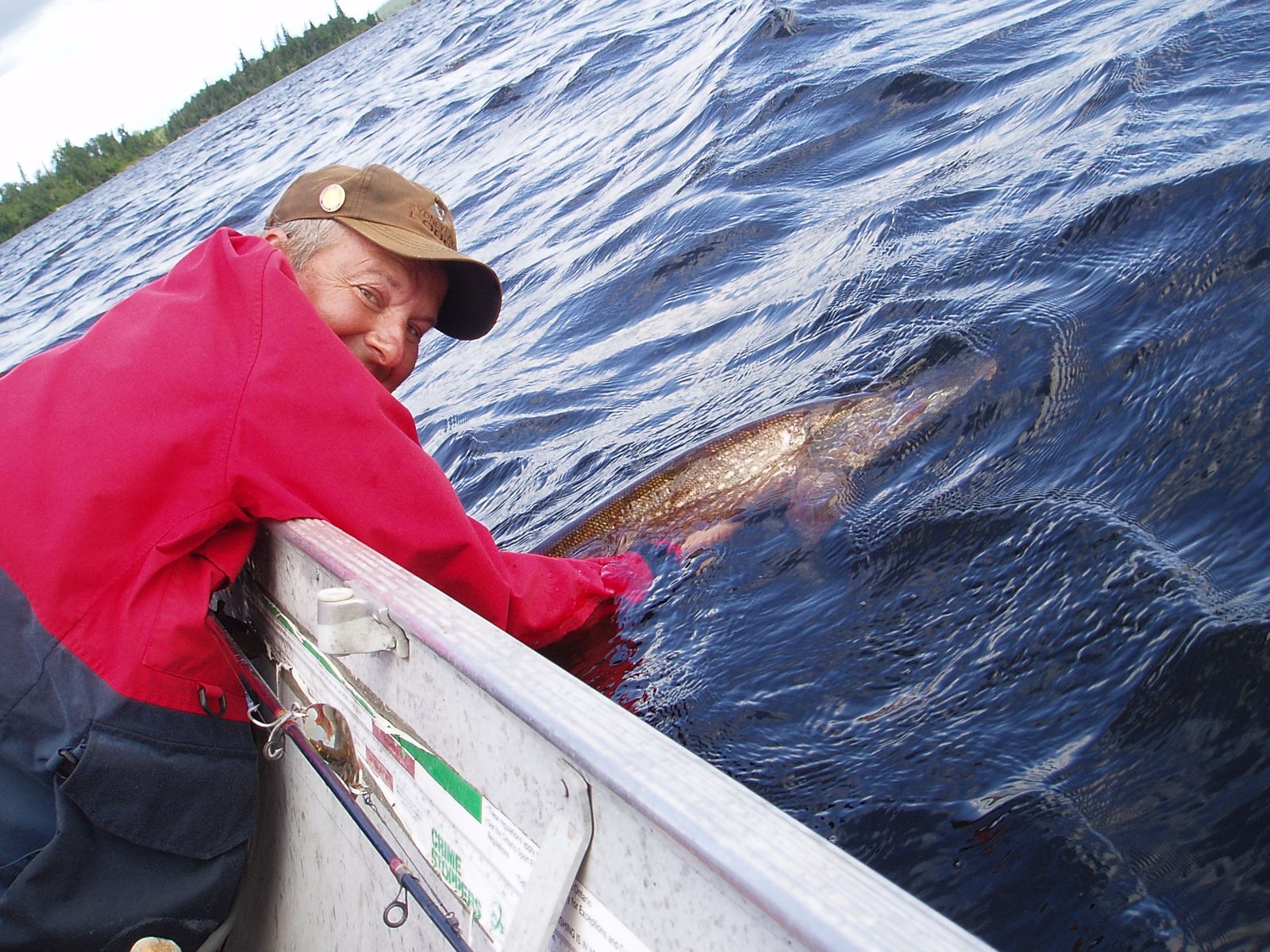
Guest reviews
★★★★★
“If you like catching 300-400 walleyes over 20” long in a week and then throw in some big pike as well, then you need to come to Sydney Lake!”
★★★★★
“Great trip in dad's memory”
★★★★★
“We caught quality fish every day, with incredible walleye, lake trout and northern pike action.”
5.0 on Tripadvisor from 12 reviews · 5 stars on Google · Read all guest reviews →
Ontario’s Trophy Waters
Every season, the angler who catches and releases the biggest pike anywhere in Ontario’s Trophy Waters wins a free trip the next year. Sydney Lake guests won it in 2023 (Steve Wilhelm) and again in 2024 (Rory H.), both with 46-inch pike. Catch a 38-incher or better, register it at camp with a witness and a photo, and you’re in the running. Trophy pike have been going back into these lakes for years. One of them could be yours.
How the Trophy Waters contest works →More fishing on Sydney Lake: Walleye · Lake trout