Sydney & Kilburn Lakes · Northwest Ontario
Two kinds of water, a deep lake full of cisco, and nobody upstream. Here’s what makes these some of the best walleye lakes in Canada, and how my family has kept them that way since 1933.
240ft
deepest water in Sydney
A cold, clear main basin that averages 65 feet deep. Kilburn’s Trout Bay drops to 213 feet.
17,570
acres of water, one lodge
About 190 miles of shoreline and 120 islands. No roads, no cottages, no public launch.
1987
conservation fishing since
Trophies go back in the lake to grow, spawn and be caught again.
100%
wild fish
No stocking, ever. We sit near the headwaters, with no towns, dams or industry upstream.

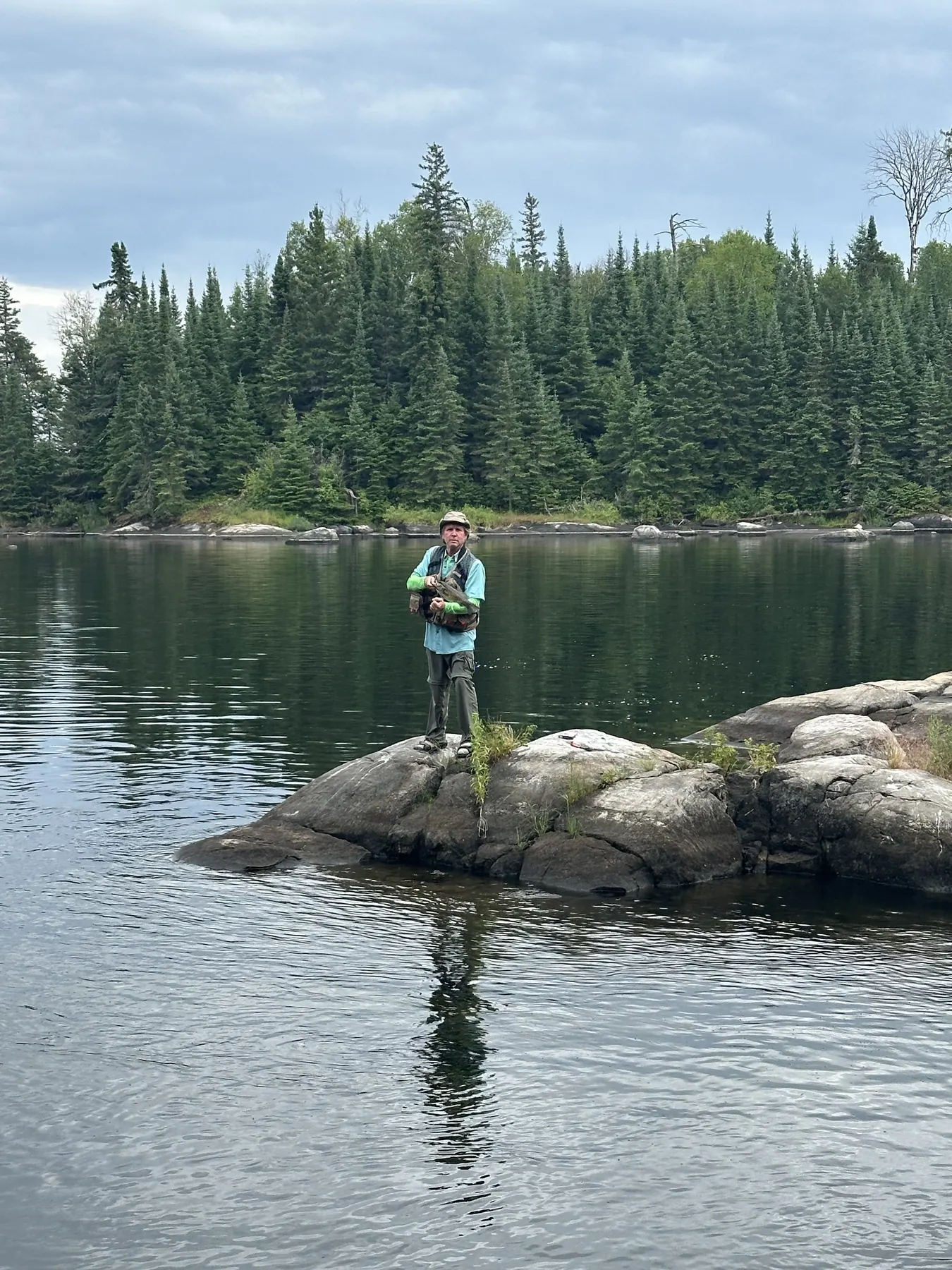


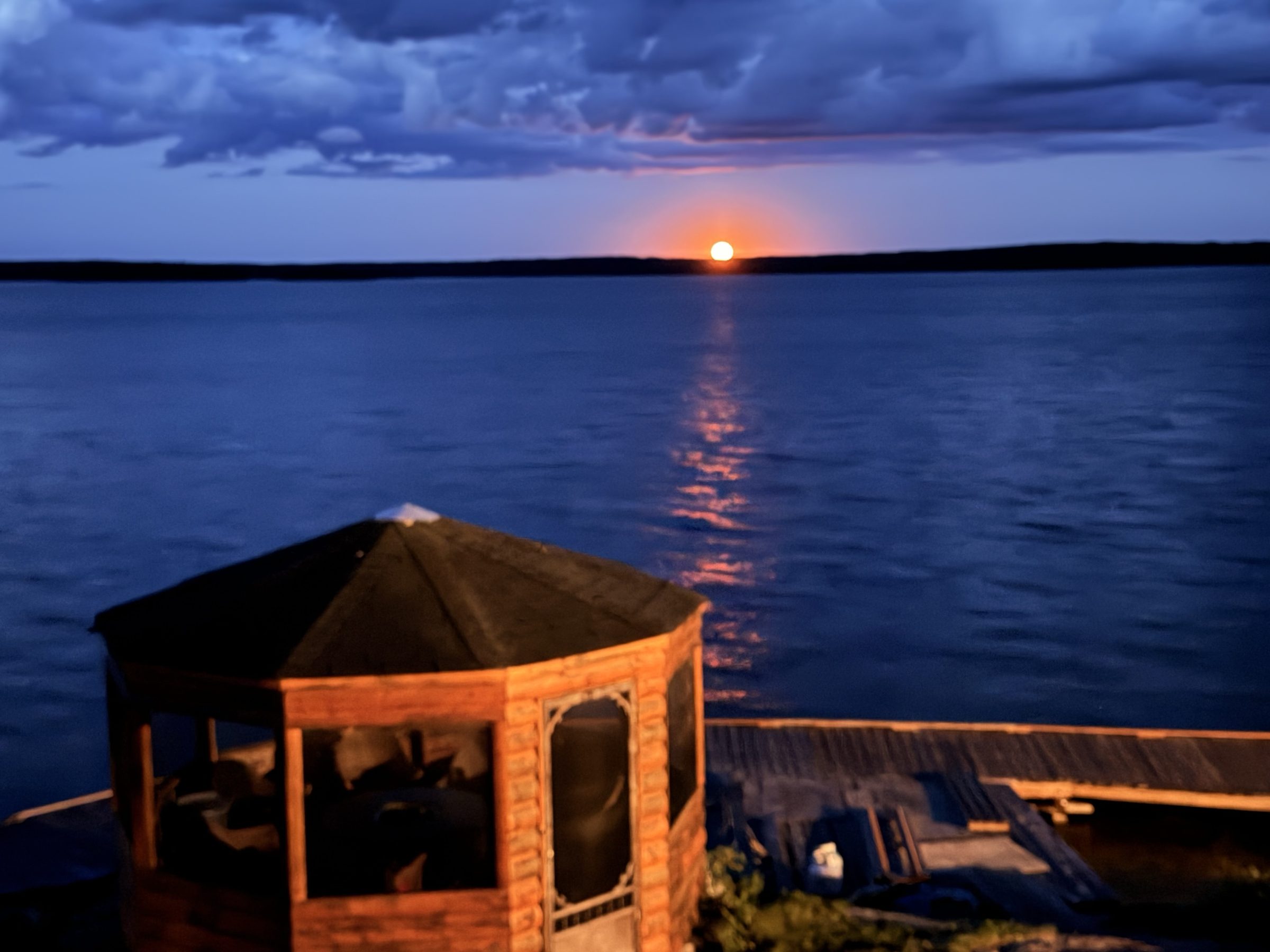


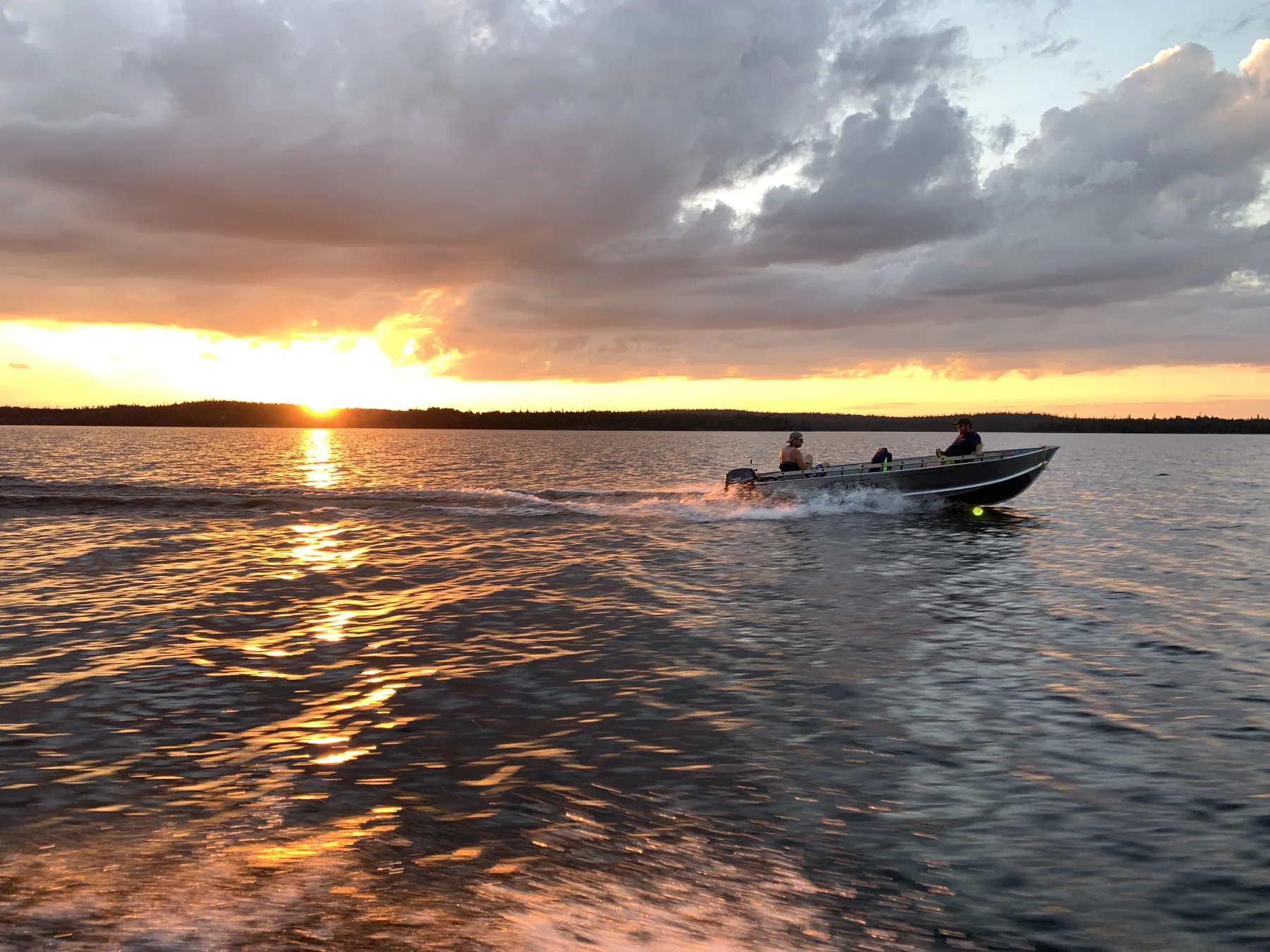
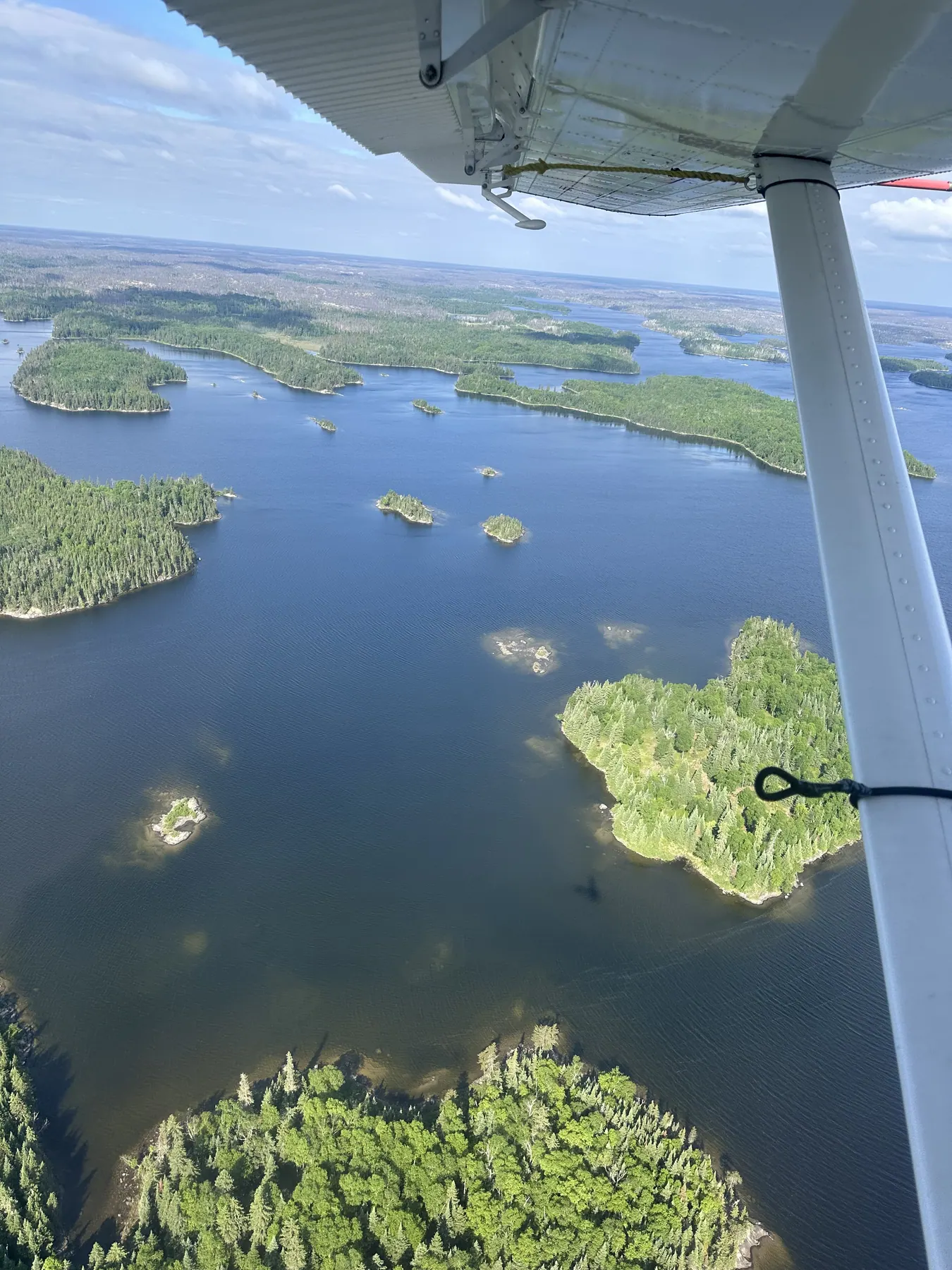
Two kinds of water
Most lakes give fish one kind of water. Sydney and Kilburn give them two. Kilburn and the back bays of Sydney are tea-stained: dark water that warms fast in spring, with creek mouths, weed beds and mud flats where walleye spawn and feed and big pike hunt.
Out in Sydney’s main basin the water turns cold and clear. The lake runs 14.5 miles long and up to 240 feet deep, with reefs, humps and sharp drop-offs. In summer the big walleye slide out to that structure, and the lake trout live down deep. Shallow water to feed in sits right beside deep water to grow in, and our camp sits in the middle of both.
That deep water is full of cisco (tullibee), a rich, oily baitfish that needs cold, clean, oxygen-rich water. Walleye, pike and lake trout all feed on them, and it shows in how thick our fish are.
The science backs it up. In a federal Fisheries and Oceans Canada study of six northwestern Ontario lakes, the biggest walleye of the whole study came from Sydney Lake, and its walleye were among the fastest growing.
Compare Sydney with other walleye lakes →Depth tells the story
Sydney’s shallow zone covers about 40% of the lake, so there’s room for both warm-water and cold-water fish. Here’s roughly how it stacks up in summer.
3–10 ft
Tea-stained bays and creek mouths. Spring walleye, big pike and baitfish.
10–25 ft
Weed edges, points and reefs. Summer walleye and pike on the breaks.
25–35 ft
The thermocline. In summer the water drops about 10°F in ten feet.
35–125 ft
Cold water that stays rich in oxygen. Cisco, whitefish and lake trout.
125–240 ft
Sydney’s deep basin. The coldest water in the lake, all summer long.
Want to see it for yourself? Rent a Garmin depth finder at camp and watch the bottom fall away off the reefs. Every group also gets a waterproof lake map marked with our favourite spots.
Why the fishing stays good
Big fish need food and time. They also need to be left alone. Here’s what keeps Sydney and Kilburn the way they are.
Location
No development upstream, ever
Sydney and Kilburn sit near the top of the Sturgeon River system. More than 20 creeks and the Sturgeon River flow in, and nothing upstream has ever had a town, a dam, a mine or a mill. Many big Ontario walleye waters, like Lake of the Woods and the English River, had mills or mines on their watersheds. Ours never did.
Downstream, the water leaves over Sydney Falls into Rowdy Lake.
Access
Fly-in only · 30 minutes from Kenora
There’s one lodge on Sydney and Kilburn, and it’s ours. No road reaches either lake, there’s no public boat launch and there are no cottages. The only way in is by float plane, about 60 miles north of Kenora, so the fish see very few lures.
Every group runs its own boat, with 17,570 acres to spread out on.
Since 1987
Big fish go back alive
We started releasing our trophy fish in 1987, long before it was common. Keep a couple of eaters for shore lunch; every fish over the slot goes back. Those fish keep spawning, keep growing, and get caught again.
Pinched barbs and single hooks make release quick.
Nature-made
100% wild fish
Every walleye, pike and lake trout here was born in these lakes. Nothing has ever been stocked. The fishery is as nature made it, kept in balance by clean water, plenty of forage and light fishing pressure.
Treat them like the wild fish they are: release them fast.
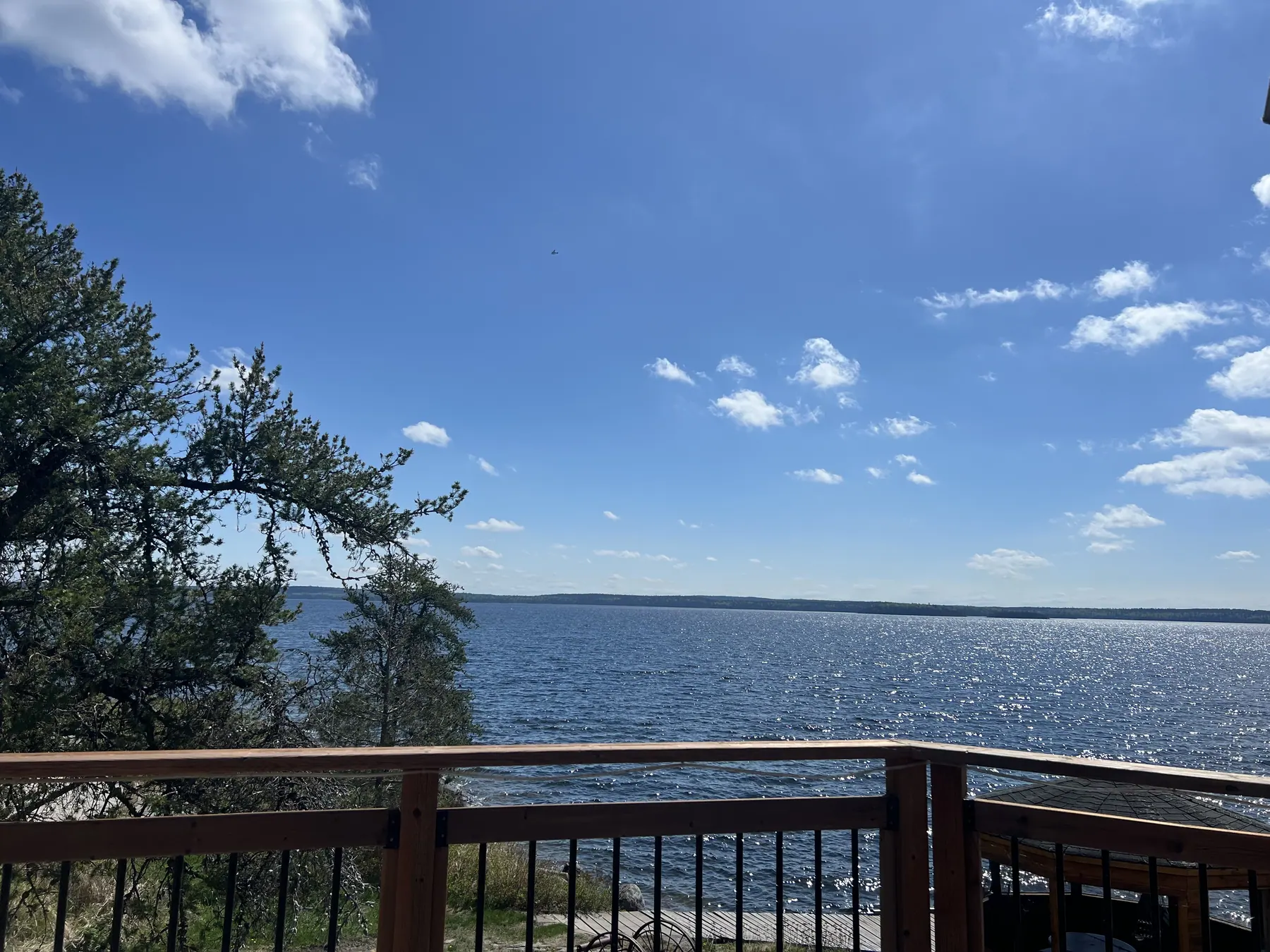


Caught on video on Sydney Lake
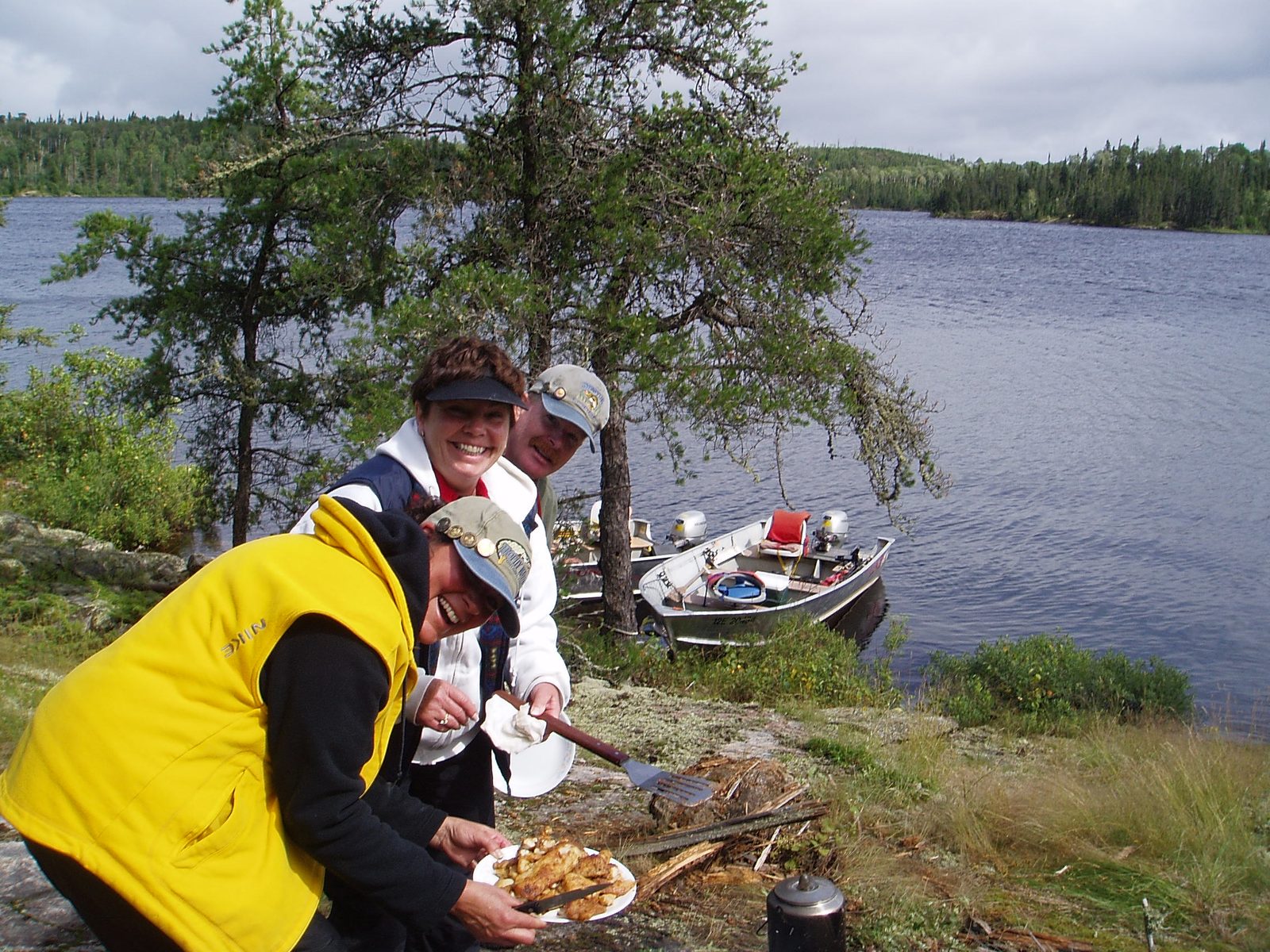
We were fishing near camp when a bald eagle circled over the boat, dropped to the water a few yards away and flew off with a walleye.
Eagles fish where the fish are. Watch for them on the tall dead spruce along the shore.
Filmed from the boat on Sydney Lake, August 2023. Watch the full video on YouTube →
Protected on every side
Sydney and Kilburn don’t sit alone. They’re part of some of the largest protected country in Northwest Ontario, under conservation rules the area’s camps signed up for to keep it that way.
Conservation area
From Sydney Lake south to the English River and west to Manitoba
A conservation fishing area backed by the Ontario government. The region's tourist operators came up with the idea, and the province made it official, with slot limits and catch-and-release of big fish. Release a trophy, register it at camp with a witness and a photo, and your name goes in the Trophy Waters records. The biggest fish of each species each season wins a free trip the next year.
Sydney Lake sits at the northeast corner of the area.
Wilderness park
About 1.1 million acres of wilderness
Sydney and Kilburn sit at the south end of Woodland Caribou Provincial Park, one of Ontario’s largest wilderness parks. It runs from Red Lake west to the Manitoba border and is home to one of the largest herds of woodland caribou south of Hudson Bay. Moose, black bears, wolves, bald eagles and pelicans are regular sightings from the boat.
The caribou on the back of the Canadian quarter is a woodland caribou.
UNESCO, 2018
“The land that gives life”
Woodland Caribou Park is part of Pimachiowin Aki, inscribed as a UNESCO World Heritage Site in 2018 for its boreal forest and for the Anishinaabe culture that has lived on this land for thousands of years. Our lakes have their own history: pictographs at nearby Pineneedle Lake and an old Hudson’s Bay Company post on the Sturgeon River.
Ask us how to get to the pictographs.
2023 · 2024
Two Trophy Waters pike wins in a row
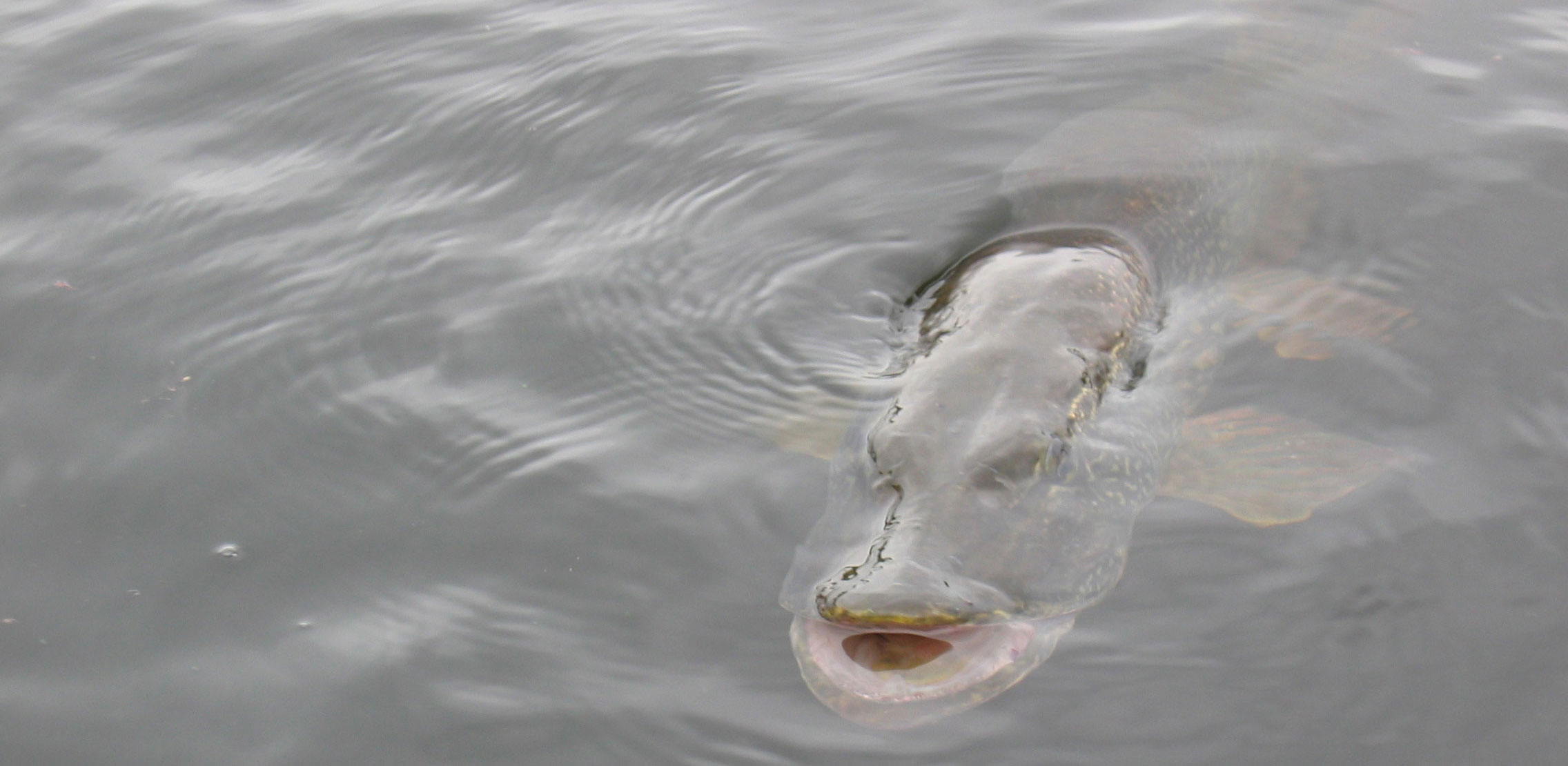
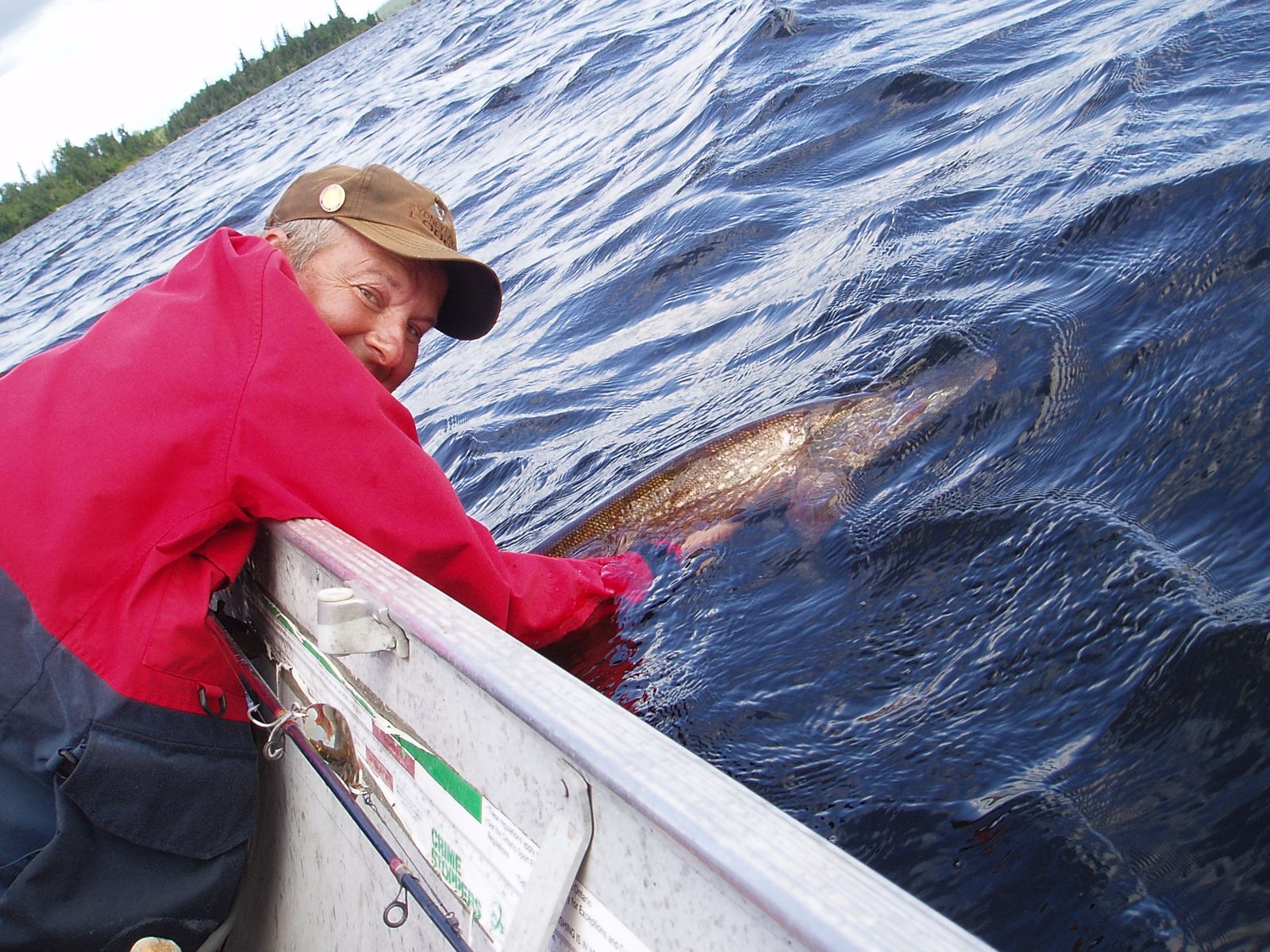
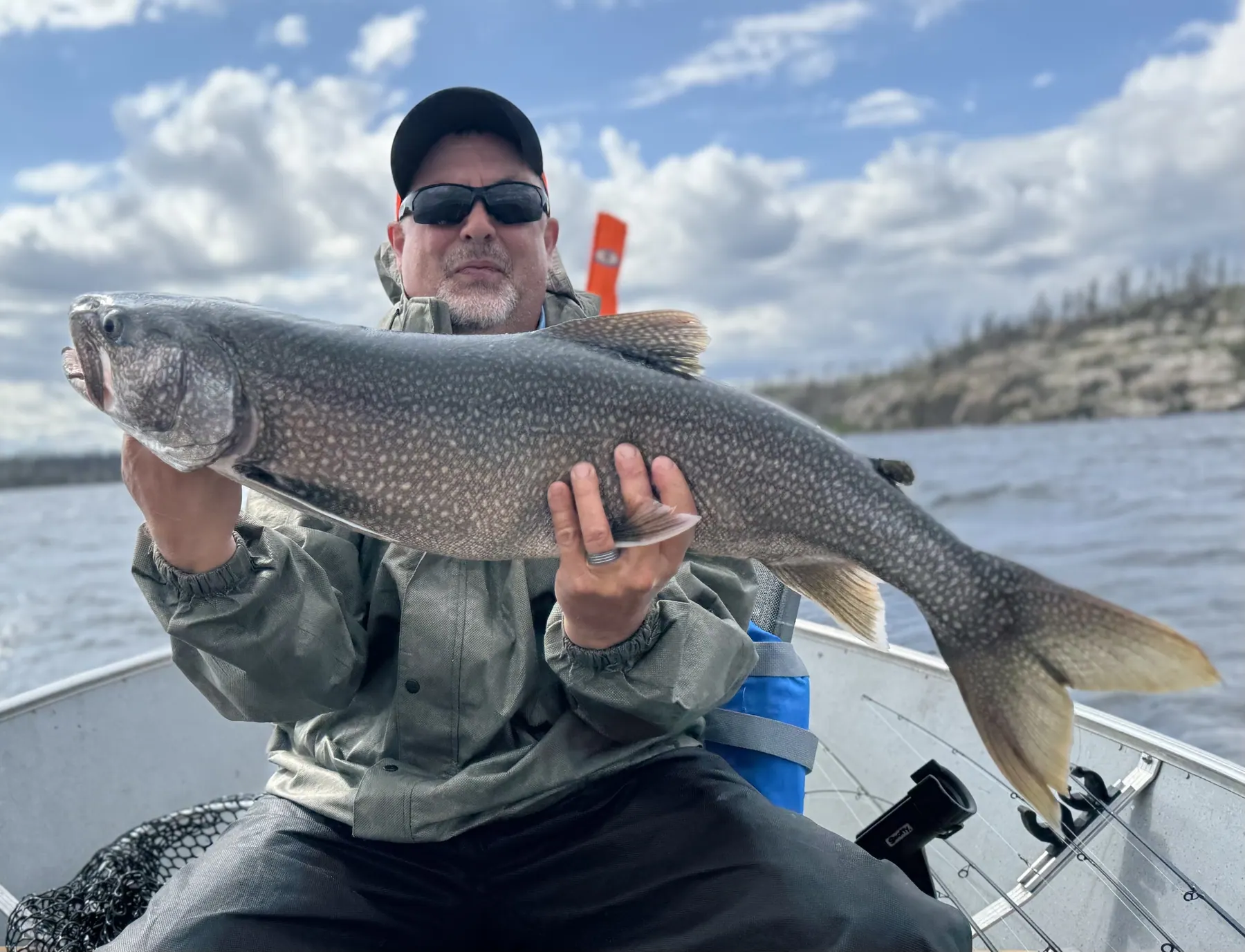
In 2023 and again in 2024, the biggest northern pike released anywhere in Ontario’s Trophy Waters came from Sydney Lake. Both fish were 46 inches long, and both anglers won a free trip the next year: Steve Wilhelm in 2023 (his pike is in the photos above) and Rory H. in 2024.
Sydney Lake guests have won the Trophy Waters lake trout prize several times, too.


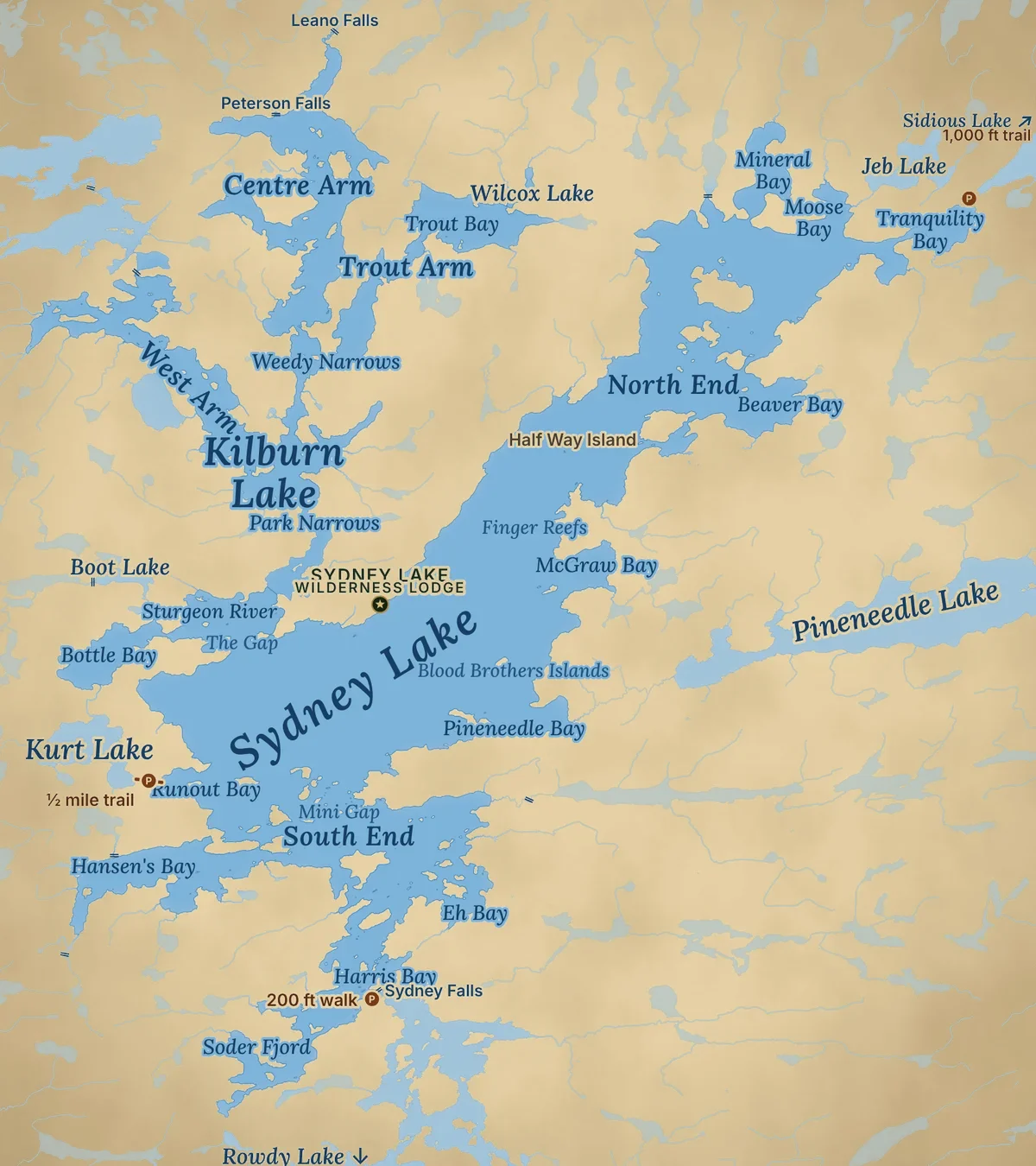
Read the map
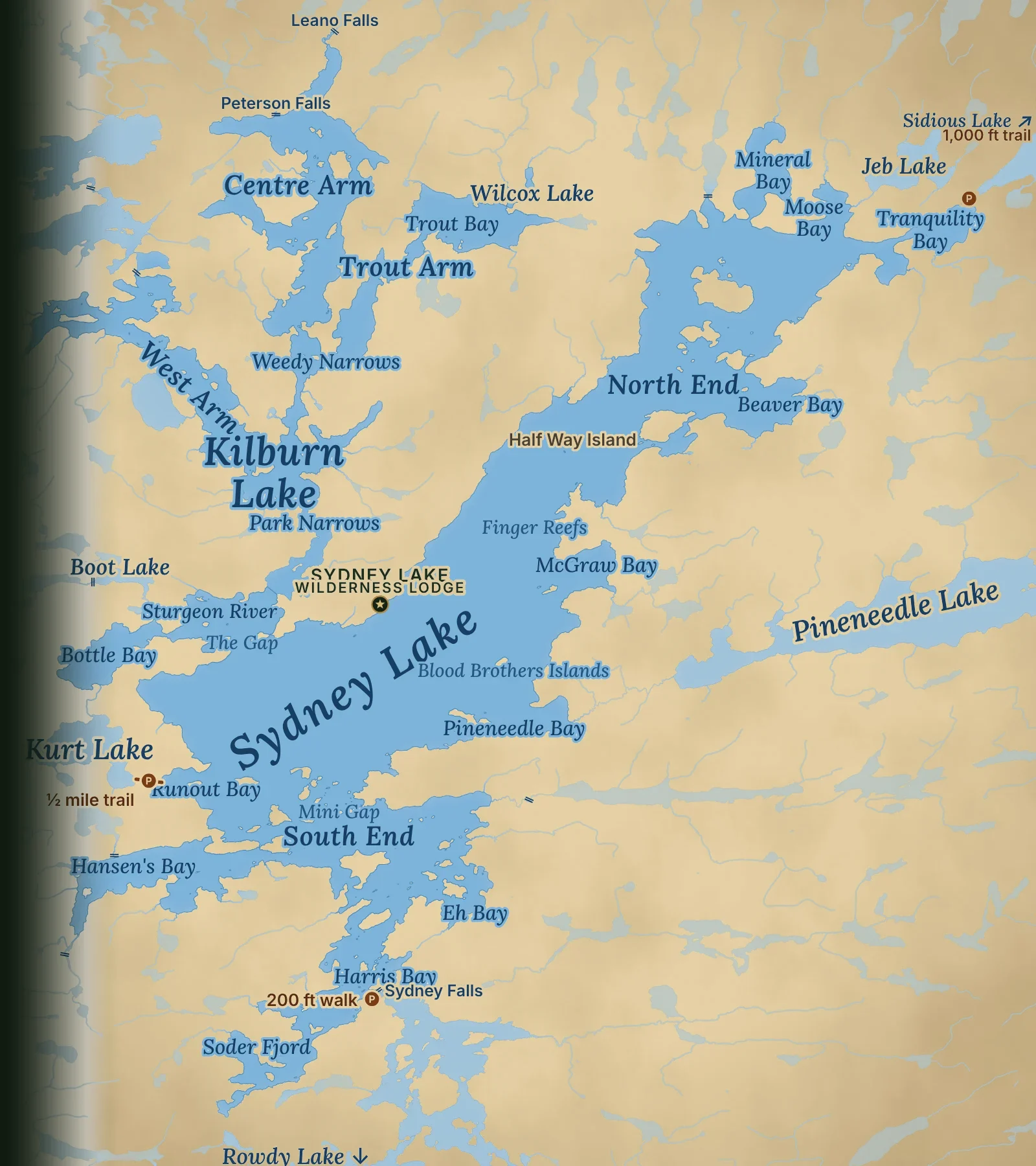
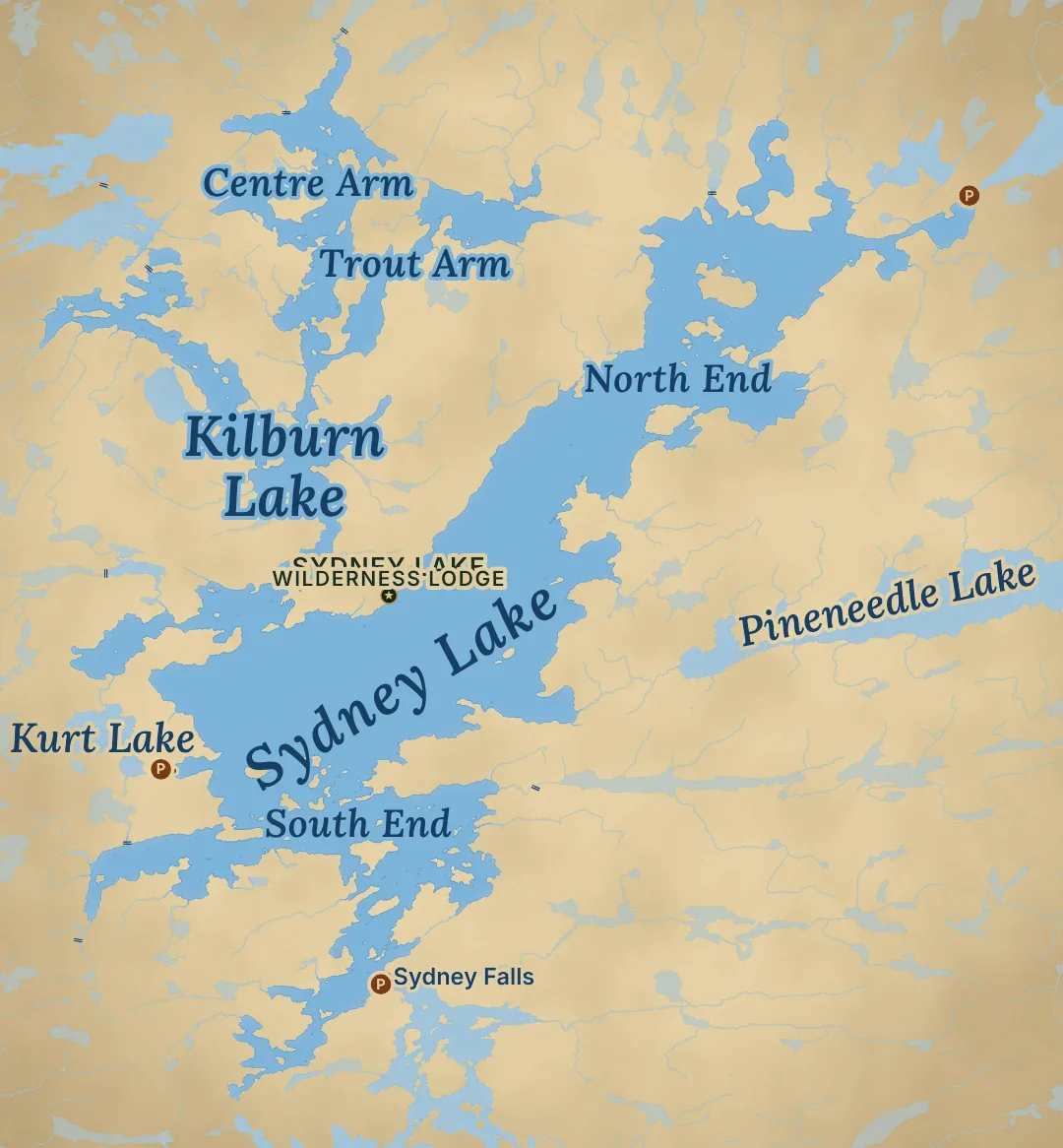
Camp (the star) sits on Sydney’s west shore near the middle of the system, so most spots are 30 minutes or less by boat. Click the map to open the interactive version with depths, rocks, fishing spots and boat times.
Sydney’s main basin
14.5 miles long and 3.5 wide, running northeast to southwest. Clear, cold water to 240 feet, averaging 65 feet deep.
Kilburn Lake
About 3,330 acres in three arms, each 4 to 5 miles long. Darker water, with Trout Bay dropping past 200 feet.
The Sturgeon River
Joins the two lakes through two narrows with a little current. No portage. The Narrows is one of our best walleye spots.
The tea-stained bays
Mineral, Tranquility, Hansen’s and Bottle Bays. Shallow, creek-fed and the first water to warm in spring.
The Gap
Where the Sturgeon River enters Sydney: a ridge as shallow as 5 feet, with 80 feet on the river side and 200 on the lake side.
91 islands
Islands bunch up at the north and south ends of Sydney, with reefs, saddles and shore lunch spots between them.
The Race Track
Our name for a stretch of islands and channels at the south end of Sydney.
Sydney Falls
The lake’s only outlet. The water drops about 7 feet into Rowdy Lake and flows on down the Sturgeon River to the English River.
Sydney Lake data
A government lake survey measured Sydney’s water the way a biologist would. The numbers explain a lot about the fishing.
Size
14.5 mi long · 3.5 mi wide
Sydney, with the Sturgeon River, is a big lake by any measure. Add Kilburn’s 3,330 acres and you have 17,570 acres, about 190 miles of shoreline and 120 islands.
Lat. 50°41′ N · Long. 94°25′ W
Depth
Average depth about 65 ft
Much of Sydney is deep water. That’s why it holds lake trout and cisco all summer, and why walleye always have cooler water close by when the shallows heat up.
Kilburn’s deepest spot: 213 feet, in Trout Bay.
Clarity
Secchi disc reading, main lake
In the survey, a white disc lowered into the main lake stayed in sight down to 26 feet. That’s clear, colourless water. Kilburn and the back bays are the other kind: tea-stained and much darker.
Bright day? Fish deeper in the clear water, or head for the dark bays.
Oxygen
9.4 to 10 parts per million
Dissolved oxygen barely changed from the surface down to 125 feet. Plenty of lakes lose the oxygen in their deep water by late summer. Sydney didn’t, so trout and cisco can live deep and stay healthy.
Good news for lake trout, which need cold water with lots of oxygen.
Temperature
63°F to 53°F between 25 and 35 ft
In summer the lake layers out. Surface water reached 70°F, and within the top 100 feet it fell to 45°F, with the sharpest drop between 25 and 35 feet. Fish and baitfish stack up along that line.
Watch for fish at 25 to 35 feet on your depth finder.
Water chemistry
pH 7.6 · 16 ppm dissolved solids
Slightly alkaline, with very little dissolved in it. That’s what a clean Canadian Shield lake looks like when there’s nothing upstream but rock, forest and more lakes.
No towns, dams or industry upstream.
Inflows and outflow
Elevation about 1,157 ft
More than 20 creeks feed Sydney, plus the Sturgeon River through Kilburn. There’s one outlet, at Sydney Falls, where the lake drops about 7 feet into Rowdy Lake.
Creek mouths draw spring walleye.
Fish species
Walleye · northern pike · lake trout
The survey found lake trout, walleye (yellow pickerel), sauger, northern pike, lake whitefish, lake herring (cisco), burbot, white and red suckers, trout-perch, Iowa darters, ninespine sticklebacks and four kinds of minnows and shiners.
Food at every size, from minnows to cisco.

What it means for you
✓Walleye in the shallow bays in spring and on the reefs in summer, all close to camp
✓Trophy northern pike in the tea-stained bays and along the weed edges
✓Lake trout in the deep, clear main basin
✓17,570 acres to spread out on, with no other camps on Sydney or Kilburn
✓No road, no launch, no cottages: just float planes and loons
✓A camp in the middle of it all, so you spend your day fishing, not running
✓A waterproof lake map, marked with spots, for every group
✓Garmin depth finders to rent at camp, to find the reefs and humps
How we get you on the fish
Great water is half of it. The other half is knowing where to go. When you arrive, we’ll mark your map with the spots, depths and lures that are working that week.
My family has fished these lakes since 1933. Ask us anything at the dock: which bay is warming up, where the trout are holding, or the best place for shore lunch.
Full packing & tackle list →Pick your fish
Species #1
Bays in spring · reefs in summer
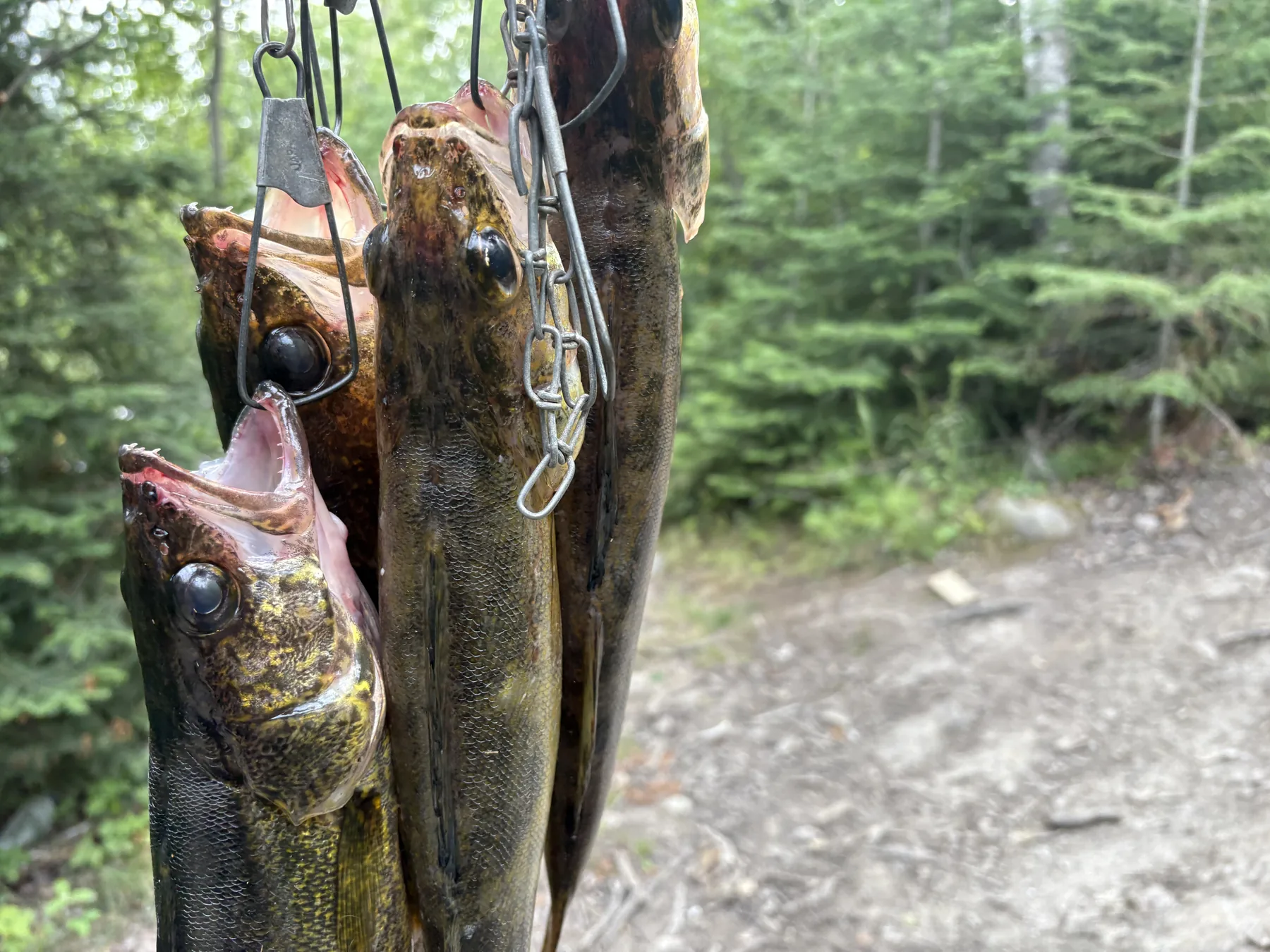
The main reason most guests come. Big schools, a good average size, and walleye over 27 inches every season, fattened on cisco.
More in our walleye fishing guide.
Trophy fish
Weedy bays · rocky points
Pike hunt the shallow, tea-stained bays and the weed edges. Fish from 30 to 38 inches are common, and pike of 42 to 46 inches are caught every year.
More in our northern pike guide.
Deep water
Shallower in spring and fall · deep in summer
Sydney’s cold, oxygen-rich depths make it real lake trout water, and plenty of cisco keeps them well fed. Lake trout 32 inches or longer count as trophies in the Trophy Waters.
More in our lake trout guide.
Off the main lakes
Creek rides, short walks and carries
Small lakes like Boot, Rowdy, Middle Kilburn and Kurt add another kind of day: a creek ride or a short portage, and water that is seldom fished.
More on our portage lakes page.
Conservation since 1987
We’ve practised conservation fishing on Sydney and Kilburn for nearly 40 years. The rule is simple: keep a couple of eaters for shore lunch, and put every fish over the slot back alive. Big fish put back produce more big fish, and they’re a lot of fun to catch the second time.
To release a fish well, use single hooks with the barbs pinched, and keep the fish in the water when you can. If a hook is swallowed, cut the line. Pinch the tail to measure, hold the fish level for a quick photo, and if it’s slow to swim off, hold it by the tail, nose down a little, until it kicks away. Want one for the wall? A replica made from the length, girth and a photo lasts longer and never smells.
Fishing rules change, so check the current Ontario regulations before your trip.
Licences & limits →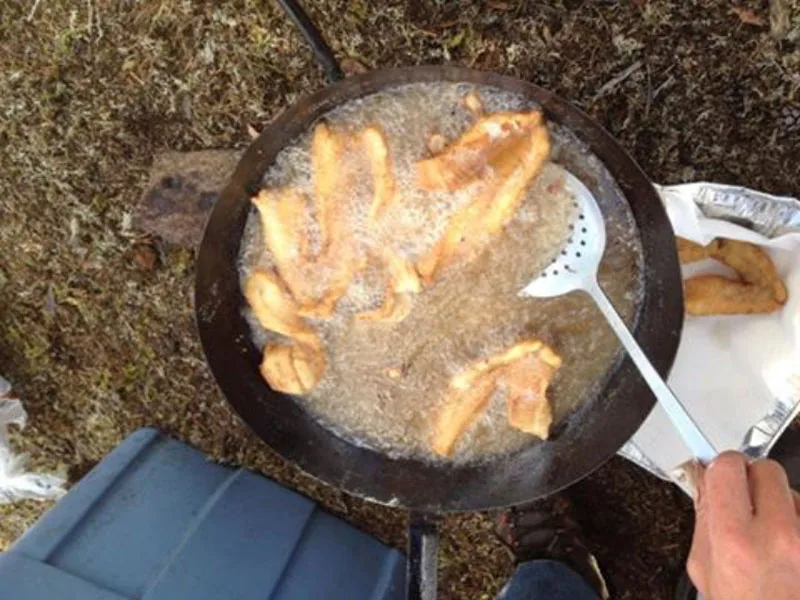
Ontario’s Trophy Waters
Every season, the biggest fish of each species released anywhere in Ontario’s Trophy Waters wins its angler a free trip the next year. Sydney Lake guests won it for northern pike in 2023 and again in 2024, with a 46-inch pike each time. That’s what decades of letting the big ones go looks like.
About Ontario’s Trophy Waters →Explore more: Sydney Lake · Kilburn Lake · Portage lakes · Walleye · Northern pike · Lake trout · Woodland Caribou Park