Summer fishing trips · July and August 2027
Warm days, water you can swim in, moose along the shore at dusk and wild blueberries on the rock ridges. The walleye and big pike move out to main-lake points and reefs, the lake trout go deep, and the evenings are long and calm.
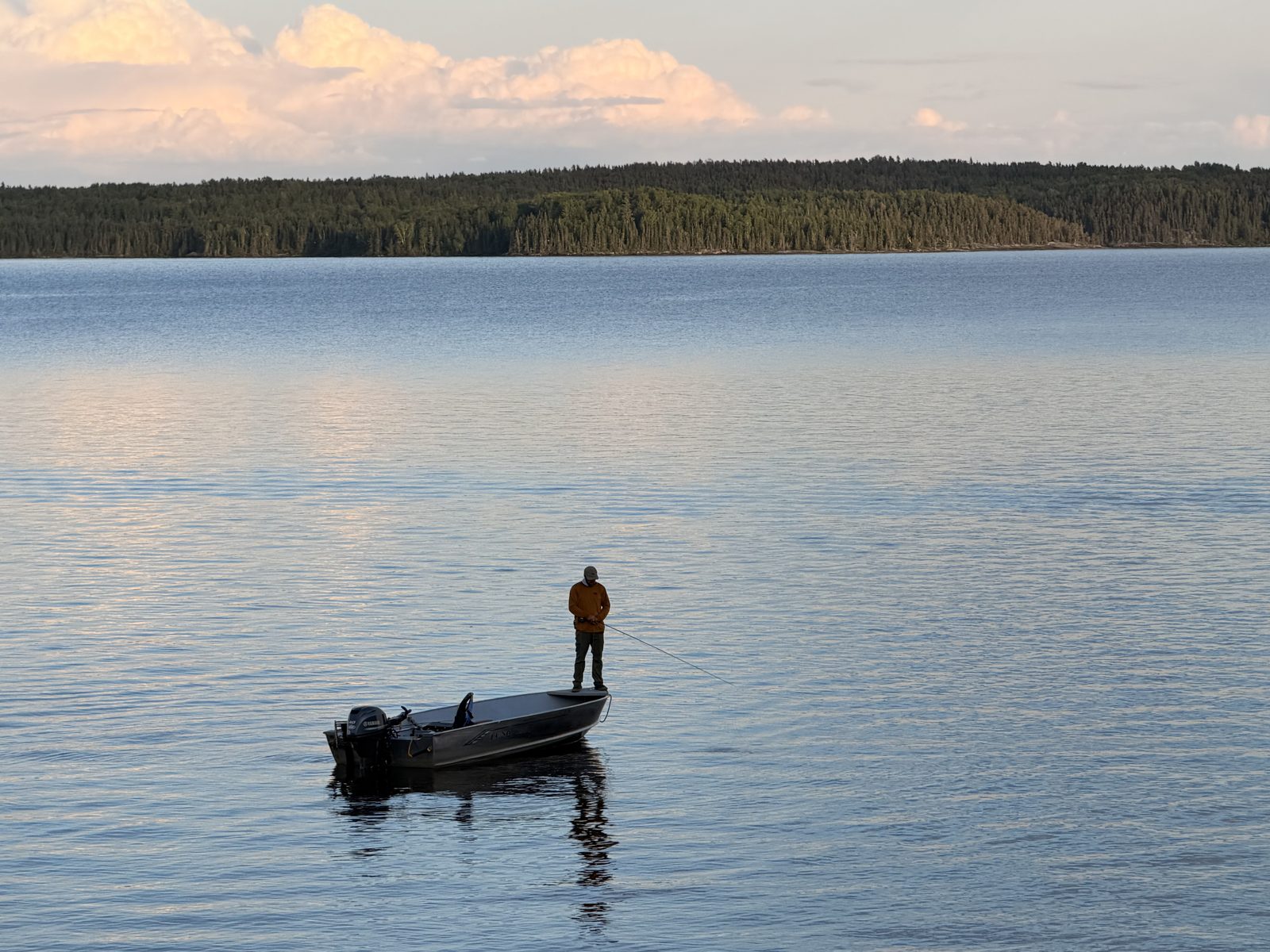
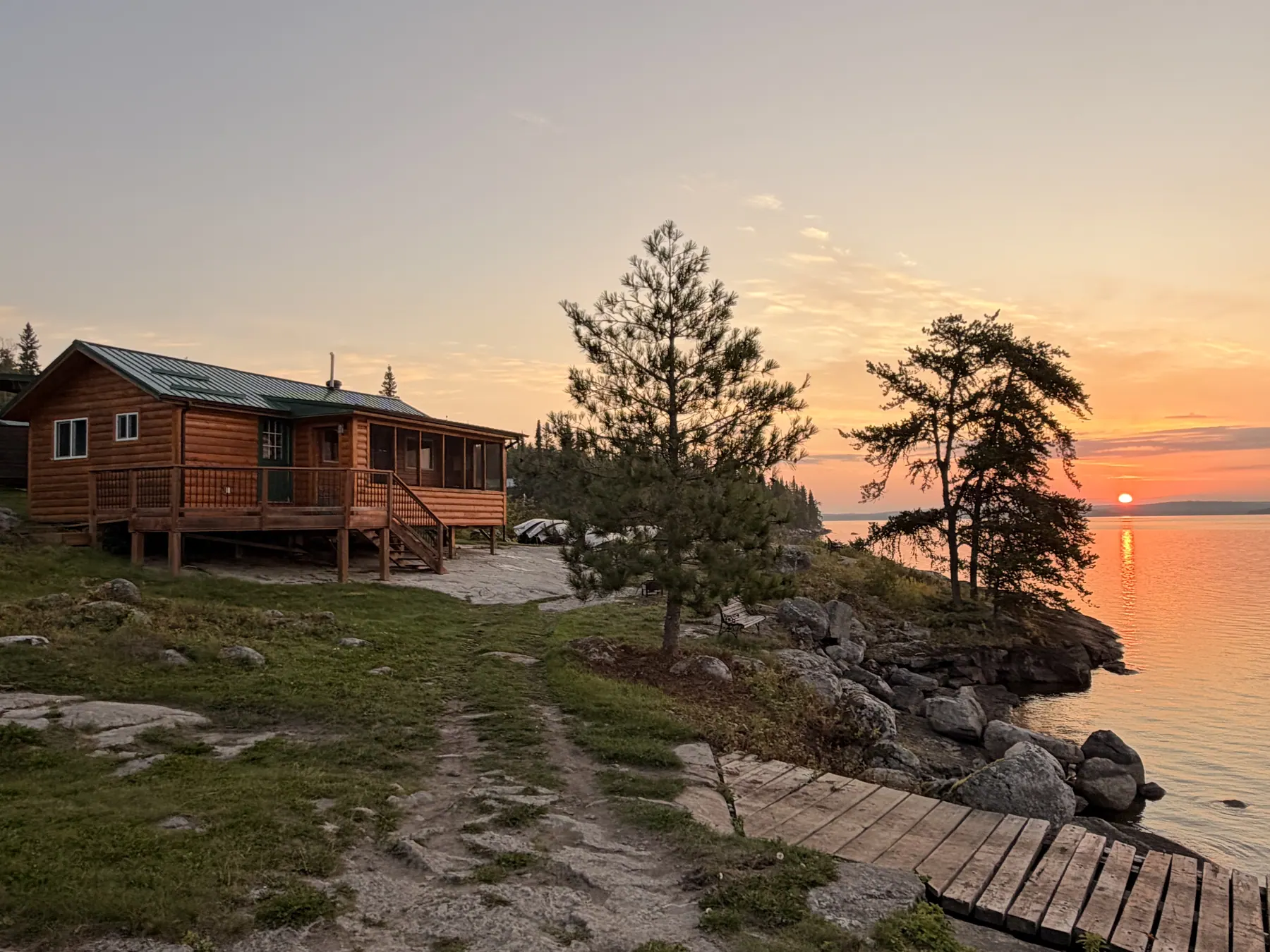
A calm summer evening · Sydney Lake
10–30 ft
walleye depth in July and August
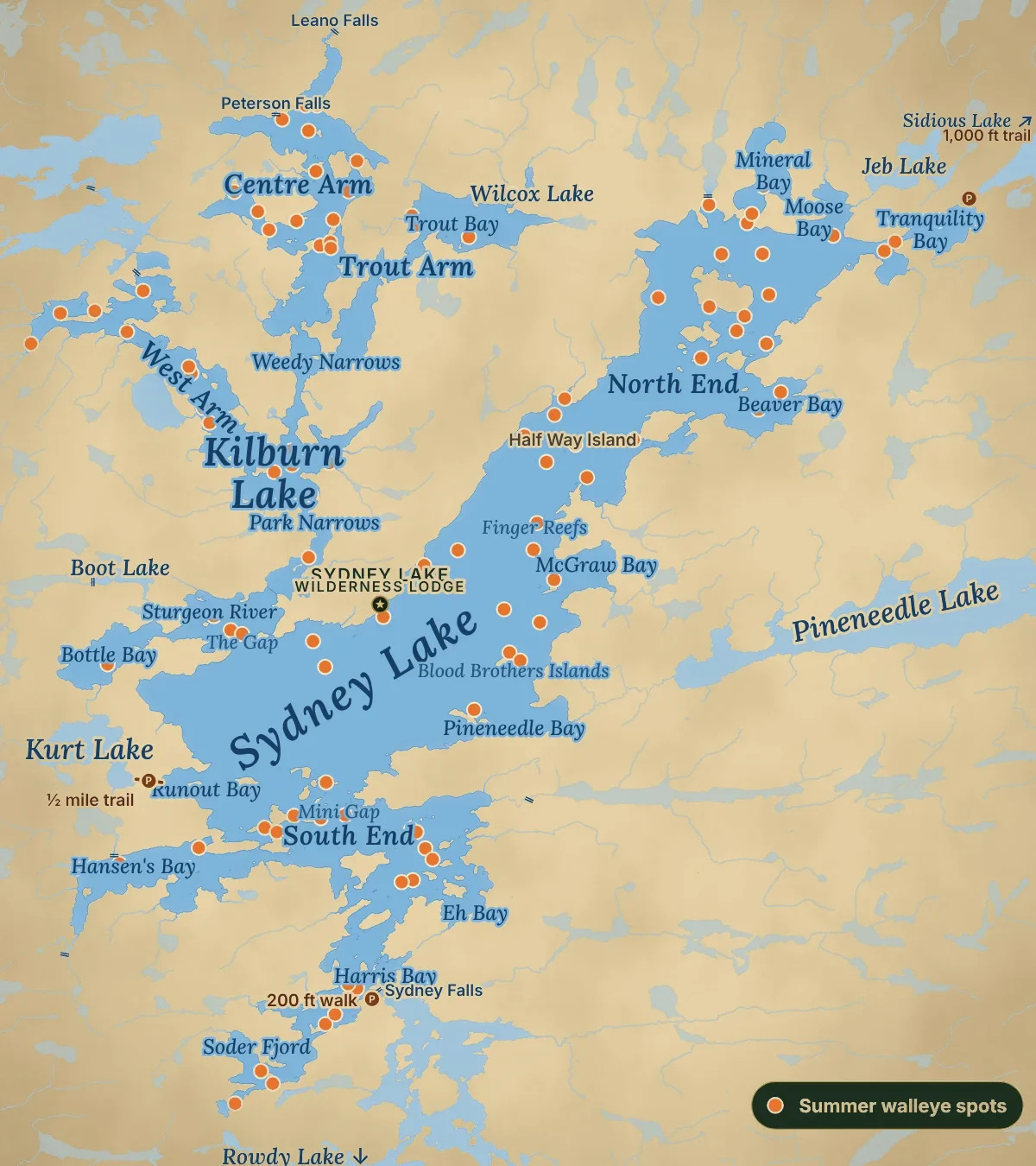
On main-lake points, reefs and humps. On Kilburn, about 18–28 ft by August.
Late July
wild blueberries ripen
On the open rock ridges and islands, into August.
68–75 °F
surface water in July
20–24 °C. Warm enough to swim off the dock.
76–100 °F
summer highs
Average 76 °F (24 °C) in July, with plenty of days in the 80s and the odd one near 100. Every cabin is air-conditioned.


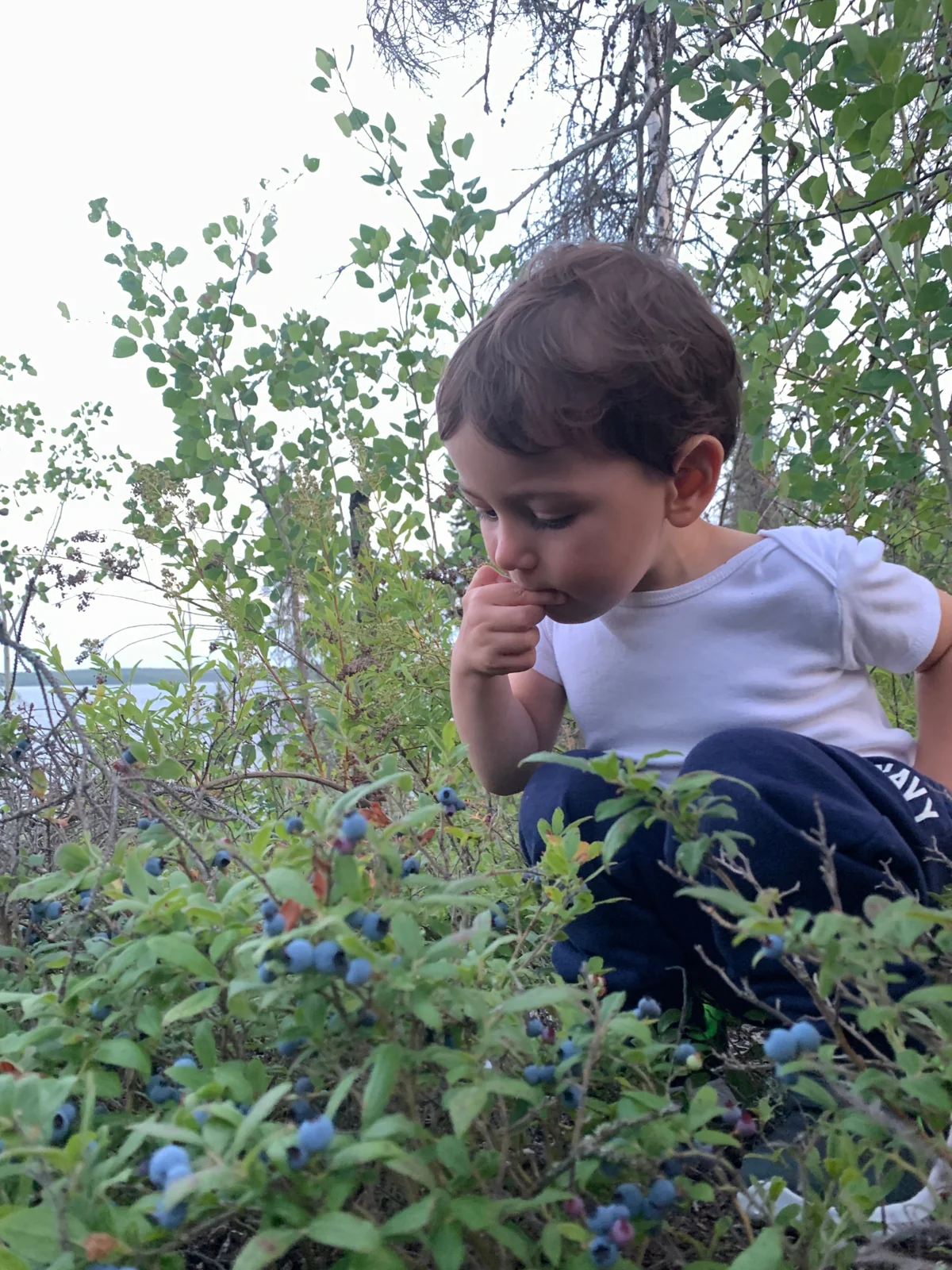
The whole trip
Warm and settled: T-shirt days, water warm enough to swim, moose in the bays at dusk and long evenings on the deck. It’s the season for families, and for anyone who wants a swim after a day on the water.
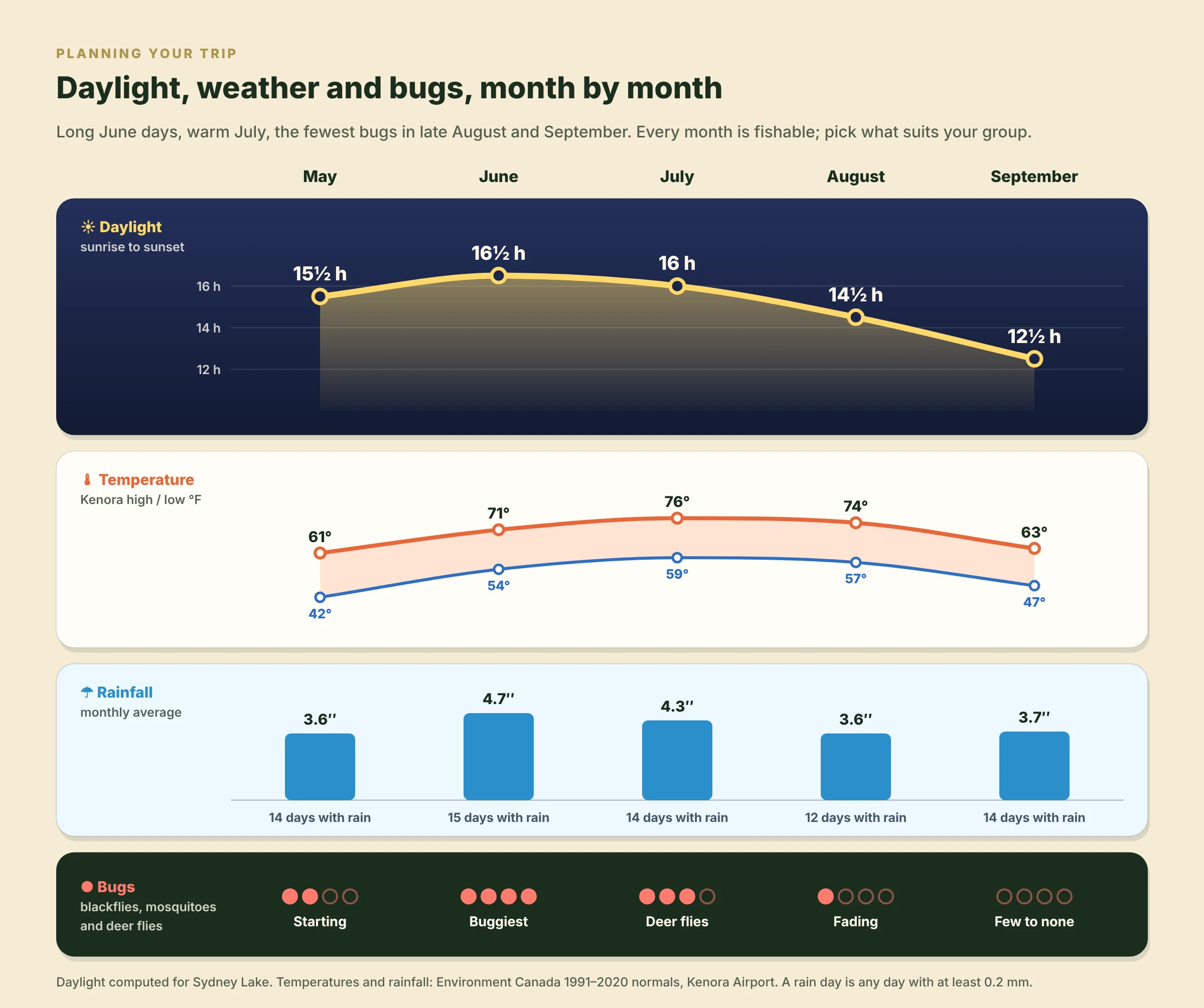
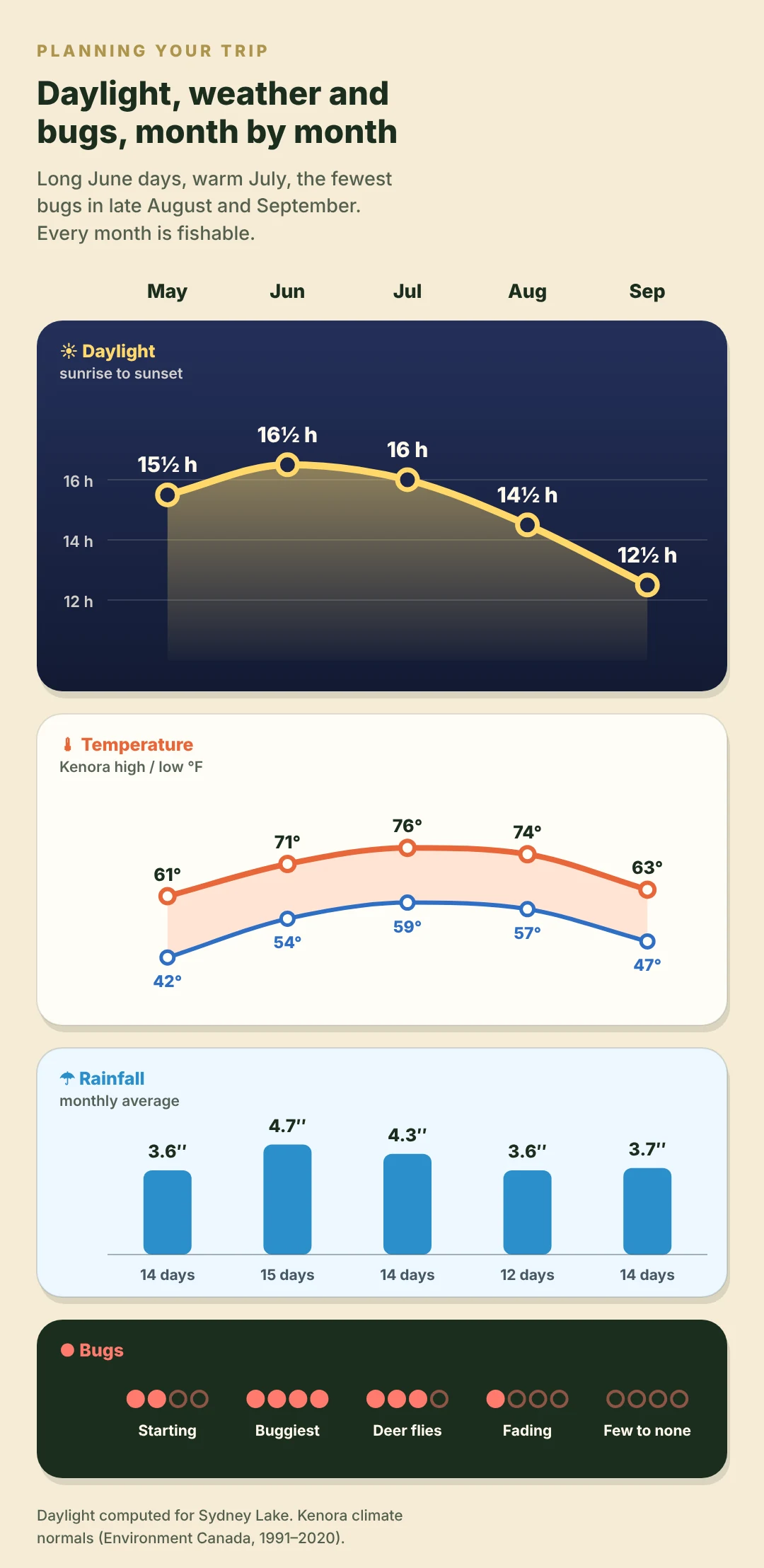
Kenora averages
Average highs 76 °F in July, 74 °F in August · many days in the 80s
Those are averages, not the range. Plenty of July and August days reach the 80s °F, and once in a while it touches 100 °F. Every cabin has air conditioning, so you come off the lake to a cool cabin and sleep well on the warmest nights. Lows average near 59 °F in July and 57 °F in August (15 and 14 °C). On hot days, early-evening thunderstorms roll through, and camp has a front-row view. July and August are usually the driest months.
Pack: shorts, a sun hat, a fleece for early mornings, and rain gear.
Late June to mid-August
Mosquitoes at dawn and dusk
Blackflies are gone by mid-June. Mosquitoes come out at dawn and dusk, and deer flies on hot, sunny afternoons from late June to mid-August. Out on the main lake a breeze usually keeps them off you, and by mid-August there are far fewer.
Bring: repellent, and a light long-sleeve shirt for evenings.
July and August
Surface water 68–75 °F
By July the lake is warm enough to swim. Jump off the docks, or take the trail around the corner to the beach; you can also run over in your boat.
Try: a swim after supper, when the lake goes calm.
Late afternoon and evening
Down to the shore to feed
Warm weather brings moose out of the forest to the shoreline in the late afternoon and early evening. Good spots: the entrance to Bottle Bay, Boot Lake Creek, the Narrows on Kilburn, the entrance to Centre Arm, and Mineral, Moose and Tranquility Bays in the north end.
Late July into August
On the sunny rock ridges
Wild blueberries ripen on the open rock ridges and islands from late July into August. The crop changes with the rain and heat each year.
All summer
Loons in groups of 70 to 200+
Loons group up in rafts of 70 to over 200 birds and make daily circuits of the lake. Bald eagles are around all season, pelicans and swans show up in summer, and woodland caribou are seen in both Sydney and Kilburn, sometimes swimming across.
From mid-August
Dark nights are back
In June and early July it barely gets dark. From mid-August the nights are dark enough again, and on clear nights you have a real chance of the northern lights from about 11 p.m.
July and August
Kids under 16: 40% off
Summer is family season. Kids under 16 get 40% off, and between fishing trips there’s swimming, blueberry picking, and moose and loons to watch.
The fishing
When the shallows warm up, the fish don’t leave: they slide deeper and out to main-lake structure. Fish the edges and the low-light hours.
Walleye · 10–30 ft
In July walleye move out of the bays to main-lake points, reefs, sunken islands and sharp breaks in 10 to 25 ft. In August they school on saddles, humps and mid-lake reefs in 18 to 30 ft and follow the cisco. They hold deep in bright sun and move up to feed in low light, wind and cloud; Kilburn’s tea-stained bays hold them shallower.
Try: a jig on the windy side of a point, or a spinner back-trolled along the break.
Northern pike · 10–30 ft
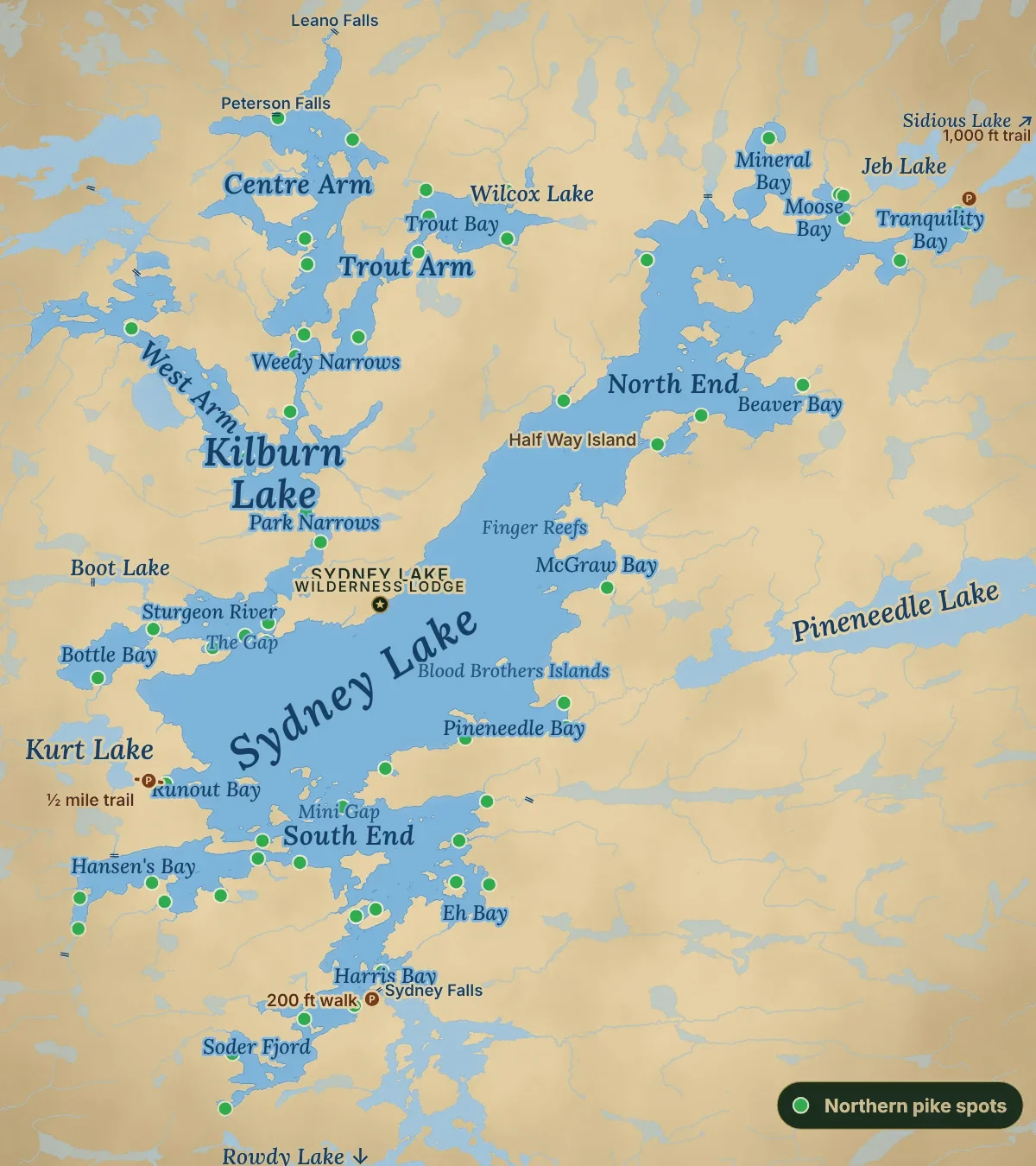
Smaller pike stay in the warm, weedy bays. Big ones look for water of about 61–70 °F (16–21 °C): the deepest weed edges, rocky points that drop fast, reefs and narrows. Morning and evening they hunt the shallows next to deep water.
Try: topwater over the weeds on a calm evening.
Lake trout · 40–120 ft
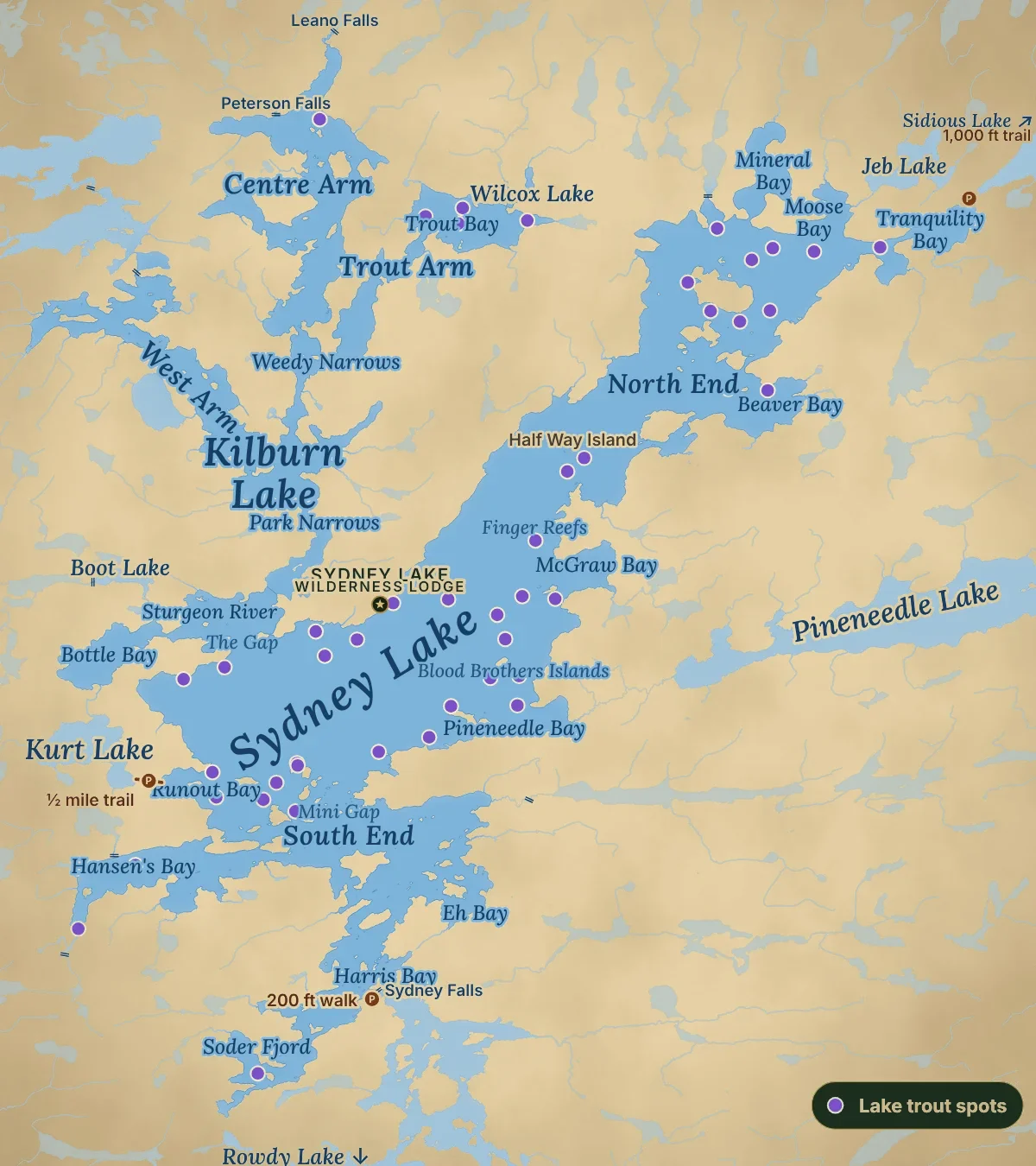
Lake trout do best in water of about 46–54 °F (8–12 °C), so in summer they live below the warm surface layer, on the edges of 50 to 70 foot plateaus. In August the biggest may sit 90 to 120 feet down over Sydney’s 240-foot basin.
Try: a tube jig dropped straight down on fish you see on the depth finder.
Life at camp
Hot afternoons, a swim before supper and fish on the grill while the lake goes calm.
Your cabin
Every cabin is air-conditioned, so on the hottest afternoons you can come in off the water, cool down and nap before the evening bite, and sleep comfortably at night. Each group has its own cabin with a full kitchen, showers, a screened porch and electricity around the clock. Beds are at floor level with good mattresses, and we do the housekeeping, dishes included.
Evenings
Grill supper on the BBQ deck by the docks, then sit out in the screened gazebo and watch the evening storms or the sunset roll over the lake.
Every day
Your boat is gassed and cleaned every day, and we’ll tell you what’s working and where. Text us for more bait or a hand on the water.
Noon
Shore lunch kits with pots, pans, burners and propane are ready to go. Pick an island and fry up a couple of walleye: you can keep two per angler per day, 18 inches and under. In August, pick blueberries for dessert.
Any day
Want the reefs and deep humps figured out fast? Our head guide, David Quinlan, can take you out for a day.
Where the fish are
Tap a map to open it with that layer of spots turned on. Every group also gets a waterproof lake map, and we’ll mark what’s working that week when you arrive.
Questions
Yes. The walleye don’t leave when the shallows warm: they slide out to main-lake points, reefs and sharp breaks in 10 to 25 ft and feed hardest early, late and on windy or cloudy days. Big pike move to deep weed edges and rocky points, and lake trout sit in 40 to 70 ft. Fish the edges and the low-light hours and July is very good.
Yes. In July the surface water is usually about 68–75 °F (20–24 °C), warm enough to swim off the docks. There’s also a beach just around the corner, by trail or by boat.
Blackflies are gone by mid-June. Mosquitoes come out at dawn and dusk, and deer flies on hot, sunny afternoons until about mid-August. On the open lake a breeze keeps most of them away, and every cabin has a screened porch. By mid-August there are far fewer bugs.
From late July into August, on the open rock ridges and islands. The crop changes with the rain and heat each year.
Out of the shallow bays to main-lake structure. In July look on points, reefs, sunken islands and sharp breaks in 10 to 25 ft; in August on saddles, humps and mid-lake reefs in 18 to 30 ft, where they follow the cisco. They hold deeper in bright sun and move up to feed in low light, wind and cloud. Kilburn’s tea-stained bays hold them shallower all summer.
Yes, and summer is the best time to bring kids. Children under 16 get 40% off, the cabins have air conditioning, and between fishing trips there’s swimming, blueberry picking, and moose and loons to watch.
Summer trips
Tell me which week in July or August you’d like and how many are in your group, and I’ll let you know what’s open. Summer weeks are popular with families, so it pays to ask early.
More fishing: Walleye · Northern pike · Lake trout · Ontario fishing · Check dates